Year One Supporting Links
History
General
- You might want to start by having your oldest students read this selection on “How to Read a History Assignment.”
- This classic, beloved game is now available to play for free! Play Oregon Trail online!
- Another great game, also available and free to play! Play Amazon Trail online!
- A Child’s History of the World for Year 1.
- A real treasure: Study guide for the Holman Bible Atlas! This is a 69-page pdf download file.
- The Story of Mankind by Hendrik Van Loon
- Great site! You can look up words and make your own glossary. Input the words you want included and push send. You will get a professional looking glossary of all your words. Best of all IT IS FREE!
- Highland Heritage has a number of resources you might love to use; however, there is no answer key for some of the literature helps.
- Norton online quizzes – Western Literature
- Judaism: all kinds of useful information. Pre-read before letting them loose, but wholesome for most children, I think.
- If you and your children enjoy praying for different countries of the world, you will enjoy linking up with this page on Worldwide Missions. It contains statistics that give a clear picture of the prayer needs of various countries. Year 1 encourages you to lead your children in prayer for all Hindus and Buddhists. Look at this site to find those areas most in need!
- The “Ism” book online. Basic definitions that will help you in your worldview studies.
- Bible dictionary that you may find helpful during Year 1
- A user recommends the NIV Archaeological Study Bible ISBN: 031092605X
- Great Studio Projects in Art History by William Reid (ISBN 0825138523): This art history project book can be used in all four year-plans! There are 80 projects and the time period goes through the 1980’s.
- Here’s real help with Feast Nights: food timeline and recipes galore! Enjoy!
- Cookie Dough Recipe: A great alternative to salt dough maps.
- Try Crayola’s Model Magic: a great lightweight soft modeling substance. It air-dries quickly, and after it’s dry, it can be sanded, painted, or decorated. Model magic can replace Fimo for most projects suggested in Tapestry.
- Graphic Organizers on Tap: a fantastic resource for all of your graphic organizing needs.
- If you would like to make personalized graphic organizers, click here.
- This site can be for reviewing parts of speech. Activities include matching, concentration, flash cards, and a word search.
- Click here for another grammar game.
- Make online crossword puzzles here or here. These are great for reviewing vocabulary!
- Daily Grammar Excellent site!
- Online Writing Lab
- Transition words for writing.
- Great speech outline: .pdf file
Time Lines
- Time Line Book Instructions
- Time Line Forms
- Interesting information about ancient time lines from Answers in Genesis
- Time line of “Famous People”
- Ancient History Time Line
Unit 1
Week 1: Curtain Rises on Egypt: Gift of the Nile
- Odyssey Online: Egypt
- GREAT site on Egypt: pharaohs, pyramids, great maps, wonderful for Upper Elementary and up!
- Ancient Egyptian flora and fauna page.
- Wonderful overview site of Egyptian history
- Text of the Egyptian Book of the Dead
Week 2: Pharaohs & Pyramids
- Odyssey Online: Egypt
- Dynasties of Egypt
- Excellent site for all ages on pyramids: take virtual tours!
- Mummies: Pictures and Information
- This site is about Egyptian life after death
- Egyptian Armies
- The Seven Wonders of the Ancient World
Week 3: Egyptian Polytheism & the Judgment of God
- Read about Egyptian gods here.
- See the article, “Why Did God Allow the Killing of All the Firstborn in Egypt?” for the correlation of each plague to an Egyptian god, plus more information on God’s judgment of Egypt.
- Want to know more about Egyptian mythology? Look no further! Use images from this site to decorate writing projects, display boards, etc. Also great for art projects!
- Egyptian Religion from Kidipede
- Plagues versus Egyptian Gods: worksheet with teacher answers
- This site includes games, recipes, and basic information for several Jewish holidays.
Week 4: Creation Through Noah
- Neat link about the theory of tectonic plates from a Christian perspective!
- Noah’s Flood: a worldwide event? Yes, judging from the number of flood stories assembled here!
- Man builds a scale model of the Ark
- Scroll down just a bit for an interactive 3-D model of Noah’s Ark.
Week 5: Abraham & Ancient Mesopotamian Civilizations
- Middle East: cultural links can be found here and here.
- Wonderful site on Mesopotamia
- Writing in Mesopotamia
- Life in Mesopotamia
- Examine this short collection of Tower of Babel pictures to understand the nature of ziggurats and how artists have used it to portray human sin.
- Timeline of Mesopotamia
- Ancient Mesopotamia: video
Week 6: The Patriarchs: From Canaan to Egypt
- Time Line of the Patriarchs
- Bible Time Line, includes Bible verses with no graphics.
- The Significance of Passover.
- Hebrew for Christians
Week 7: In The Wilderness: The Tabernacle & the Law
- Find out lots of information about practicing Shabbat.
- Shabbat Service
- What was it like inside the Tabernacle?
- 3-D animation of the Tabernacle!
- Jewish Calendar
- A Jewish calendar diagram is found here.
- Hebrew for Christians
- This site includes games, recipes, and basic information for several Jewish holidays.
Week 8: In The Wilderness: Holiness – Worshipping God as God
- Jewish Prayer Services
- Judaism 101 all kinds of useful information. Pre-read before letting them loose, but wholesome for most children, I think.
- The Jewish Children’s Learning Network. All kinds of useful information!
- Rosh Hashanah site loaded with traditions, blessings, crafts, and more.
- Rosh Hashanah Seder
- Hebrew for Christians
- Learn to read Biblical Hebrew
- This site includes games, recipes, and basic information for several Jewish holidays.
Week 9: In The Wilderness: Slaves to Warriors
- Hebrew for Christians
- This site includes games, recipes, and basic information for several Jewish holidays.
Unit 2
Week 10: The Indus Valley, Hinduism, & Buddhism
- Interactive site about the Indus Valley. Information about the “bead pot” for Year 1. (Warning: nude statues)
- Art and Technologies in the Indus Valley
- The Indus Valley Civilization
- Indus Valley Civilization: Daily Life
- Ancient India: Pictures and Information.
- For rhetoric Accountability and Thinking Questions: Ancient India.
- Examples of oxen and a two-wheeled cart
Week 11: Ancient China: Confucius & Taoism
- Learn about the Great Wall of China.
- A panoramic of the Great Wall
- From EnchantedLearning: Chinese Inventors and Inventions.
- Compare China to another country (maybe Ancient India?) with this Venn Diagram (pdf file).
- Ancient Chinese advancements and achievements Click tabs across the top to view achievements in every dynasty.
- Ancient Chinese Civilizations
Week 12: Ancient Americas
- Odyssey Online: Ancient Americas
- Mayan Civilization
- Mound Builders
Week 13: Early Greek Cultures of the Bronze Age
- Life in Ancient Greece.
- Excellent website about Ancient Greece.
- Odyssey Online: Greece
- Synopsis of the Trojan War.
- Excellent site on the epochs of Greek history.
- Greek Mythology site
- Text of Famous Men of Greece
- Minoans
- Mycenaeans
Week 14: Early Greek Cultures of the Archaic Period
- Life in Ancient Greece
- Excellent website about Ancient Greece
- Odyssey Online: Greece
- Text of Famous Men of Greece
Week 15: The Promised Land: Conquest & Settlement
- Relationship between the Canaanite/Phoenician cultures and the Israelites as they entered Canaan.
- Canaanite culture: very informative links here and here.
Week 16: Israel’s Judges and Neighbors
- Lydians
- Lydia: great information found here.
- Ammonites
- Midianites
- Amorites
- Jebusites
- Moabites
- Brief but helpful overview of the Hittites
- The Hittites
- Ancient Civilizations of the Fertile Crescent with comparison to Egypt.
Week 17: The Rise of Saul & the Philistines
- The origins of the Philistines.
- All Bible references to the Philistines.
- The Catholic Encyclopedia’s information on the Philistines.
- Ekron: A Philistine City
- Excavation site and pottery from Ekron, one of the five Philistine cities.
Week 18: King David and the Phoenicians
- A great site on Phoenicians.
- Phoenicians in Spain
- Do many searches for all things Phoenician from this comprehensive site. Again, parental guidance suggested! We’ve done a few key searches for you:
- Ancient Civilizations of the Fertile Crescent with comparison to Egypt.
- Tyrian (Phoenician) Purple
- Phoenician Colonies & Trading Posts
Unit 3
Week 19: Solomon’s Divided Heart
- YouTube video showing 3D rendering of Solomon’s Temple.
- Very nice website on Solomon’s temple.
- Queen of Sheba
Week 20: The Divided Kingdom
- Kings of Israel and Judah: time lines and short bios. Very helpful!
- Kings of Israel referenced Biblically.
- Worksheet about the Divided Kingdom
Week 21: The Assyrian Scourge: The Northern Kingdom Is Deported
Week 22: The Chaldeans (New Babylonians) and the Babylonian Captivity
- A brief history of the Babylonians.
- Information on the Babylonian Captivity with a nice hyperlink to a page on the Chaldeans.
- The Chaldeans
Week 23: The Medes and Persians: The Israelites Return Home
- A good history of the Persians
- Time line of the Persian Empire.
- Exhibition of Persian artifacts
- This site includes games, recipes, and basic information for several Jewish holidays.
Week 24: Persians and Greeks: The Persian Wars
- An excellent website about Ancient Greece
- Text of Famous Men of Greece
- Great site on the Ancient Greeks.
- Odyssey Online: Greece
- Useful summary of the Persian Wars
- Herodotus
- A time-line of the Persian Empire.
- The Rise of Athens and Sparta.
- The Persian Wars
- The Athenian Empire
Week 25: The Golden Age of Greece and the Peloponnesian Wars
- An excellent website about Ancient Greece
- Odyssey Online: Greece
- Peloponnesian War
- Text of Famous Men of Greece
- War between Athens and Sparta as seen by these two families, told in play format.
- Hippocrates
- The History of the Peloponnesian War by Thucydides
- Ancient Greet Art
Week 26: Greek Achievements: Science, Mathematics, and Philosophy
- Ancient Catapults: Lots of historical information, but good illustrations that may prove helpful if you are making your own.
- Text of Famous Men of Greece
- Learn about the original Olympics.
- Hippocrates
- Pythagoras
- Socrates
- Plato
Week 27: Alexander the Great: Preparation for Proclamation
- Alexander the Great
- Jewish history during the Hellenistic Age.
- The Maccabees
- Text of Famous Men of Greece
- Aristotle
- Alexander III (the Great)
- This site includes games, recipes, and basic information for several Jewish holidays.
Unit 4
Week 28: The Etruscans and the Founding of Rome
- The Etruscans
- Text of Famous Men of Rome
- Romulus and Remus
- The life of Coriolanus, by Plutarch
- For the dialectic mini-report: Colonial Culture
Week 29: The Roman Republic: Everyday Life
- Odyssey Online: Rome
- Text of Famous Men of Rome
Week 30: The Roman Republic Expands: The Punic Wars
- Punic Wars
- Text of Famous Men of Rome
Week 31: From Republic to Empire
- Text of Famous Men of Rome
- The Celts and the Romans in Britain
- Iron Age Celts
- Cicero
- Sulla
- Pompey
- Julius Caesar
- Mark Antony
Week 32: Imperial Rome: Backdrop to the Atonement
- Odyssey Online: Rome
- Pompeii
- Text of Famous Men of Rome
- The Celts and the Romans in Britain
- Claudius
- Nero
Week 33: The Zenith of Imperial Rome: Backdrop to the Early Church
Week 34: Rome Decays: Saints and Martyrs of the Early Church
Week 35: Christianity Conquers Rome: Of Church Hierarchies
Week 36: Western Rome Falls: Theology and Church Councils
- Successors of Rome
- Text of Famous Men of Rome
- Augustine
- From the Catholic Encyclopedia: Attila the Hun
- From EnchantedLearning: The Huns
- From the Catholic Encyclopedia: Visigoths
Geography
We suggest that you use a good world history atlas so that your students can have practice at the skill of using maps and legends. Click the link below for our recommendation. The next choice is to use the supporting links that you find here. Please only let your student look at the teacher map in Map Aids as a last resort.
Also:
Holman Bible Atlas: Colorful maps and informative text provide valuable information for those studying Bible history. This is a spine text for Year 1 that your rhetoric students will use over and over again. Younger students can use this to find map labels. 298 pages HB.
General
Online Maps, Map Vendors, and More!
- Euratlas
- A real treasure: Study guide for the Holman Bible Atlas! This is a 69-page pdf download file.
- More great outline maps: easy to use and nice and clear!
- Karlazone.com: a great site which will be lots of help in all four of our year-plans.
- Geography Dictionary: great site for geography terms. Click on the letter of terms you are searching for.
- Another neat site: MegaMaps. Print up maps from the size of a single page to 7 feet across!
- Maps of the Ancient World
- Imperial History of the Middle East: Who has conquered the Middle East over the course of world events? View this 90-second flash presentation!
Unit 1
Week 1: Curtain Rises on Egypt: Gift of the Nile
- A helpful site for geography terms.
- Great site on Egypt.
- Egyptian Wild Animals
- Egyptian Flora
- Mineral Resources and Imports and Exports of Egypt.
- Longitude and Latitude: glossary, activity, and answers
- The history of irrigation, shadufs and farming.
- Investigate the Nile in this Interactive Story.
- Search for precious materials in the Jeweler of Memphis.
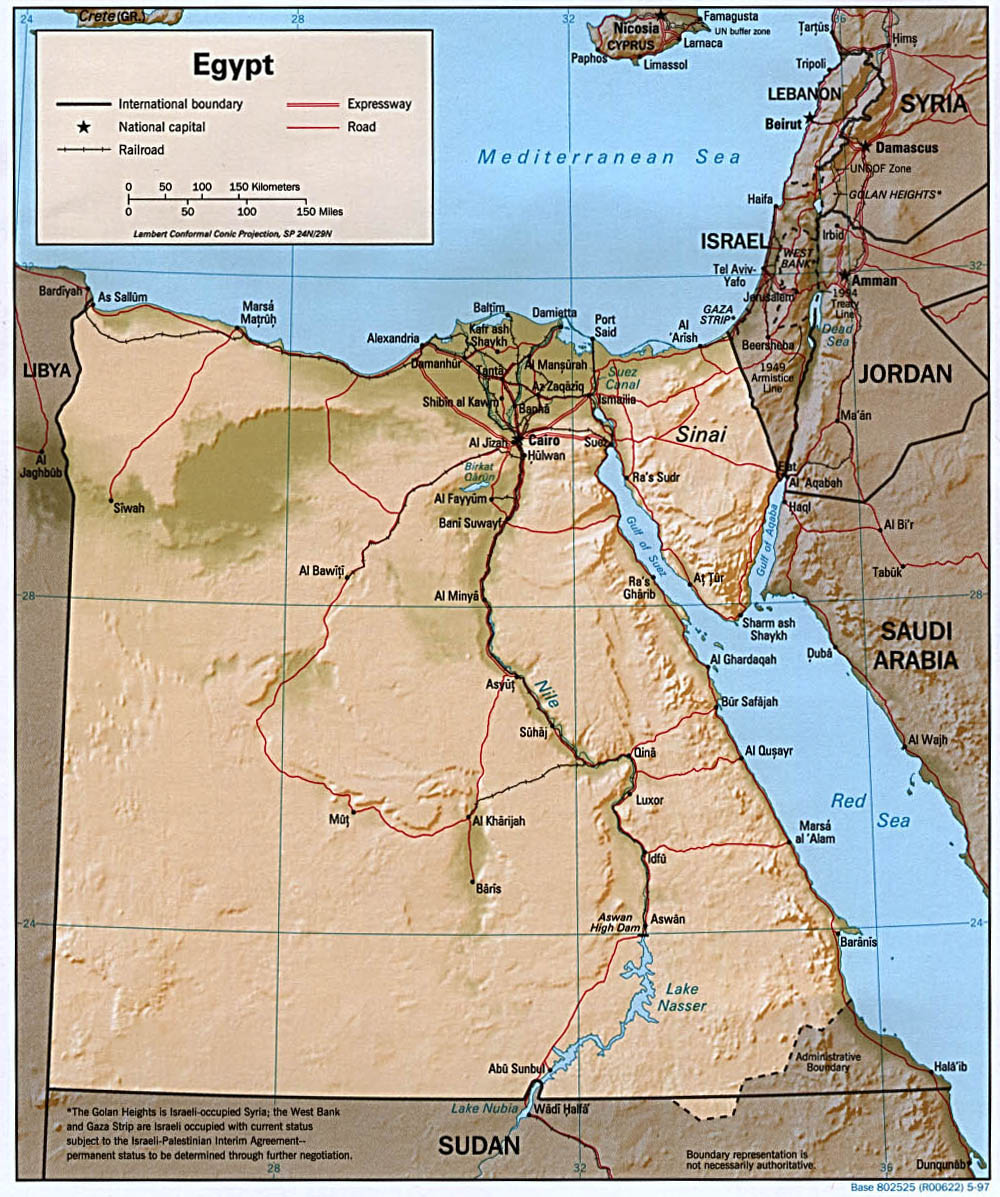
- Simple clickable map of Egypt.
- Need to learn about the black and red lands of Egypt? Click here for maps and helpful information.
- Ethiopian Highlands
- Outline map of Egypt.
Week 2: Pharaohs & Pyramids
- Egyptian Flora
- Egyptian Fauna
- A topographical map of Egypt.
- Maps of the Middle East and Egypt.
- Egypt for kids
Week 3: Egyptian Polytheism & the Judgment of God
- Colorful and informative site for pyramids and temples.
- Egyptian gods shows a chart of which deities were associated with the surrounding geography or wildlife.
- Pharaoh’s Obelisk from NOVA TV.
- Pyramid Design and Excavation from NOVA.
- Step Pyramid of Djoser
Week 4: Creation Through Noah
- An animated map of plate tectonics that helps LG & UG kids get an idea of how it might have happened.
- The Layered Earth
- Parents: preview sites, as may have different viewpoints. Animations showing possible breakup of Pangea. Read USGS site here. Also look at NASA’s version.Try out NASA’s kid page.
- Possible locations of the Garden of Eden: a biblical perspective.
- Recommended site for detail about the descendants of Noah, as well as a map.
- Noah’s descendants.
- Scroll down just a bit to “The Ancient World” to see the see where the sons of Noah settled.
Week 5: Abraham & Ancient Mesopotamian Civilizations
- More helps for learning about Mesopotamia: this site has an interactive map and interactive dramatization of crop management.
- Ancient trade routes that merchants took between the Persian Gulf and Egypt.
- Drastic consequences from climate change – more general information.
- Harvest dates as possible indications of climatic change in Ancient Mesopotamia.
- Mesopotamian climate change
- Ancient Mesopotamian foods includes recipe for making Baby Goat Stew – yum!
Week 6: The Patriarchs: From Canaan to Egypt
- Simple geography of the Promised Land.
- Detailed map of the Twelve Tribes of Israel.
- Trace Abraham’s journey here.
- Unique geography of the Promised Land explained here.
Week 7: In The Wilderness: The Tabernacle & the Law
- No objectives
Week 8: In The Wilderness: Holiness – Worshipping God as God
- No objectives
Week 9: In The Wilderness: Slaves to Warriors
- The Exodus from Egypt.
- Outline map of Egypt for review purposes.
Unit 2
Week 10: The Indus Valley, Hinduism, & Buddhism
- Very helpful map of the Canaanite tribes.
- Here’s a map of many Canaanite/Phoenician towns and cities
- More geography on India for you to peruse.
- Ancient Harappa in 3-D
- Maps of India
Week 11: Ancient China: Confucius & Taoism
- Tibetan Highlands
- Map of China.
- Discover the beauty of the land of China.
- Geography of China
- Most of the places listed in the Student Activity Pages are found here.
- Blank outline map of China.
- Enchanted Learning’s Quiz Printout of China.
Week 12: Ancient Americas
- Scroll down just a bit for some maps of where the Inuit lived.
- Map of Mesoamerica
- Yucatan Peninsula
Week 13: Early Greek Cultures of the Bronze Age
- Maps of Ancient Greece: links here and here.
- Homeric geography
- Maps for the Odyssey.
- Map Quiz printout from Enchanted Learning.
Week 14: Early Greek Cultures of the Archaic Period
- Aegean Sea: links here and here.
- What is a “Mediterranean climate”? Click here to find out.
- Great .pdf maps for the Aegean Sea.
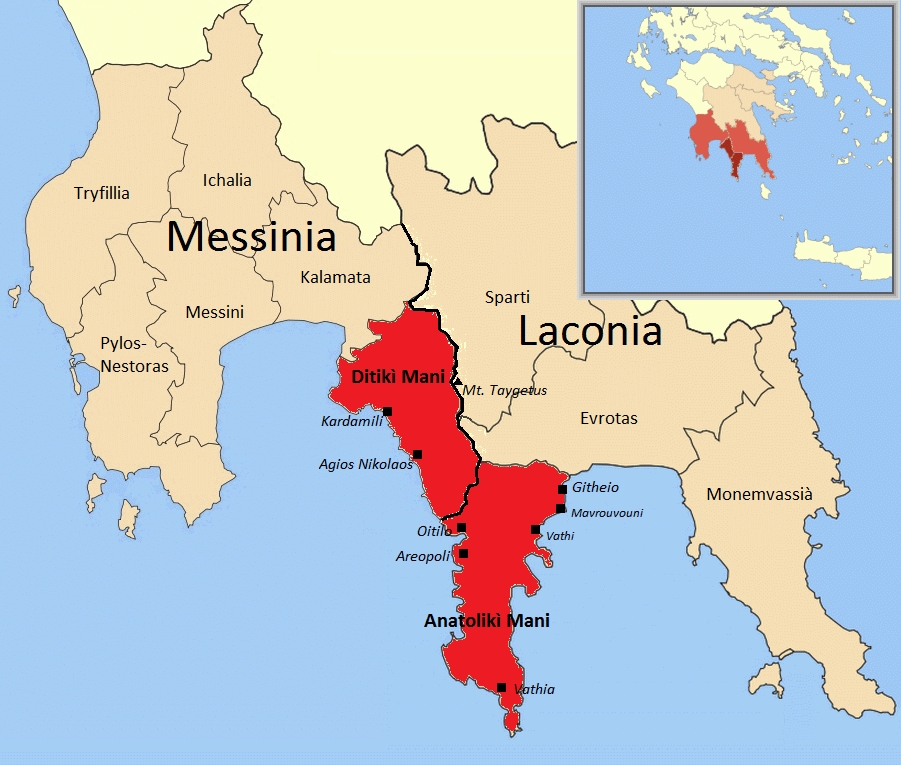
- Laconia and Messania
- National Geographic for Kids: Greece
- Mainland Greece.
- Geography of the Greek Peninsula
- The Greek Islands

Week 15: The Promised Land: Conquest & Settlement
- Topographical map of Israel
- Very helpful map of the Canaanite tribes.
- Map of Canaanite/Phoenician towns and cities.
- Land of Canaan
- Joshua’s Battle Route
Week 16: Israel’s Judges and Neighbors
- Ancient Near East site maps that you can download and use for map work this week.
- Ancient Israel: map
- Israel: blank outline maps from EnchantedLearning.com.
- The 12 Tribes of Israel.
Week 17: The Rise of Saul & the Philistines
- Geography of the Book of Samuel.
Week 18: King David and the Phoenicians
- Map showing Phoenician trade routes.
- Map showing Phoenician trading empire: colonies and lands they controlled.
- A comparison map showing the division of the 12 Tribes and the Empire of David and Solomon

Unit 3
Week 19: Solomon’s Divided Heart
- One map that may help you this week
- A comparison map showing the division of the 12 Tribes and the Empire of David and Solomon
- The Kingdom of Solomon.
- Trace the path of the International Coastal Highway.(click on the map to enlarge)
- Trace the path of the King’s Highway.
Week 20: The Divided Kingdom
- Map of the divided kingdoms
Week 21: The Assyrian Scourge: The Northern Kingdom Is Deported
Week 22: The Chaldeans (New Babylonians) and the Babylonian Captivity
Week 23: The Medes and Persians: The Israelites Return Home
- Really neat interactive map showing the Silk Road
- The Persian Royal Road
- Great map of the Persian Empire at its height. Shows the Royal Road.
Week 24: Persians and Greeks: The Persian Wars
- Map shows the interactions between the Greeks and Persians.
- Links to several maps of the Ancient Greek World.
- Excellent website about Ancient Greece: click on “geography”
Week 25: The Golden Age of Greece and the Peloponnesian Wars
- Enchanted Learning’s “Map of Greece Quiz/Coloring Printout”
- Excellent website about Ancient Greece: click on “geography”
- This map shows the natural resources of ancient Greece that helped them create enduring work of art and architecture. (Click on the natural resources map)
Week 26: Greek Achievements: Science, Mathematics, and Philosophy
Week 27: Alexander the Great: Preparation for Proclamation
- The Extent of the Hellenistic Empire under Alexander.
- Alexander’s Kingdom (after his death)
- Philip Arrhidaeus (Philip III)
- The History of Israel-Timeline

Unit 4
Week 28: The Etruscans and the Founding of Rome
- Map of the Etruscan League and cities. GREAT!
- Ancient Italy
- Etruscans and Greek Colonists
- Latium territory information can be found here.
- Apennine Mountains, Syracuse (Siracusa), and the Bay of Naples
- Alba Longa and the Tiber River
- Adriatic Sea, Tyrrhenian Sea, and the Gulf of Tarentum
- Magna Graecia
- Pompeii
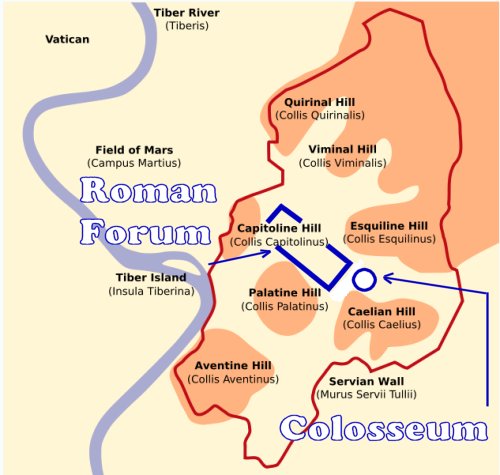
- Palatine Hill


Week 29: The Roman Republic: Everyday Life
- No objectives this week
Week 30: The Roman Republic Expands: The Punic Wars
- Map of the Carthaginian Empire.
- WONDERFUL interactive atlas of the scope of the Punic Wars. Click on the bullets below the map and get a super picture of the interactions between these two rivals over the span of about 150 years. Outstanding!
- The Pyrenees Mountains, Strait of Gibraltar, Bay of Biscay, and Mediterranean Sea are found on this map.
- The Iberian Peninsula
- The Italian Peninsula
- The Greek Peninsula
- Rivers of the Iberian Peninsula and the Balearic Islands are found on this map.
- The Canary Islands
- Cadiz, Malaga, and Barcelona
- Numidia and Carthage
- Greek and Carthaginian Colonies
- Path of the Punic Wars


Week 31: From Republic to Empire
Week 32: Imperial Rome: Backdrop to the Atonement
- Map of the Roman Empire in the time of Jesus.
- One more excellent map that will help you this week. Don’t miss this one!
- Ancient Italy
Week 33: The Zenith of Imperial Rome: Backdrop to the Early Church
- Neat map showing the spread of Christianity.
- One of several online maps showing Paul’s missionary journeys.
- Color map of Paul’s first or second missionary journey.
- Blank outline map for labeling the Mediterranean World (pdf file)
- The Diaspora
Week 34: Rome Decays: Saints and Martyrs of the Early Church
- No objectives this week
Week 35: Christianity Conquers Rome: Of Church Hierarchies
- Diocletian
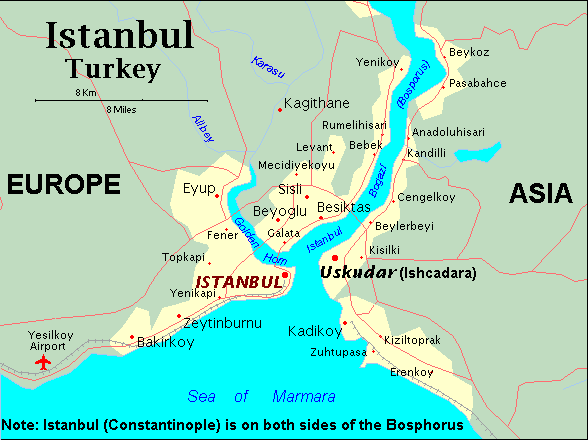
- Constantinople
- The Division of the Roman Empire.
- Where is Constantinople located in today’s world?
Week 36: Western Rome Falls: Theology and Church Councils
- Maps of the Roman Empire.
- Model Roman City
- Review Units 3 and 4.
Worldview
General
- If you and your children enjoy praying for different countries of the world, you will enjoy linking up with this page on Worldwide Missions. It contains statistics that give a clear picture of the prayer needs of various countries. Year 1 encourages you to lead your children in prayer for all Hindus and Buddhists. Look at this site to find those areas most in need!
- The “Ism” book online. Basic definitions that will help you in your worldview studies.
- Bible dictionary that you may find helpful during Year 1
- A user recommends the NIV Archaeological Study Bible ISBN: 031092605X
Unit 1 – The Books of Moses
Week 1: Curtain Rises on Egypt: Gift of the Nile
- Egyptian coloring pages for coloring or journal entries can be found here.
- From ChristianAnswers.net: Moses and the Burning Bush coloring page.
- A picture and a drawing of a paddle doll
- Reed Boat
- A great website that shows Ancient Egyptian boats!
- Make Egyptian jewelry: necklace and bracelet.
- Elements of design: color
Week 2: Pharaohs & Pyramids
- No helpful links this week.
Week 3: Egyptian Polytheism & the Judgment of God
- Article on Egyptian beliefs: Teacher only.
- Spurgeon’s sermons: Christ Our Passover and The Exodus.
Week 4: Creation Through Noah
- No helpful links this week.
Week 5: Abraham & Ancient Mesopotamian Civilizations
- Wonderful site on Mesopotamia.
- Summary of Sumerian mythology with pictures.
Week 6: The Patriarchs: From Canaan to Egypt
- Judaism: all kinds of useful information. Please pre-read, but wholesome for most children, I think, and a great help for teachers.
- God Calls Abram: worksheets from the book of Genesis.
- Rosh Hashanah guided learning from MyJewishLearning.com.
- Yom Kippur guided learning from MyJewishLearning.com.
- Abraham’s Family Tree
- Compare and contrast the Mosaic Covenant with the Abrahamic Covenant.
- All the links you’ll ever need about the Tabernacle, and Tabernacle models.
- Neat project for learning about the tabernacle!
- Jewish Prayer Services
Week 7: In The Wilderness: The Tabernacle & the Law
- Judaism: all kinds of useful information. Please pre-read, but wholesome for most children, I think, and a great help for teachers.
- God Calls Abram: worksheets from the book of Genesis.
- Rosh Hashanah guided learning from MyJewishLearning.com.
- Yom Kippur guided learning from MyJewishLearning.com.
- Abraham’s Family Tree
- Compare and contrast the Mosaic Covenant with the Abrahamic Covenant.
- All the links you’ll ever need about the Tabernacle, and Tabernacle models.
- Neat project for learning about the tabernacle!
- Jewish Prayer Services
Week 8: In The Wilderness: Holiness – Worshipping God as God
- Judaism: all kinds of useful information. Please pre-read, but wholesome for most children, I think, and a great help for teachers.
- God Calls Abram: worksheets from the book of Genesis.
- Rosh Hashanah guided learning from MyJewishLearning.com.
- Yom Kippur guided learning from MyJewishLearning.com.
- Abraham’s Family Tree
- Compare and contrast the Mosaic Covenant with the Abrahamic Covenant.
- All the links you’ll ever need about the Tabernacle, and Tabernacle models.
- Neat project for learning about the tabernacle!
- Jewish Prayer Services
Week 9: In The Wilderness: Slaves to Warriors
- Judaism: all kinds of useful information. Please pre-read, but wholesome for most children, I think, and a great help for teachers.
- God Calls Abram: worksheets from the book of Genesis.
- Rosh Hashanah guided learning from MyJewishLearning.com.
- Yom Kippur guided learning from MyJewishLearning.com.
- Abraham’s Family Tree
- Compare and contrast the Mosaic Covenant with the Abrahamic Covenant.
- All the links you’ll ever need about the Tabernacle, and Tabernacle models.
- Neat project for learning about the tabernacle!
- Jewish Prayer Services
Unit 2 – All Governments Are Established by God
Week 10: The Indus Valley, Hinduism, & Buddhism
Week 11: Ancient China: Confucius & Taoism
- Ancient Chinese Religion
- Learn more about Confucius here or here.
Week 12: Ancient Americas
- Indian mythology and Legends: Click on Native American Legends on the left and you can search the people groups alphabetically.
Week 13: Early Greek Cultures of the Bronze Age
- No helpful links this week.
Week 14: Early Greek Cultures of the Archaic Period
- No helpful links this week.
Week 15: The Promised Land: Conquest & Settlement
- No helpful links this week.
Week 16: Israel’s Judges and Neighbors
- A blank chart of Israel’s Judges and Peoples of Ancient Palestine worksheet. (pdf files)
Week 17: The Rise of Saul & the Philistines
- Who was the Philistine idol, Dagon, who fell down before the ark? The Catholic Encyclopedia online has a great short summary.
- A picture of Dagon, the fish-god.
Week 18: King David and the Phoenicians
- No helpful links this week.
Unit 3 – Preparing the World for its Savior
Week 19: Solomon’s Divided Heart
- Neat project for learning about the temple.
Week 20: The Divided Kingdom
- Worksheet about the Divided Kingdom
- Use these charts as you study the kings and prophets of the two kingdoms: Israel’s Kings and Prophets and Kings and Prophets. The two charts don’t always agree, especially in the case of Obadiah, but they are a helpful place to start.
Week 21: The Assyrian Scourge: The Northern Kingdom Is Deported
Week 22: The Chaldeans (New Babylonians) and the Babylonian Captivity
- No helpful links this week.
Week 23: The Medes and Persians: The Israelites Return Home
- Zoroastrianism, the religion of Persia.
Week 24: Persians and Greeks: The Persian Wars
Week 25: The Golden Age of Greece and the Peloponnesian Wars
Week 26: Greek Achievements: Science, Mathematics, and Philosophy
- No helpful links this week.
Week 27: Alexander the Great: Preparation for Proclamation
- Link to the texts of the books of Macabees:
- 1 Macabees (16 chapters)
- 2 Macabees (15 chapters)
- Overview and background information on Macabees from the Catholic Dictionary.
- Aristotle
- The Works of Aristotle
Unit 4 – In the Fullness of Time
Week 28: The Etruscans and the Founding of Rome
- No helpful links this week.
Week 29: The Roman Republic: Everyday Life
Week 30: The Roman Republic Expands: The Punic Wars
Week 31: From Republic to Empire
Week 32: Imperial Rome: Backdrop to the Atonement
- The Death and Resurrection of Jesus
- Book of Matthew
Week 33: The Zenith of Imperial Rome: Backdrop to the Early Church
Week 34: Rome Decays: Saints and Martyrs of the Early Church
- The Development of the Canons of the New Testament.
- Book of Galatians
Week 35: Christianity Conquers Rome: Of Church Hierarchies
- Constantine
- Book of Ephesians
- Apostolic Succession: Why don’t Protestants have a pope?
- What does the Bible say about the pope/papacy?
Week 36: Western Rome Falls: Theology and Church Councils
- Review Units 3 and 4.
Literature
General
- Great site! You can look up words and make your own glossary. Input the words you want included and push send. You will get a professional looking glossary of all your words. Best of all IT IS FREE!
- Highland Heritage has a number of resources you might love to use; however, there is no answer key for some of the literature helps.
- Norton online quizzes – Western Literature
- Judaism: all kinds of useful information. Pre-read before letting them loose, but wholesome for most children, I think.
Unit 1 – The Books of Moses
Week 1: Curtain Rises on Egypt: Gift of the Nile
- Ancient Egypt: the Mythology
Week 2: Pharaohs & Pyramids
- The Golden Goblet study questions.
- Ancient Egypt: the Mythology
- The Tale of Isis and Osiris
- The Sphinx and the Prince
Week 3: Egyptian Polytheism & the Judgment of God
- Khnemu of the Nile
- The Book of Thoth
- Se-Osiris and the Sealed Letter
- The Story of the Shipwrecked Sailor: links here and here
- The Greek Princess
- Ancient Egypt: the Mythology
Week 4: Creation Through Noah
- Egyptian Creation Mythology
- Lower and Upper Kingdom creation myths
- Flood Stories from Around the World.
Week 5: Abraham & Ancient Mesopotamian Civilizations
- You’ll definitely want to read “The Flood of Noah and the Flood of Gilgamesh” from the Institute for Creation Research. Look for the chart of parallels midway down the page. For Rhetoric students and teacher information.
- Another excellent choice is from Answers in Genesis: “Noah’s Flood and the Gilgamesh Epic”.
- Free copy of the Epic of Gilgamesh in translation.
- Gilgamesh summarized, good detailed summary. If you would like to edit your students reading of the lewd parts of the story, you can read here and find where they are and avoid them. A good “in between” site for students too advanced for picture books and not quite ready for the actual text! You can get the full tale from this site!
- Gilgamesh questions
Week 6: The Patriarchs: From Canaan to Egypt
- No helpful links this week.
Week 7: In The Wilderness: The Tabernacle & the Law
- Shabbat Stories for children.
Week 8: In The Wilderness: Holiness – Worshipping God as God
- Good information about Rosh Hashanah.
- The Jewish holiday of Yom Kippur.
Week 9: In The Wilderness: Slaves to Warriors
- A good explanation of the Passover.
Unit 2 – All Governments Are Established by God
Week 10: The Indus Valley, Hinduism, & Buddhism
- Very good site on Indian mythology. Supervise students: all ages.
Week 11: Ancient China: Confucius & Taoism
Week 12: Ancient Americas
- At this excellent site, read in translation from the original Creation myth of the Ancient Mayans, Popol Vuh.
- Indian mythology and Legends: Click on Native American Legends on the left and you can search the people groups alphabetically.
Week 13: Early Greek Cultures of the Bronze Age
- Spark Notes for The Iliad
- By Right of Conquest – online book.
Week 14: Early Greek Cultures of the Archaic Period
- A fun link for Greek mythology and learning about Greek gods
- The Odyssey, a short version and a detailed version from this website.
- By Right of Conquest – online book.
Week 15: The Promised Land: Conquest & Settlement
- No helpful links this week.
Week 17: The Rise of Saul & the Philistines
- An excellent study guide for the book Hittite Warrior (.pdf file). If warning comes up for your Adobe Reader click cancel and the page will load.
Week 18: King David and the Phoenicians
- No helpful links this week.
Unit 3 – Preparing the World for its Savior
Week 19: Solomon’s Divided Heart
- Scroll almost all of the way down for an excellent study guide for the King Solomon and the Queen of Sheba. Includes comprehension questions and tests. (Dig around…this is a very helpful site!)
Week 20: The Divided Kingdom
Week 21: The Assyrian Scourge: The Northern Kingdom Is Deported
- Click here for worksheets on Jonah.
- Jonah (NIV), Amos (NIV, KJV). Just the first chapter of each will come up. You’ll have to click on “next chapter” to continue reading.
Week 22: The Chaldeans (New Babylonians) and the Babylonian Captivity
Week 23: The Medes and Persians: The Israelites Return Home
- Study guide for the book of Esther
Week 24: Persians and Greeks: The Persian Wars
- All you need to know about Greek theatre.
- A simpler, shorter summary of Greek theatre with some good pictures. Suitable for Dialectics and up independently, and you can read aloud from this site to youngersMiddle students and up can read independently, read aloud for younger students.
- Spark Notes and summaries for: Agamemnon, Antigone, and Oedipus the King. You may want to make sure the subject matter is not too much for your child.
- Spark notes for The Libation Bearers
- The complete Xenophon is here: you’d choose the Anabasis if you want to read Xenophon.
- Great site: all the Aesop’s Fables you’ll ever need! All ages, but supervision is recommended. (We’ve not previewed this entire site, and it seems that stories from other sources are also posted.)
Week 25: The Golden Age of Greece and the Peloponnesian Wars
- Spark Notes and summary for Medea. You may want to make sure the subject matter is not too much for your child. Here is another wonderful guide to Medea.
- Great site: all the Aesop’s Fables you’ll ever need! All ages, but supervision is recommended. (We’ve not previewed this entire site, and it seems that stories from other sources are also posted.)
Week 26: Greek Achievements: Science, Mathematics, and Philosophy
- An introduction to Greek tragedy.
- All you need to know about Greek theatre.
- A simpler, shorter summary of Greek theatre. Middle students and up can read independently, read aloud for younger students.
- Background on Plato’s Apology.
- The text of Plato’s Apology to read on screen or print and read.
- Text of Euthyphro to read/print.
Week 27: Alexander the Great: Preparation for Proclamation
- Background on the true Eratosthenes. How does this week’s story for young children compare with known facts from this resource?
- Plato’s Crito to read on screen or print and read.
- Plato’s Phaedo to read on screen or print and read.
Unit 4 – In the Fullness of Time
Week 28: The Etruscans and the Founding of Rome
Week 29: The Roman Republic: Everyday Life
- The Story of the Aeneid. Summary information for the teacher, but will also work as a good substitute for a Dialectic student.
- The Aeneid
- Spark Notes for The Aeneid.
- Short review for In Search of a Homeland
Week 30: The Roman Republic Expands: The Punic Wars
- The Story of the Aeneid. Summary information for the teacher, but will also work as a good substitute for a Dialectic student.
- The Aeneid
- Spark Notes for The Aeneid
Week 31: From Republic to Empire
- Here is the full version of Gallic Wars by Julius Caesar.
- The Story of the Aeneid. Summary information for the teacher, but will also work as a good substitute for a Dialectic student.
- The Aeneid
- Spark Notes for The Aeneid.
Week 32: Imperial Rome: Backdrop to the Atonement
- Here is the full version of Gallic Wars by Julius Caesar.
Week 33: The Zenith of Imperial Rome: Backdrop to the Early Church
Week 34: Rome Decays: Saints and Martyrs of the Early Church
Week 35: Christianity Conquers Rome: Of Church Hierarchies
- No helpful links this week.
Week 36: Western Rome Falls: Theology and Church Councils
Writing
General
- Here’s a great site to bookmark for all your graphic organizing needs and questions. What is a Graphic Organizer?
- If you would like to make personalized graphic organizers, click here.
- This site can be for reviewing parts of speech. Activities include matching, concentration, flash cards, and a word search.
- Click here for another grammar game.
- Make online crossword puzzles here or here. These are great for reviewing vocabulary!
- Daily Grammar Excellent site!
- At the right is a picture one of our users sent in of the sentence pocket suggested in Marcia’s introductory notes. Click on the picture to see all the details up very close!
- Online Writing Lab
- Transition words for writing.
- Great speech outline: .pdf file
SAT Preparation:
- The SAT online question of the day
- Go to this site to answer almost any question you may have about taking the SAT, PSAT, and more.
- Great test preparation site. Looks great!
- SAT Vocabulary Words
- 5000 Collegiate Words with Brief Definitions
- SAT Flash Cards
Writing College Admissions Essays
Evaluations and Rubrics:
- A great link for evaluating writing in grades 2-5. An interactive rubric for the student to use as a checklist.
- Click here to evaluate writing for grades 6-8. Another great interactive student checklist!
- I recommend you show a student his grading rubric (or better yet, have him help you develop one!) before he starts his project or writing assignment. Click here to develop rubrics automatically from this site for most types of evaluations!
Unit 1 – The Books of Moses
Week 1: Curtain Rises on Egypt: Gift of the Nile
- Level 1: Click here or here for some neat online activities as you are teaching nouns. Use next week too!
- Level 2: Nouns
- Levels 3-7: For reviewing the steps in the writing process, click here.
- Levels 8-11: More advanced explanation of steps in the writing process.
Week 2: Pharaohs & Pyramids
- Level 1: Coloring pages: Moses, Pharaoh, the pyramids and more
- Level 2: Pronouns
- Levels 3-6: Sample dictation sentences from the Bible
- Levels 4-11: Sense chart (pdf file), Describing wheel (pdf file), Cluster diagram (pdf file)
- Level 5: Parts of Speech songs by Schoolhouse Rock.
- Levels 7-8: Cluster diagram for more middle level students (pdf file)
- Levels 9-11: More advanced Cluster diagram for oldest student, T-chart (pdf)
- Level 12: More advanced explanation of steps in the writing process
Week 3: Egyptian Polytheism & the Judgment of God
- Level 1: Coloring page of Israel being delivered from Egypt.
- Level 2: Worksheet reviewing simple tenses.
- Level 2: Grammar Worksheets
- Level 3: Review the parts of speech with this online game.
- Level 3: Parts of Speech song and Schoolhouse Rock songs!
- Levels 3-6: Sample dictation sentences from the Bible.
- Levels 9-11: Common Proofreading Symbols
Week 4: Creation Through Noah
- Level 1: Coloring pages: Adam and Eve and Noah’s Ark.
- Level 2: Grammar Worksheets
- Level 3: This site can be used as you are teaching or reviewing the parts of speech. You’ll enjoy matching, concentration, flash cards, and a word search.
- Levels 3-6: Sample dictation sentences from the Bible.
- Levels 4-12: If you are beginning to learn or review prepositions this week in grammar, click here for a crossword puzzle that will reinforce this knowledge.
- Levels 4-12: Another review: A preposition word search.
Week 5: Abraham & Ancient Mesopotamian Civilizations
- Level 1: Ancient Egypt coloring pages.
- Levels 3-5: Venn diagram, Cluster diagram (pdf file), describing wheel (pdf file), 5 W’s Chart (pdf file)
- Levels 3-6: Sample dictation sentences from the Bible.
- Levels 3-6: Steps in the writing process
- Levels 6-9: Types of paragraphs: expository, descriptive, narrative, and persuasive.
- Levels 10-11: Formal Outlines
- Level 12: Classical Comparison Paper
Week 6: The Patriarchs: From Canaan to Egypt
- Level 3: Cluster diagram (pdf file)
- Levels 3-6: dictation sentences from the Bible.
- Levels 10-11: Analytical Essay
Week 7: In The Wilderness: The Tabernacle & the Law
- Level 1: Click here for instructions on making a game for learning prepositions. Looks like fun!
- Level 2: Grammar Worksheets
- Level 3: Cluster diagram (pdf file)
- Levels 3-6: Sample dictation sentences from the Bible.
- Levels 4-5: 5 W’s Chart (pdf file), Cluster diagram (pdf file)
- Levels 6-7: Cluster Diagram for more middle level students (pdf file)
- Level 8: Transition words
- Level 9: More advanced cluster diagram for oldest students.
- Level 11: Go to these sites for helps and practice college application essays:
- Princeton Review has loads of helpful information, and we found this very interesting page there.
- Interested in Business schools? Princeton Review has this article on writing essays for admission to them.
- AdmissionsEssays.com. Click on “college”, then scroll down and click on “FREE step by step analysis, structure, and writing guide!” Or, here is the direct link.
- College Application Essays: written from a secular perspective, but with some helpful hints.
- Sample College Essays
Week 8: In The Wilderness: Holiness – Worshipping God as God
- Level 2: For further help with learning the steps of the writing process, click here.
- Level 3: Describing wheel (pdf file)
- Levels 3-6: Sample dictation sentences from the Bible.
Week 9: In The Wilderness: Slaves to Warriors
- Level 3: Very simple story map (pdf file).
- Levels 3-6: Sample dictation sentences from the Bible.
Unit 2 – All Governments Are Established by God
Week 10: The Indus Valley, Hinduism, & Buddhism
- Level 2: Sense chart (pdf file), Describing wheel (pdf file)
- Level 3: Venn diagram
- Level 6: Story Map
Week 11: Ancient China: Confucius & Taoism
- Level 1: Need extra worksheets for working on capitalization? Click here.
- Level 2: Cluster diagram (pdf file)
- Level 3: Venn diagram
Week 12: Ancient Americas
- Level 2: Very simple story map (pdf file)
- Level 3: Venn diagram
- Levels 4-5: Use an online dictionary/thesaurus.
- Levels 4-5: Online thesaurus
- Levels 4-5: Using a Thesaurus
Week 13: Early Greek Cultures of the Bronze Age
- Levels 1-8: Scholastic site for writing and publishing your own poetry.
- Levels 3, 6, 8: For more helps in teaching your poetry unit, click here.
- Levels 3, 6, 8, 10: For further helps on teaching your poetry unit, click here.
- Levels 4-5: Cluster diagram (pdf file)
Week 14: Early Greek Cultures of the Archaic Period
- Level 1: Greek Myth coloring pages. Click on the right side of the screen.
- Level 2: Cluster diagram (pdf file)
- Levels 3, 6: You won’t want to miss this site for teaching your poetry unit. Excellent!
- Levels 3, 6, 8, 10: For further helps on teaching your poetry unit, click here and here.
Week 15: The Promised Land: Conquest & Settlement
- Level 2: Cluster diagram (pdf file)
- Levels 3, 6, 8: A poetry page on haiku with links to other websites.
Week 16: Israel’s Judges and Neighbors
- Level 2: Cluster diagram (pdf file)
- Level 3: Learn to write a cinquain.
- Level 6, 8, 10: Learn to write a limerick.
- Level 7: Describing wheel (pdf file) or sense chart (pdf file)
- Level 11: Story map
- Level 12: Instructions for building your own website.
Week 17: The Rise of Saul & the Philistines
- No links.
Week 18: King David and the Phoenicians
- Levels 3, 6, 8, 10: Use this site for your lesson on Hebrew poetry.
- Levels 4-5: Here is a cover that you can use for your state notebook. (pdf file)
- Levels 4-5: Click here for a ready-to-use Table of Contents for your notebook. (pdf file)
- Level 9: Grading rubric for writing a research paper.
- Level 12: Review this site for an extensive list of business communiques.
Unit 3 – Preparing the World for its Savior
Week 19: Solomon’s Divided Heart
- Level 1: Cluster diagram (pdf file)
- Levels 2, 4, 7: Newspaper writing
- Level 3: Describing wheel (pdf file), Story Map, Cluster diagram (pdf file)
- Level 5: Story map
- Level 9: Finding and Gathering the News
Week 20: The Divided Kingdom
- Level 1: Cluster diagram (pdf file)
- Levels 2, 4, 7: Newspaper writing
- Level 3: Describing wheel (pdf file), Story Map, Cluster diagram (pdf file)
- Level 5: Story map
- Level 6: Guidelines for a business letter
- Level 8: Literary terms
Week 21: The Assyrian Scourge: The Northern Kingdom Is Deported
- Level 1: Cluster diagram (pdf file)
- Levels 2, 4, 7: Newspaper writing
- Level 3: Describing wheel (pdf file), Story Map, Cluster diagram (pdf file)
- Level 5: Story map
- Level 6: Internet Safety, Kid Rules for Online Safety, and Criteria to Evaluate the Credibility of WWW Resources
- Level 10: Venn Diagram (pdf file) to use for prewriting
- Level 11: Good site, with an example definition essay.
Week 22: The Chaldeans (New Babylonians) and the Babylonian Captivity
- Level 1: Cluster diagram (pdf file)
- Level 1: Coloring page: Daniel
- Levels 2, 4, 7: Newspaper writing
- Levels 3, 6: Story Map
- Levels 3, 6, 9: Learn how to write plays from the Scholastic website
- Level 5: Story map
- Level 10: Venn Diagram (pdf file) to use for prewriting
Week 23: The Medes and Persians: The Israelites Return Home
- Level 1: Cluster diagram (pdf file)
- Levels 2, 4, 7: Newspaper writing
- Levels 3, 6, 9: Learn how to write plays from the Scholastic website.
- Level 5: Story map
- Level 10: Venn Diagram (pdf file) to use for prewriting
Week 24: Persians and Greeks: The Persian Wars
- Level 1: Cluster diagram (pdf file)
- Levels 2, 4, 7: Newspaper writing
- Levels 3, 6, 9: Learn how to write plays from the Scholastic website.
- Level 5: Cluster diagram (pdf file)
- Level 5: Fifth grade book report instructions and outline form
- Level 8: Venn Diagram (pdf file) to use for prewriting
- Levels 10-12: If you are interested in a formal debate and communications association, read more at National Christian Forensics and Communications Association.
Week 25: The Golden Age of Greece and the Peloponnesian Wars
- Level 1: Cluster diagram (pdf file)
- Levels 2, 4, 7: Newspaper writing
- Levels 3, 6, 9: Learn how to write plays from the Scholastic website.
- Level 5: Cluster diagram (pdf file)
- Level 8: Venn Diagram (pdf file) to use for prewriting
- Levels 10-12: Detailed site explaining how to debate.
- Levels 10-12: Learn about debates from the HSLDA website.
- Levels 10-12: If you are interested in a formal debate and communications association, read more at National Christian Forensics and Communications Association.
Week 26: Greek Achievements: Science, Mathematics, and Philosophy
- Level 1: Cluster diagram (pdf file)
- Level 1: Coloring page of Greek pottery
- Levels 2, 4, 7: Newspaper writing
- Level 5: Cluster diagram (pdf file)
- Levels 6, 8, 9: Venn diagram
- Levels 10-12: Detailed site explaining how to debate.
- Levels 10-12: Learn about debates from the HSLDA website.
- Levels 10-12: If you are interested in a formal debate and communications association, read more at National Christian Forensics and Communications Association.
Week 27: Alexander the Great: Preparation for Proclamation
- Level 1: Cluster diagram (pdf file)
- Level 2, 4, 7: Newspaper writing
- Level 5: Cluster diagram (pdf file)
- Levels 6, 8, 9: Venn diagram
- Levels 10-12: Detailed site explaining how to debate.
- Levels 10-12: Learn about debates from the HSLDA website.
- Levels 10-12: If you are interested in a formal debate and communications association, read more at National Christian Forensics and Communications Association.
- How to write business letters.
Unit 4 – In the Fullness of Time
Week 28: The Etruscans and the Founding of Rome
- Levels 1, 4: 12 Essential Paragrah and Essay Writing Skills Exercises and Worksheets (including cluster diagrams) (pdf file)
- Levels 2, 4: Teaching story maps (pdf file)
- Level 5: Biography Worksheet (pdf file)
- Level 5: A user recommends Note Taking By Crayon for this week’s biography paper.
- Levels 8, 9: A checklist for taking essay tests.
Week 29: The Roman Republic: Everyday Life
- Level 1: Very simple instructions for writing friendly letters.
- Levels 3, 5: 12 Essential Paragraph and Essay Writing Skill Exercises and Worksheets (including cluster diagrams) (pdf file)
- Level 3: Basic information about expository writing.
- Levels 8, 9: A checklist for taking essay tests.
Week 30: The Roman Republic Expands: The Punic Wars
- Level 1: 12 Essential Paragraph and Essay Writing Skill Exercises and Worksheets (including cluster diagrams) (pdf file)
- Level 2: Teaching story maps(pdf file)
- Level 3: Basic information about descriptive writing.
- Level 5: Biography Worksheet (pdf file)
- Level 7: Write a book report.
- Level 10: Write a biography.
Week 31: From Republic to Empire
- Level 1: 12 Essential Paragraph and Essay Writing Skill Exercises and Worksheets (including cluster diagrams)(pdf file)
- Level 2: Teaching story maps.
- Level 7: Essay Writing: Writer’s Checklist (pdf file)
- Level 8: A Character Sketch and Advanced Story Map: scroll down to the attached worksheet
- Level 10: Write a biography.
Week 32: Imperial Rome: Backdrop to the Atonement
- Level 1: Cluster diagram (pdf file)
- Level 2: A very simple story map. (pdf file)
- Level 6: How to write a research paper.
- Level 8: A nice character sketch form.
- Level 9: Write a speech.
- Level 10: Write a biography.
Week 33: The Zenith of Imperial Rome: Backdrop to the Early Church
- Level 1: Cluster diagram (pdf file)
- Level 2: Great information on how to write a book report.
- Levels 4, 5, 7, 9: Write a speech.
- Level 6: How to write a research paper.
- Level 8: A nice character sketch form.
Week 34: Rome Decays: Saints and Martyrs of the Early Church
- Levels 4, 5, 7, 9: Write a speech.
- Level 6: How to write a research paper.
- Level 8: A nice character sketch form.
- Level 10: Business Letters, Memos, Resumes
Week 35: Christianity Conquers Rome: Of Church Hierarchies
- Levels 4, 5, 7, 9: Write a speech.
- Level 6: How to write a research paper.
- Level 8: A nice character sketch form.
- Level 10: Instructions for building your own website.
Week 36: Western Rome Falls: Theology and Church Councils
Level 10: Instructions for building your own website.
Levels 4, 5, 7, 9: Write a speech.
Level 6: How to write a research paper.
Level 8: A nice character sketch form.
Government
General
- Massive site: teacher’s use, probably, initially, although you’ll use it to find sites for your children. If they want to read the originals, here they are!
- All ages will love this site on US Government. This site transcends unit boundaries. It’s GREAT!
Unit 1 – Napoleon’s World
Week 1: When John Adams Was President
- The Declaration of Independence and the Bill of Rights
- The Declaration of the Rights of Man – 1789
Week 2: Napoleon: The Man and His Career
- The History Guide: The Code Napoleon
Week 3: Early Industrial Revolution
- FAQs about the Code Napoleon. You can also follow a link here about the Code Napoleon.
- Read excerpts from the Code here.
Week 4: Jefferson and the Louisiana Purchase
Week 5: Jefferson and the Supreme Court
- No links for this week.
Week 6: Madison and the War of 1812
- Democracy in America, by Alexis De Tocqueville
Week 7: Reshaping Europe and South America
- Democracy in America, by Alexis De Tocqueville
Week 8: South America in Transition
Week 9: Monroe and the American Hemisphere
- Democracy in America, by Alexis De Tocqueville
Unit 2 – The Age of Industry & Expansion
Week 10: John Quincy Adams and Political Realignments
- Democracy in America, by Alexis De Tocqueville
Week 11: Jacksonian Democracy
- Democracy in America, by Alexis De Tocqueville
Week 12: Revolutions in Texas & Europe
Week 13: Victorian England
Week 14: Victorians at Home and Abroad
- Australian government
- Definition of commonwealth
- Tocequeville
Week 15: Manifest Destiny
Week 16: Sea to Shining Sea
Week 17: The Oregon Trail
- No links for this week.
Week 18: 1848: Gold Dust & Gunpowder
- 15-chapter online biography of Karl Marx. Mature Rhetoric students only.
- Spark Notes: The Communist Manifesto
Unit 3 – Nations Uniting & Dividing
Week 19: Westerners in Asia
Week 20: Franklin Pierce & the Crimean War
Week 21: America Divides & Italy Unites
- No links for this week.
Week 22: Lincoln and the Start of the Civil War
- No links for this week
Week 23: Decisive Years of the Civil War
Week 24: Closing Years of the Civil War
- The Thirteenth Amendment
- The Civil Rights Act of 1866
- President Johnson’s Veto message of the Civil Rights Act
Week 25: Andrew Johnson vs. Radical Reconstruction
- No links for this week.
Week 26: Ulysses Grant & the Plains Indians Wars
- No links for this week.
Week 27: Technological Progress & the Unification of Germany
- No links for this week.
Unit 4 – The Gilded Age
Week 28: Introducing Africa and Reforming Empires
Week 29: The Scramble for Empire
- No links for this week.
Week 30: Imperialism and Culture
Week 31: Waves of Immigrants
Week 32: Captains of Industry
Week 33: Labor Issues and the New South
Week 34: Farmers, Populists, Gold Strikes and Gold Standards
Week 35: Powerful Men and Inspiring Women
Week 36: The Balkan Problem & American Imperialism
- No links for this week.
Arts & Activities
General
- Use this site for great pictures when making lap books.
- Great Studio Projects in Art History by William Reid (ISBN 0825138523): This art history project book can be used in all four year-plans! There are 80 projects and the time period goes through the 1980’s.
- Here’s real help with Feast Nights: food timeline and recipes galore! Enjoy!
- Cookie Dough Recipe: A great alternative to salt dough maps.
- 2 c. smooth peanut butter
- 2 1/2 c. powdered milk
- 2 1/2 c. powdered sugar
- 2 c. white corn syrup
- Blue icing – lakes and oceans
- Green sprinkles – plains
- Clear sprinkles – deserts
- Chocolate chips – mountains
- Red candy strips – rivers
- M&Ms – capitals
- Try Crayola’s Model Magic: a great lightweight soft modeling substance. It air-dries quickly, and after it’s dry, it can be sanded, painted, or decorated. Model magic can replace Fimo for most projects suggested in Tapestry.
Unit 1 – The Books of Moses
Week 1: Curtain Rises on Egypt: Gift of the Nile
- Egyptian coloring pages for coloring or journal entries can be found here.
- From ChristianAnswers.net: Moses and the Burning Bush coloring page.
- A picture and a drawing of a paddle doll
- Reed Boat
- A great website that shows Ancient Egyptian boats!
- Make an Egyptian paddle doll.
- Make Egyptian jewelry: necklace and bracelet.
- Elements of design: color
Week 2: Pharaohs & Pyramids
- Link for making mummies!
- A Clip art gallery for Egypt.
- Tomb painting examples for your project. Be sure to click on the next part at the end of each section. Gives a full display of Egyptian art.
- Great Pyramid of Khufu (pdf to download and assemble)
- Make Pharaoh’s double crown.
- Make bricks like the Ancient Egyptians!
- Sphinx pdf to download and assemble.
- Sphinx pictures to aid your carving project.
- Questions about and suggestions for brick making.
- Let’s Do Dewey
Week 3: Egyptian Polytheism & the Judgment of God
- Egyptian idol pictures for you to draw: here or here
- How to make your own Egyptian clothing
- Use a paper plate to make an Ancient Egyptian collar!
- Create music with an Ancient Egyptian sistrum!
Week 4: Creation Through Noah
- Here is a fun coloring page for Noah and the Ark.
- Find coloring pages for the Creation and Noah and the Flood on these sites.
- Here is a good Creation word search from ChristianAnswers.net
- D is for Dinosaur teaching notes and coloring pages
- Tintoretto’s Creation of the Animals
- Tiepolo’s Creation of the Universe
- Michelangelo’s The Creation of the Heavens
Week 5: Abraham & Ancient Mesopotamian Civilizations
- Play the Royal Game of Ur. Make your own game board and learn the rules (recently discovered!) from this great site! See a picture of the actual Royal Game of Ur board by clicking here.
- Learn about the explorations of an archaeologist named C. Leonard Woolley, and explore four royal tombs found in Mesopotamia. Choose tomb 779 on Woolley’s diagram to see the Standard of Ur that Woolley discovered.
- Sumerian Art
- Sumerian Votive Statues
- Model Ziggurat temple (pdf)
- The Royal Stand of Ur
- FREE download of a board game about Mesopotamia.
- Tower of Babel by Pieter Bruegel the Elder
- Tower of Babel painting by Master of the Duke of Bedford
- The Finding of Moses by Paolo Veronese
- Students can make their own ziggurat by following instructions found here


*Recipes/Seder information under week 9
Week 6: The Patriarchs: From Canaan to Egypt
- Judaism: all kinds of useful information. Please pre-read, but wholesome for most children, I think, and a great help for teachers.
- All the links you’ll ever need about the Tabernacle, and Tabernacle models.
- Neat project for learning about the tabernacle!
- Buy tabernacle model kits here.
- Excellent pictures of a Tabernacle model that may help in building your own.
- The Jewish Calendar and Sacred Festivals.
- God Calls Abram worksheets for younger children. (pdf)
- Abraham and Isaac etching by Rembrandt
- Rembrandt’s Abraham
- How to draw the Star of David.
- Great website on Ancient Egyptian clothing.
- Listen to a shofar.
- Learn how to make Shabbat candles.
- Printable activities for Passover.
- The family tree of Terah.
- Make a cardboard box loom.
- Make some tasty, kid-friendly lentil stew!
- Various Lentil Stew Recipes
- Tabernacle Cards: great activity with detailed pictures.
- Build a Tabernacle: Full color, 3D, printable model of the tabernacle.
Week 7: In The Wilderness: The Tabernacle & the Law
- *Recipes/Seder information under this section
- Judaism: all kinds of useful information. Please pre-read, but wholesome for most children, I think, and a great help for teachers.
- All the links you’ll ever need about the Tabernacle, and Tabernacle models.
- Neat project for learning about the tabernacle!
- Buy tabernacle model kits here.
- Excellent pictures of a Tabernacle model that may help in building your own.
- The Jewish Calendar and Sacred Festivals
- Abraham and Isaac etching by Rembrandt.
- Rembrandt’s Abraham
- How to draw the Star of David.
- How to make Ten Commandments clay tablets.
- Make a mini model of the Tabernacle!
- Make a Jewish calendar!
- Listen to a shofar.
- Color pages about Jewish holidays.
- Learn how to make Shabbat candles.
- Printable activities for Passover.
- The family tree of Terah.
- Make a cardboard box loom.
- Tabernacle Cards: great activity with detailed pictures.
- Build a Tabernacle: Full color, 3D, printable model of the tabernacle.
- The Finding of Moses
- Make Shabbat candles.
- Make Challah bread.
Week 8: In The Wilderness: Holiness – Worshipping God as God
- *Recipes/Seder information under this section
- Judaism: all kinds of useful information. Please pre-read, but wholesome for most children, I think, and a great help for teachers.
- All the links you’ll ever need about the Tabernacle, and Tabernacle models.
- Neat project for learning about the tabernacle!
- Buy tabernacle model kits here.
- Excellent pictures of a Tabernacle model that may help in building your own.
- The Jewish Calendar and Sacred Festivals
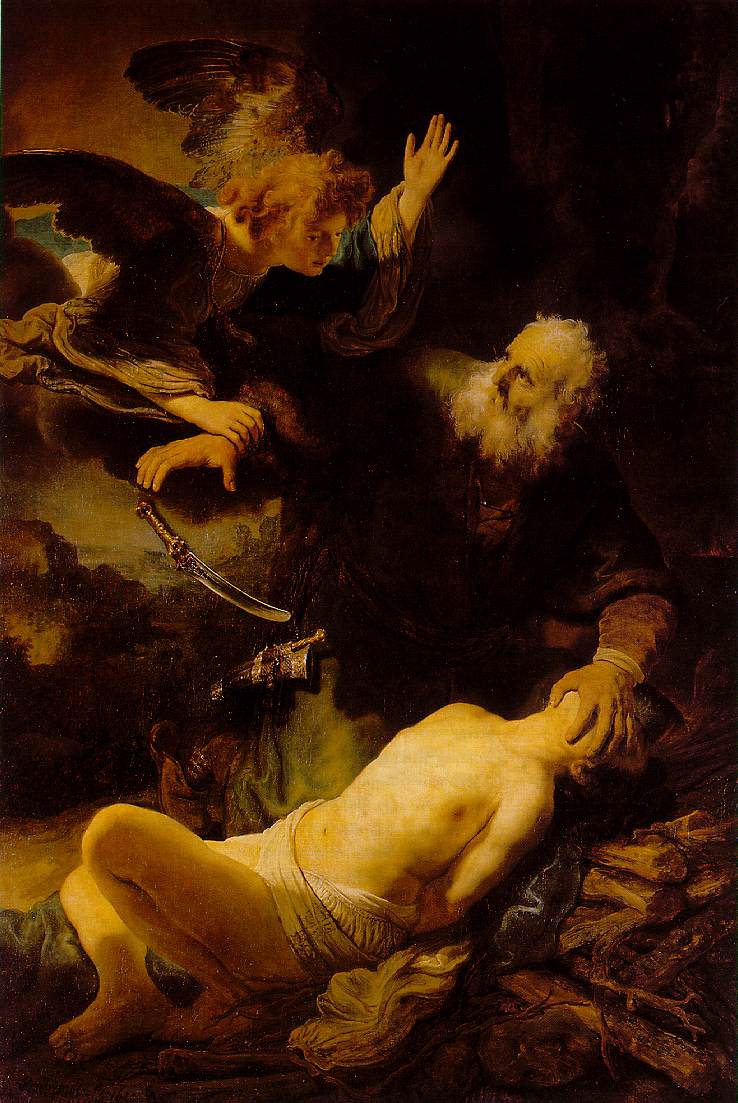
- Abraham and Isaac etching by Rembrandt.
- Rembrandt’s Abraham
- How to draw the Star of David.
- Video on how to make a trumpet like the Ancient Israelites!
- Map of the Israelite camp.
- Listen to a shofar.
- Color pages about Jewish holidays.
- Learn how to make Shabbat candles.
- Printable activities for Passover.
- Neat family tree of Terah.
- Make a cardboard box loom.
Week 9: In The Wilderness: Slaves to Warriors
- *Recipes/Seder information under this section
- Judaism: all kinds of useful information. Please pre-read, but wholesome for most children, I think, and a great help for teachers.
- All the links you’ll ever need about the Tabernacle, and Tabernacle models.
- Neat project for learning about the tabernacle!
- Buy tabernacle model kits here.
- Excellent pictures of a Tabernacle model that may help in building your own.
- The Jewish Calendar and Sacred Festivals
- Abraham and Isaac etching by Rembrandt.
- Rembrandt’s Abraham
- How to draw the Star of David.
- Listen to a shofar.
- Color pages about Jewish holidays.
- More color pages: Shabbat or Torah.
- Learn how to make Shabbat candles here.
- Printable activities for Passover.
- The family tree of Terah.
- Make a cardboard box loom.
*Seder/Recipes:
- Go to this site and prepare a Seder plate online! (Interactive activity, especially good for kids to do while you prepare the actual Celebration!)
- Planning a Seder for your unit-celebration? Click here for information.
- Family Seder Meal
- Challah Bread Recipe
- Egyptian Lentil Stew Recipe
- Egyptian Fig Cakes
- Introduction to a Christian Seder.
Unit 2 – All Governments Are Established by God
Week 10: The Indus Valley, Hinduism, & Buddhism
- Great information on carving stone. Many types and sources, great if you’re a mom leading this week’s craft.
- How to make simple Soapstone Carvings.
- Various forms of Pachisi, and ideas for making game boards and playing according to traditional rules in India.
- A portable Pachisi craft from Crayola
- Great interactive site about the Indus Valley. Find information about the “bead pot” mentioned in Year 1 Redesigned at this link.
- For your model of a two-wheeled cart: check links here and here.
- Ancient India: food and recipes.
- Ancient India: clothing (sari, dhoti, and turban)
- How to make a diorama
- Ancient Indus Valley: homes
Week 11: Ancient China: Confucius & Taoism
- See your name written in Chinese!
- Make a Chinese Dragon
- Learn about the history of another ancient game this week: Wei-Ch’i. The Japanese call it “Go” and most Westerners know it by this name. Said to be more challenging than Chess, it’s a simple game to make and learn.
- Learn the rules of Go, and then make a board and pieces and play it for your family night. (Challenging for adults; possible for Dialectics and up.)
- Make an abacus!
- Buy an abacus and learn to use it!
- Learn to do Chinese calligraphy! Buy a calligraphy set here.
- Make your own kite! The first website has a very simply made kite. The second website has printable directions and nice diagrams.
- Make paper! Learn how from this excellent site!
- Easy and hard version of a China Word search!
- Make a Chinese pellet drum.
- Make a Chinese folding fan.
- Make a Chinese pagoda.
- Write Chinese numbers.
Week 12: Ancient Americas
- Make a gourd birdhouse. Parental supervision needed.
- One set of instructions on making a gourd rattle or musical instrument called a Shekere.
- Lure construction. Mine this website for information on making your own lures.
- Lessons plans about Ancient Mayan art.
- Make your name glyph using a Mayan syllabary. Also has info on numbers and background of their language.
- Great coloring pages for Aztec culture.
- Book suggestion by a user: Mexico! 40 Activities to Experience Mexico Past and Present by Susan Milord. This is a great book: you’ll use it this year and next. ISBN: 1885593228
Week 13: Early Greek Cultures of the Bronze Age
- Look at a picture of an ancient Greek yoyo here. Then, follow these instructions for making your own!
- Greek crafts for younger kids
- The most famous early fresco from Crete, The Toreador
- The Building of the Trojan Horse by Giovanni Domenico Tiepolo
- Trojan horse: scroll to the bottom of the page and click on one of the Trojan horse images to print and make your puzzle.
- Make a ship of Popsicle sticks
- What did Greek pottery look like?

Week 14: Early Greek Cultures of the Archaic Period
- Greek crafts for younger kids.
- Greek recipes
Week 15: The Promised Land: Conquest & Settlement
- Artifacts from this period: Canaanite (mostly Bronze Age) and Israelite (mostly Iron Age–later.) Notice how much cruder the Israelite pieces are, even though they’re more recent. All ages.
- Make a salt dough map of Israel.
- Check out this neat website on Canaan and Ancient Israel!
- Directions for casting metals, and a source for buying moulds. Scroll down the home page index looking for the article entitled “6 steps to perfect casting.”
- The Blinding of Samson by Rembrandt: Graphic in nature, younger students should be supervised when viewing.
- Clay Molds
- Plaster Molds
Week 16: Israel’s Judges and Neighbors
- Make a clay oil lamp.
- The Apotheosis of Homer by Jean-Auguste-Dominique Ingres
Week 17: The Rise of Saul & the Philistines
- Picture of Mycenaean pottery that shows warriors who look much like Goliath as described in 1 Samuel 17:4-7.
- Create music with a sistrum!
- Detailed instructions for making pottery.
- Pinch pots: how to make them.
- A picture of Dagon, the fish-god.
- Fabulous site: hyperlinks to pictures of ruins and artifacts, as well as map and tons of information about the Philistine culture and their interactions with Israel. Great resource for the Peoples of Ancient Palestine display board.
- David with the Head of Goliath by Caravaggio
Week 18: King David and the Phoenicians
- The history and “how to” of batik dying. Note that the history says that ancient Middle East batiks were usually blue!
- Make a sling like David’s!
- Build a blanket fort and hide in a “cave” like David and his fellow soldiers!
- Different dye techniques: links and instructions.
- Phoenician Trade
- Phoenician art/artifacts
- For your poster assignment: The Development of the Alphabet.
Unit 3 – Preparing the World for its Savior
Week 19: Solomon’s Divided Heart


Week 20: The Divided Kingdom
- Worksheet on the Divided Kingdom.
- Worksheet for Elijah.
- Elijah’s Prayer answered.
- Fun Bible crafts about Elijah: You’ll find a paper-plate raven, some puppets, and more.
Week 21: The Assyrian Scourge: The Northern Kingdom Is Deported
- Painted models of Assyrian soldiers. Interesting for Grammar and up. Click on pictures to see them enlarged.
- Friezes: pictures and information.
- Coloring page for Jonah.
- Assyrian-style relief
Week 22: The Chaldeans (New Babylonians) and the Babylonian Captivity
- Daniel in the Lion’s Den: story on youtube.
- Coloring page of Daniel and his friends.
- Model of the Ishtar Gate
- The Hanging Gardens of Babylon
- Artist depiction of Ancient Babylon

Week 23: The Medes and Persians: The Israelites Return Home
- Jerusalem Temple 3d model.
- Purim is a Jewish holiday that was established in the book of Esther. On this site you will find a recipe for Hamentaschen and some helpful links.
- Create your own clay seal!
- Youtube video on tithing.
- Another Purim site with lots of fun ideas, recipes, crafts, etc.
- Make a Shalach Manos basket for Purim.
- Persian art and artifacts
Week 24: Persians and Greeks: The Persian Wars
- Venn Diagram
- An interactive website of Greek gods and heroes.
Week 25: The Golden Age of Greece and the Peloponnesian Wars
- Sculptures of Classical Greece: Reproduction of the Laokoon group and Athena mourning. (warning: classical nudity)
- Architecture: Greek orders of columns, with diagrams and pictures. Outstanding site for all ages.
- Greek recipes
- Learn how to make mosaics.
- Make a Greek chiton for your unit celebration.
- Greek costumes for your unit celebration
- Classical Greek Art: (warning: classical nudity)
Week 26: Greek Achievements: Science, Mathematics, and Philosophy
Week 27: Alexander the Great: Preparation for Proclamation
- Reproductions of busts of Alexander.
Unit 4 – In the Fullness of Time
Week 28: The Etruscans and the Founding of Rome
- VERY nice page on Etruscan Art.
- Etruscan tombs
- The Arch and the Vault
- Build a Roman Road
- Make a Mosaic Tile.
Week 29: The Roman Republic: Everyday Life
- The Construction and Makeup of Roman Roads
- A picture of the Appian Way
Week 30: The Roman Republic Expands: The Punic Wars
- Make a model of a Roman road.
- Roman Roads
Week 31: From Republic to Empire
- Celtic knotwork. Great instructions here, but don’t follow links on their website without adult supervision.
- Create your own Celtic knots: links here and here.
- Celtic cross-stitch pattern
- History and symbolism of the Celtic cross… there are several nice pictures that will help you in your hands-on projects this week.
Week 32: Imperial Rome: Backdrop to the Atonement
- Find paper soldiers for many time periods.
- Coloring page of a Roman soldier
- See and hear “The Lord’s Prayer” in Aramaic, the tongue of Jesus.
- Make a paper nativity scene.
- Examples of Roman wall painting.
Week 33: The Zenith of Imperial Rome: Backdrop to the Early Church
- Click here for many pictures of Roman lamps.
- Plaster casts: casts of Pompeii, make your own casts
- Ancient Roman clothing
- Roman mosaics
- A user has created this great site for creating Roman mosaics.
- This is a great site for learning about Pompeii and Mount Vesuvius..
- Build a working volcano.
- At this website you can view history and information on The Christian Catacombs of Rome.
Week 34: Rome Decays: Saints and Martyrs of the Early Church
- Instructions for making a model Roman chariot.
- Pictures of the Catacombs
Week 35: Christianity Conquers Rome: Of Church Hierarchies
- Timeline of the Roman Empire
Week 36: Western Rome Falls: Theology and Church Councils
- Review Units 3 and 4.
- Complete all hands-on projects this week for your Unit Celebration.
Field Trips
On this page, we hope to post field trip ideas from YOUR state that dovetail with Tapestry subjects as organized in our week-plans. Please submit your ideas via email, and please try to include the following information:
- Your email address (for our sake, in case we have questions, but you can tell us if you’re willing to have your email linked as a contact person for more info about your recommendation).
- The name of the attraction.
- ANY online links to explain, give information, about the attraction.
- A short paragraph explaining why the attraction would serve homeschoolers.
THANKS for your help! We will post states as their submissions come in, and under the weeks as listed below:
**IMAX often has great films that are an excellent addition to your academic studies. Find out what is playing, and where, to schedule this activity for your family.
Unit 1 – The Books of Moses
Week 1: Curtain Rises on Egypt: Gift of the Nile
- Virtual field trip of Egypt. Use anytime during this unit.
- Movie-goers will enjoy Mystery of the Nile, a story of a modern-day expedition traveling down the Blue Nile from its source into the Mediterranean. One highlight was an ancient Nubian city that most people have never heard of. The movie was quite fair to Christians, with a very memorable scene of Ethiopian Christians worshipping. It also explained how Christianity was preserved in Ethiopia, and the role of the Nile in tying Christians together.
- The Museum of World Treasures in Wichita, Kansas. I would have a hard time choosing a specific week to go, because most weeks would apply. The museum has mummies from Egypt, a replica of the Rosetta Stone as well as coins, pottery, and many other artifacts from ancient civilizations. The mummies themselves make the trip worth it.
- Creation Museum in Petersburg, KY. Cheap rates. Teaches youngsters about creation from a Biblical perspective.
- Ancient Egypt Collection: Institute of Egyptian Art and Archaeology in Memphis, TN
- National Geographic: Treasures of the Earth Museum in Indianapolis, IN
Week 2: Pharaohs & Pyramids
- A user recommends the Field Museum in Chicago, Illinois. They have a permanent exhibit called “Inside Ancient Egypt”. This provides a very good overview of the culture.
- Two users recommended a field trip to King Tut and the Golden Age of the Pharoahs. Click to see if it’s coming near you!
- Ancient Egypt Collection: Institute of Egyptian Art and Archaeology in Memphis, TN.
- National Geographic: Treasures of the Earth Museum in Indianapolis, IN.
Week 3: Egyptian Polytheism & the Judgment of God
- When studying Ancient Egypt, if you are in the Philadelphia area, the University of Pennsylvania has some good displays to reinforce your unit.
- The Cummer Art Museum in Jacksonville, Florida has various collections and beautiful gardens, but of particular interest to Year 1 TOG users is their collection of antiquities dating from 2100 B.C. to 300 A.D. This collection has fine examples of the art of Egypt, Etruria, Greece and Rome. Currently, a Cameo Exhibition of Art of the Ancient Mediterranean world and the Ancient Americas is on display in the Millner Gallery. Note: Tuesday evenings are AT&T Free Tuesdays and admission is free from 4-9 P.M.
- Ancient Egypt Collection: Institute of Egyptian Art and Archaeology in Memphis, TN.
- National Geographic: Treasures of the Earth Museum in Indianapolis, IN.
Week 4: Creation Through Noah
- No helpful links this week.
Week 5: Abraham & Ancient Mesopotamian Civilizations
- No helpful links this week.
Week 6: The Patriarchs: From Canaan to Egypt
- Life-Size Tabernacle Replica.
- Tabernacle Replica in Lancaster, PA
Week 7: In The Wilderness: The Tabernacle & the Law
- The Holy Land Experience in Orlando, FL is a lot of fun for the whole family! They have musicals, plays, gift shops, authentic Jewish food and many more fun activities!
Week 8: In The Wilderness: Holiness – Worshipping God as God
- No helpful links this week.
Week 9: In The Wilderness: Slaves to Warriors
- No helpful links this week.
Unit 2- All Governments Are Established by God
Week 10: The Indus Valley, Hinduism, & Buddhism
- Freer Sackler Galleries of the Smithsonian in Washington, DC.
Week 11: Ancient China: Confucius & Taoism
- National Geographic: Treasures of the Earth Museum in Indianapolis, IN.
- Freer Sackler Galleries of the Smithsonian in Washington, DC.
Week 12: Ancient Americas
- A user recommends the Field Museum of Chicago in Illinois. They have a permanent exhibit called “Early American Indians.”
- The Mound Builders: Moundville Archaeological Park in Tuscaloosa, AL.
- Town Creek Indian Mound
- Cahokia Mounds: Located within 15 minutes of St. Louis, MO.
Week 13: Early Greek Cultures of the Bronze Age
- Can’t quite make that field trip to Greece happen this year? Hidden in the heart of Nashville, Tennessee is a full-scale replica of the Parthenon that houses an awe-inspiring 42-foot replica of Athena (complete with Nike in her palm). A full day can be made of this field trip as it is located in Centennial Park with a lake, bench swings, and even a stage (which hosts Shakespeare in the Park each summer). Visit the website to schedule a field trip and download excellent educational resources.
Week 14: Early Greek Cultures of the Archaic Period
- No helpful links this week.
Week 15: The Promised Land: Conquest & Settlement
- No helpful links this week.
Week 16: Israel’s Judges and Neighbors
- No helpful links this week.
Week 17: The Rise of Saul & the Philistines
- No helpful links this week.
Week 18: King David and the Phoenicians
- No helpful links this week.
Unit 3 – Preparing the World for its Savior
Week 19: Solomon’s Divided Heart
- No helpful links this week.
Week 20: The Divided Kingdom
- No helpful links this week.
Week 21: The Assyrian Scourge: The Northern Kingdom Is Deported
- No helpful links this week.
Week 22: The Chaldeans (New Babylonians) and the Babylonian Captivity
- Visit an Observatory: Leander McCormick Observatory is located in Charlottesville, VA.
Week 23: The Medes and Persians: The Israelites Return Home
- No helpful links this week.
Week 24: Persians and Greeks: The Persian Wars
- No helpful links this week.
Week 25: The Golden Age of Greece and the Peloponnesian Wars
- No helpful links this week.
Week 26: Greek Achievements: Science, Mathematics, and Philosophy
- No helpful links this week.
Week 27: Alexander the Great: Preparation for Proclamation
- No helpful links this week.
Unit 4 – The Book of Moses
Week 28: The Etruscans and the Founding of Rome
- No helpful links this week.
Week 29: The Roman Republic: Everyday Life
- The Cummer Art Museum in Jacksonville, Florida has various collections and beautiful gardens, but of particular interest to Year 1 Tapestry users is their collection of antiquities dating from 2100 B.C. to 300 A.D. This collection has fine examples of the art of Egypt, Etruria, Greece and Rome. Currently, a Cameo Exhibition of Art of the Ancient Mediterranean world and the Ancient Americas is on display in the Millner Gallery. Note: Tuesday evenings are BellSouth Free Tuesdays and admission is Free from 4-9 P.M.
Week 30: The Roman Republic Expands: The Punic Wars
- A user shares the great suggestion of taking a trip to the zoo and talking with the elephant trainers. She has arranged this trip ahead of time for her Lower Grammar students. Maybe you’ll even get to see baby elephants!
Week 31: From Republic to Empire
- No helpful links this week.
Week 32: Imperial Rome: Backdrop to the Atonement
- No helpful links this week.
Week 33: The Zenith of Imperial Rome: Backdrop to the Early Church
- No helpful links this week.
Week 34: Rome Decays: Saints and Martyrs of the Early Church
- No helpful links this week.
Week 35: Christianity Conquers Rome: Of Church Hierarchies
- No helpful links this week.
Week 36: Western Rome Falls: Theology and Church Councils
- No helpful links this week.
Year Two Supporting Links
History
General
- This classic, beloved game is now available to play for free! Play Oregon Trail online!
- Another great game, also available and free to play! Play Amazon Trail online!
- The Story of Europe by H.E. Marshall
- Our Island Story by H.E. Marshall
- Famous Men of the Middle Ages
- Have you chosen the Spielvogel books as a spine? To navigate the site, click on chapter titles at the top of the page. Note this is for the fifth edition of this book. Lots of great helps!
- The Story of Mankind by Hendrik Van Loon
- All ages will love this site on US Government.
- Eyewitness History! Site has first-hand accounts, graphics, and a user-friendly interface. Bookmark this link to use in all four years! Start by clicking on “index” and then scroll through, noting upcoming topics in your Year-Plan!
- You might want older students to read this selection on Academic Skills Center, Dartmouth College: Great information on how to improve reading and comprehension skills in preparation for college.
Unit 1 – The Middle Ages
General Resources for this Unit
- This webpage from Highland Heritage is full of great helps for this Year-Plan.
Week 1: Twilight of the Western Roman Empire
- Successors of Rome: Goths, Visigoths, Huns, etc. Interesting facts to aid your studies!
- Ancient Rome lesson plans for grammar students!
- What was Roman life like?
- Ancient Rome
- Who Were the Celts?
- The Celts and the Romans in Britain
- Iron Age Celts
- Who were the Ancient Celts?
- Augustine of Hippo
- Diocletian
- Constantine
- What is Arianism?
- Arius
- Jerome
- Ambrose
- Alaric
- Gregory of Tours
- Clotilda
- Clovis
- Genseric
- Odoacer
- Theodoric
- Attila the Hun
- Leo I, Bishop of Rome
- For the rhetoric study of Byzantium faith: The Byzantine Empire, Meet the People: The Orthodox Church, Arianism
Week 2: Byzantine Empire & the Eastern Orthodox Church
- Byzantine Empire
- 12 Byzantine Rulers: Podcast lectures to download!
- Byzantine Empire (for younger students)
- Justinian I
- Theodora (for older students)
- Pope Leo I
- Gregory I
- Saint Patrick
- Saint Benedict
- Augustine of Canterbury
- Venerable Bede
- Arius
- Athanasius
- Ethelbert
- For the rhetoric study of Byzantium faith: The Byzantine Empire, Meet the People: The Orthodox Church, A History of the Orthodox Church, Byzantium Yet Fallen
- Theodora (for older students): click here and here.
- Idolatry: Icons and Iconociasm
- Ecumenical Council
- Ecumenical Patriarch
- The Great Schism
Week 3: Byzantine Empire & Rise of Islam
- History of Islam
- Biography of Muhammad written by a non-Muslim.
- Biography of Muhammad from the Jewish Virtual Library.
- Sunnis
- Kharijites
- Shi’ites
- For the rhetoric study of Byzantium faith: The Byzantine Empire, Meet the People: The Orthodox Church, The Iconoclast Controversy
Week 4: The Making of Medieval Europe: Charlemagne
- Treaty of Verdun
- The Historical Charlemagne
- Biography of Charlemagne
- Cathedral virtual tour
- Louis the Pious
- The Ordinance of Louis the Pious
- Charles the Bald
- Louis the German
- Lothair I
- Egbert the Saxon
- Charles Martel
- Pepin the Short
- For the rhetoric study of Byzantium faith: The Byzantine Empire, Meet the People: The Orthodox Church
Week 5: Developments During the Viking Age
- Viking Age History
- The Vikings in North America
- The German Invasions of Western Europe: follow links to get more detail about a specific topic
- Germanic tribes
- Rollo the Viking (from Famous Men of the Middle Ages)
- Erik the Red
- Leif the Lucky
- Alfred the Great
- Henry the Fowler
- Hugh Capet
- Canute the Great
- Olaf Haraldsson
- William the Conqueror
- The Magyars
- Viking Quest game! Note some stick figure violence.
- For the rhetoric study of Byzantium faith: The Byzantine Empire, Meet the People: The Orthodox Church
- Check out a Viking village.
Week 6: Medieval Life: Feudalism
- Excellent site on Feudal life
- Emperor Otto I
- Pope Gregory VII
- Emperor Henry IV
- Henry II
- Hugh Capet
- Eleanor of Aquitaine
- Thomas Beckett
- Anselm
- William the Conqueror
Week 7: The High Middle Ages
- Medieval Times
- The Crusades
- Biographies of many of the barons present at Runnymede, site of the signing of the Magna Charta.
- Peter the Hermit
- Frederick I (Barbarossa)
- Richard I (the Lionheart)
- John I (Lackland)
- Louis IX
- Saint Francis of Assisi
- Saint Dominic
- Boniface VIII
- Saint Clare
- Frederick II
- Edward I (Longshanks)
- Phillip II (Augustus)
- Pope Innocent III
- Louis IX
- Thomas Aquinas
- The Knights Templar
- The Teutonic Knights
- Knights of St. John
- For the rhetoric study of Byzantium faith: The Byzantine Empire
Week 8: The Mongols, Marco Polo, and the Far East
- Kublai Khan
- Marco Polo
- Marco Polo and His Travels
- Pope Innocent III
- Philip IV of France
- Peter of Aragon links here and here.
- Learn about Chinese and Japanese culture.
- Shinto (Japanese religion)
- Trade in the Middle Ages.
- For the rhetoric study of Byzantium faith: The Byzantine Empire
Week 9: The Reshaping of Medieval Europe
- The Black Death
- Hundred Years War
- Rulers during the Hundred Years War
- High Middle Ages
- War of the Roses
- Joan of Arc
- Henry VII of England and France
- Pope Boniface VIII
- Edward III of England
- Philip VI of France
- Charles VII of France
- Henry V of England
- Charles VI of France
- King John of France
- Charles V of France
- Richard II of England
- Phillip IV
- Robert Bruce
Week 10: Early Lights of the Reformation
- Chart of Protestant Reformers
- Johannes Gutenberg
- John Wycliffe
- John Hus
- Edward IV
- Edward V (never crowned)
- Richard III
- Henry (VII) Tudor
Unit 2 – Renaissance & Reformation
Week 11: Introduction to the Southern Renaissance
- A massive Teacher’s Site for the Renaissance.
- You’ll find this website very helpful to answer dialectic questions about frescoes. (Note that this website is not in keeping with early creationist viewpoints.)
- Use this link to answer dialectic questions about shallow relief and Donatello.
- Teacher’s guide and multiple activities for the read-aloud Renaissance Artists who Inspired the World.
- Reproductions of European art, parental supervision needed. (Classic nudity)
- Giotto – (Classic nudity)
- Petrarch
- To answer dialectic questions about Petrarch, check out this website.
- To answer dialectic questions about Dante, check out this website.
- Lorenzo de Medici
- Leonardo Da Vinci: His life and works. (Classic nudity)
- Michelangelo: His life and works. (Classic nudity)
- Cosimo de’ Medici
- Brunelleschi: His life and works. (Classic nudity)
- Lorenzo Valla
- Alberti: His life and works. (Classic nudity)
- Masaccio: His life and works. (Classic nudity)
- Ghiberti: His life and works. (Classic nudity)
- Botticelli: His life and works. (Classic nudity)
Week 12: The Southern Renaissance & the Early Explorers
- Interactive site for more information about early navigation.
- Teacher’s guide and multiple activities for the read-aloud Renaissance Artists who Inspired the World.
- Spanish Inquisition
- Prince Henry the Navigator: For both younger and older students.
- Bartolomeu Dias
- Isabella of Castile: For older students.
- Ferdinand of Aragon
- Christopher Columbus: For younger and older students.
- Tomas de Torquemada
- John Cabot
- Amerigo Vespucci
- Vasco da Gama
- To answer dialectic questions about Boticelli, click here or here
- To answer dialectic questions about Leonardo da Vince, click here or here.
- View Leonardo Da Vince’s works here.
- Pope Alexander VI
- Lorenzo de Medici
- Girolamo Savonarola
- King Charles VIII of France
Week 13: The Southern Renaissance & the Age of Exploration
- John Cabot
- Teacher’s guide and multiple activities for the read-aloud Renaissance Artists who Inspired the World.
- Amerigo Vespucci
- Vasco da Gama, Pedro Alvares Cabral, Juan Ponce de Leon, Ferdinand Magellan, Francis Drake (younger students)
- Sebastian Cabot
- Giovanni da Verrazano
- Francis Xavier
- Jacques Cartier
- Raphael: His life and works. (Classic nudity)
- Michelangelo: His life and works. (Classic nudity)
- Victorian England: younger students
- Diego Lopes de Sequeira
- Sebastian Cabot
- Portolans
- Ethnocentrism
- Mutiny
Week 14: Spanish Dominion & the New World: Aztecs & Incas
- Aztec Calendar
- The Conquest of the Aztec Empire: Hernan Cortez
- PBS on: Conquistadors
- Hernando Cortez
- Sebastian Cabot
- From EnchantedLearning.com: Francisco Pizarro, Hernando de Soto, Francisco de Coronado
- PBS on: Francisco de Coronado
- Montezuma II
- Venetian Art: History, Angelo, Bellini, Titan (Vecelli or Vecellio)
- Venetian Color
- Vasco Nunez de Balboa
- Pedro de Alvarado
- Nicolaus Copernicus
- Aztec Civilization
- Francisco Pizarro
- Francisco De Orellana
- Juan De la Cosa
- Hernando De Soto
- Alvar Nunez Cabeza De Vaca
- Francisco Vasquez De Coronado
Week 15: The Northern Renaissance & Its Scholars
- Teacher’s guide and multiple activities for the read-aloud Renaissance Artists who Inspired the World.
- Chronological Listing of Northern Renaissance Artists.
- Pieter Bruegel: Life and works. (Classic Nudity)
- William Tyndale
- Desiderius Erasmus
- Charles V
- The Habsburg Empire
- Martin Luther
- Luther’s 95 Theses
- Latin version of the 95 Theses.
- Castle Church: where Luther nailed his 95 theses.
- Albrecht Durer
- William Tell
- The Swiss Reformation
Week 16: The Reformation: Martin Luther & the German States
- General Reformation information with lots of good review questions.
- Factors that lead to the Reformation
- Luther at the Imperial Diet of Worms
- The Augsburg Confession
- The Peace of Augsburg
- Martin Luther
- Katherina von Bora
- Historic festival commemorating Luther’s wedding in Wittenberg!
- Charles V
- Philipp Melanchthon
- Pope Leo X
- From PBS: “Martin Luther” plus more
Week 17: Reformation in Switzerland, England, & Scandinavia
- Gallery of Pictures of Henry VIII
- Royal United Kingdom
- The English Reformation
- General Reformation information
- Reformed theology: What is it?
- Catherine of Aragon
- Anne Boleyn
- Jane Seymour
- Anne of Cleves
- Catherine Howard (or Kathryn Howard)
- Catherine Parr (or Katherine Parr)
- Edward VI of England
- Lady Jane Grey
- Mary I of England
- Mary I, Queen of Scotts
- Thomas Cranmer
- Thomas Cromwell
- Cardinal Wolsey
- Huldrych Zwingli, chronology
- Conrad Grebel
- Michael Sattler
- Melchior Hoffman
- Jan Matthys
- Menno Simons with GodTube audio, Mennonites
- Jacob Ammann and the Amish
- Read more here about the Amish church.
- Jacob Hutter and Hutterites
- Anabaptists
- Moravian Church in America
Week 18: Counter Reformation, French Huguenots, & the Netherlands
- When preparing to teach the Catholic Reformation (Counter Reformation) to dialectic and rhetoric levels, this link to the Council of Trent should be read, by you or by them, independently, or preferably, both. It is a page from the Catholic Dictionary, and represents the Catholic view of this council.
- Read the decrees of the Council of Trent for yourself, and understand why the kernel argument between Catholics and Protestants remains to this day. Dialectic and up. Especially note Cannons 4, 9, 11, 12, 14, 30 and 33.
- Story of the “Siege of Leyden” (William of Orange defending Leiden against Philip II of Spain) by M.B. Synge
- Read the Catholic Encyclopedia article on Controversies on Grace. Rhetoric or teacher level.
- The Jesuits
- William of Orange and the Netherlands: Helpful maps and information.
- William of Orange and his biblical worldview.
- Francis I, King of France
- Francis II, King of France
- Catherine de Medici
- Henry of Navarre: Henry IV of France
- Ignatius Loyola
- Charles V of Spain
- Charles IX
- Jacobus Arminius
Week 19: Elizabethan England & the Scottish Reformation
- Elizabeth I
- Mary Stuart (Mary, Queen of Scots & Mary I of Scotland)
- Phillip II of Spain
- Francis Drake
- John Hawkins
- John Knox
- William Shakespeare
- Anne Hathaway (wife of Shakespeare)
- Christopher Marlowe
- Humphrey Gilbert
- Edmund Spenser
- Walter Raleigh
- The English and Scottish Reformation
- Presbyterianism
- Anglicanism
- Shakespeare quotations: use for copy work or recitations.
Unit 3 – Of Crowns & Colonies
Week 20: Early New World Colonies & Eastern Europe
- James I
- Christopher Newport (younger students)
- John Smith
- John Rolfe
- Pocahontas
- Powhatan
- Opechancanough
- Lord Delaware
- Gustavus Adolphus
- Galileo Galilei
- Walter Raleigh
- Edward Wingfield
- Thomas Dale
- Virginia Dare
- Early America: Colonization
- The First Virginia Charter: Rhetoric and up.
- Virtual Jamestown: all ages! Maps, Jamestown Fort, Artifacts, Images, and more!
Week 21: Puritans in New England
- John Carver
- Samoset
- Squanto
- William Bradford
- Miles Standish
- Henry Hudson ( younger and older students)
- John Winthrop
- Rene Descartes
- William Brewster
- Anne Bradstreet
- John Robinson
- Caleb Johnson’s Mayflower History Pages
- Early America: Colonization
- Native American Tribes
- The Pilgrims and the Plymouth Colony: 1620
- The Plymouth Colony
Week 22: Charters, Creeds, & the English Civil War
- Charles I
- Oliver Cromwell
- Roger Williams
- John Cotton
- Thomas Hooker
- John Davenport
- Blaise Pascal
- Cecil, Lord Baltimore
- Cardinal Richelieu
- Cardinal Mazarin
- Louis XIII
- Louis XIV
- Peter Minuit
- Samuel Rutherford
- John Winthrop
- Anne Hutchinson
- Maryland’s Act of Toleration: Original document (older students)
- Early America: Colonization
- Fundamental Orders of Connecticut
- Background information on the Fundamental Orders.
- Native American Tribes
- The Trial of Anne Hutchinson
Week 23: Restoration Colonies & the Age of Louis XIV
- Charles II
- Samuel de Champlain
- Michiel de Ruyter
- Peter Stuyvesant
- Early America: Colonization
- Native American Tribes
- Louis XIV
Week 24: Dissenters in America & the Age of Reason
- James II
- William III
- Queen Mary
- Anne of Great Britain
- Charles XII of Sweden
- Peter I (the Great)
- Leopold I (Holy Roman Emperor)
- William Penn
- Cotton Mather
- Anne Hutchinson
- Classics For Kids: Bach (younger students)
- Johann Sebastian Bach – (older students)
- Duke of Marlborough
- George Fox
- Quakers
- Palace of Versailles (panoramic views…beautiful!)
- Early America: Colonization
- Native American Tribes
Week 25: Colonists & Native Americans
- Peter I (the Great)
- George I of Britain
- Classics For Kids: Vivaldi (younger students)
- Antonio Vivaldi
- King Philip (Metacom) King Philip (Metacom): biography, worksheet, and teacher’s key.
- Wamsutta (Alexander)
- Pope
- Early America: Colonization
- Native American Tribes
- Northeast Native Americans
- Southeast Native Americans
Week 26: Empires at Odds
- Louis XV
- George II of Britain
- George Washington
- Frederick II of Prussia
- Catherine the Great of Russia
- Robert Walpole
- Classics for Kids – Handel (younger students)
- George Frideric Handel
- Maria Theresa
- Voltaire
- Charles Montesquieu
- Louis de Buade de Frontenac (Governor General of New France)
- Duke of Orleans
- James Oglethorpe
- Life in Colonial America
- Native American Tribes
Week 27: Thirteen Established Colonies
- Benjamin Franklin
- Daniel Boone
- John Adams
- Abigail Smith Adams
- John Hancock
- Benjamin West
- James Cook
- James Watt
- George III of Britain
- The Great Awakening and Its Effects
- Native American Tribes
Unit 4 – Age of Revolutions
General Resources for this Unit
- Check out Dave Barton’s website. It’s filled with terrific books, audiotapes, and videotapes that should be in your and your church’s libraries.
- CHARTERS OF FREEDOM – This includes the Declaration of Independence, the Constitution, and the Bill of Rights.
- A Biographical Index of America’s Founding Fathers from the National Archives.
- Read our DOCUMENTS OF FREEDOM: Columbus’ Letter Announcing His Discovery, The Mayflower Compact, The Declaration of Independence, and much more!
- Click here for an excellent resource as you are studying the birth of America.
Week 28: Shaping Influences on Colonial Culture
- Early America: Colonization
- Benjamin Franklin
- John Wesley
- George Whitefield
- Emperor Qianlong
- Robert Clive
- Deborah Read
- John Harrison
Week 29: French & Indian War
- Picture gallery of the Presidents
- Early America: Colonization
- Great flash movie about Benjamin Franklin.
- Benjamin Franklin Tercentenary website.
- George Washington
- William Pitt
- General Edward Braddock
- General James Wolfe
- Marquis Montcalm
- Chief Pontiac
- Adam Smith
- Thomas Jefferson
- Catherine the Great, Empress of Russia
- Johann Wolfgang von Goethe
- Voltaire
- Sir Edward Hawke
Week 30: Give Me Liberty!
- Early America: Colonization
- George III
- Benjamin West
- Benjamin West Artwork
- Phillis Wheatley
- John Singleton Copley: His life and works
- Francis Hopkinson
- William Billings: Life and interesting facts!
- William Pitt
- Captain James Cook: Life and Endeavour Journal!
- James Watt
- Antoine Lavoisier
- Frederick the Great
- Louis XVI
- Marie Antoinette
- Catherine the Great, Empress of Russia
- Samuel Adams
- The Boston Tea Party from the Boston Tea Party Historical Society.
- Thomas Paine
- Thomas Paine’s Common Sense
- Sons of Liberty
- John Adams
- Paul Revere
Week 31: First Battles for Independence
- Picture gallery of the Presidents
- Two great flash movies about George Washington.
- Great flash movie about the French and Indian War. “From the Warpath to the Plains of Abraham”, links and teaching guide are at the bottom of the page. (younger students)
- George III
- George Washington
- General Thomas Gage
- John Dickenson
- Thomas Jefferson
- Paul Revere
- John Hancock
- John Adams
- Samuel Adams
- Benedict Arnold
- Ethan Allen
- Richard Henry Lee
- Patrick Henry
- Thomas Paine
- Declaration of Independence from National Archives
- THE CHARTERS OF FREEDOM – This includes the Declaration of Independence, the Constitution, and the Bill of Rights.
- The Declaration of Independence
Week 32: Waging the Revolutionary War
- Revolutionary War Interactive Battles Map
- PBS site for American Revolution & Independence
- Revolutionary War time line
- Another American Revolution: Time line links!
- Virtual marching tour of the American Revolution.
- Revolutionary War: Brief descriptions of the major events and battles of the war.
- Boston Massacre
- Video about Patrick Henry
Week 33: America under the Articles of the Confederation
- Revolutionary War Interactive Battles Map
- Shays’s Rebellion
- PBS site for American Revolution & Independence
- Revolutionary War time line
- The Northwest Ordinance
- Congress enacts the Northwest Ordinance
Week 34: Writing the Constitution
- Revolutionary War Interactive Battles Map
- PBS site for American Revolution & Independence
- Revolutionary War time line
Week 35: Federal Republic & French Revolution
- The Constitution – learning level links at the top of the page.
- National Center for Constitutional Studies has a movie called “A More Perfect Union.” You can download a free guide, quiz, words searches, etc. The DVD is very inexpensive when purchased in bulk by educators.
- The French Revolution
- Detailed summary of the French Revolution
- George Washington
- Martha Washington
- Washington’s Farewell Address
Week 36: Perilous Times: The Adams Administration
- Ben’s Guide to U.S. Government for Kids – all learning levels!
- 50 States and Capitals Flashcards – everything you could possibly need to know about our fifty states!
- National Center for Constitutional Studies has a movie called “A More Perfect Union.” You can download a free guide, quiz, words searches, etc. The DVD is very inexpensive when purchased in bulk by educators.
- Napoleon
- The Rise of Napoleon
- John Adams
Geography
We suggest that you use a good world history atlas so that your students can have practice at the skill of using maps and legends. Click the link below for our recommendation. The next choice is to use the supporting links that you find here. Please only let your student look at the teacher map in Map Aids as a last resort.
General
Online Maps, Map Vendors, and More!
- Euratlas
- Interactive maps, quizzes, puzzles and downloads!
- HyperHistory: Page for links to maps, time lines, and much more!
- National Geographic MapMaker
- Outline Maps: US 50 States and Countries and Continents.
- Historical maps: Great site with lots of maps!
- MegaMaps: Printable maps from a single page up to 7 ft. across.
- Imperial History of the Middle East: A 90-second flash presentation!
- Maps for Western Civilization, 5/e by Jackson J. Spielvogel, great maps for Year 2!
- Map Library
- Political Medieval Maps: 476-1500 A.D.
Unit 1 – The Middle Ages
Week 1: Twilight of the Western Roman Empire
- Geography terms for younger students.
- The Germanic Kingdoms and the East Roman Empire in 486 AD.
- Invasions of the Roman Empire
Week 2: Byzantine Empire & the Eastern Orthodox Church
- World Map (This is a pdf file.)
- Byzantine Empire
- Barbarian and Byzantine Empires
Week 3: Byzantine Empire & Rise of Islam


Week 4: The Making of Medieval Europe: Charlemagne
- The bard kingdom before Charlemagne’s quest.
- Full map of Europe in 700 AD.
- Saxon land holdings in 600 AD.
- Charlemagne’s Empire
Week 5: Developments During the Viking Age
- Origins of the Vikings
- Check out a Viking village!
- Viking Facts
- Explore the Scandinavian Peninsula.
- Explore the Danish Peninsula.
- Climate of Nordic countries
- What are Fjords?
- Vikings, why were they good sailors and ship builders?
- How did climate affect their desire to leave or stay in their homelands?
- What were their amusements?
- Viking clothing
- What form of stories or literature came from the Vikings and why?
- Who were the Magyars and where did they settle?
- Norwegian, North, and Baltic Seas
- Barents Sea
- White Sea
- Viking trade routes
- Viking settlements
- Bay of Bothnia
- Gulf of Bothnia, Gulf of Finland, Lake Ladoga, and Lake Onega
- Skagerrak and Kattegat
- Kola Peninsula
- Aland and Gotland Islands


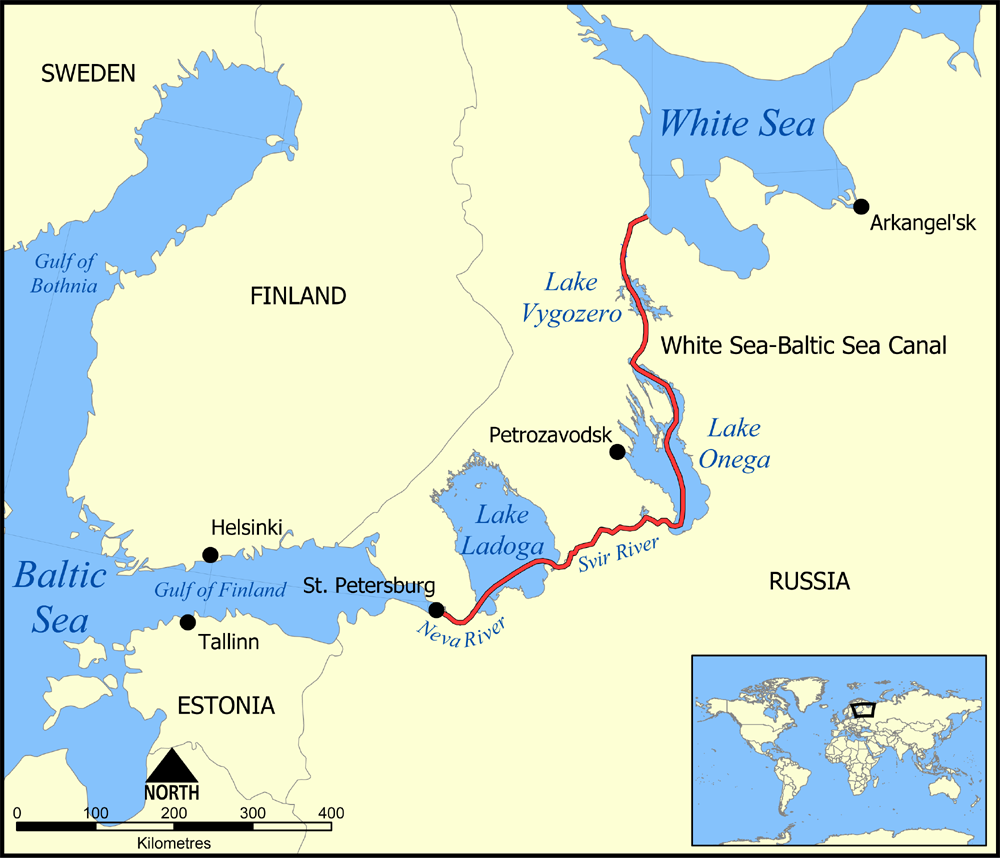
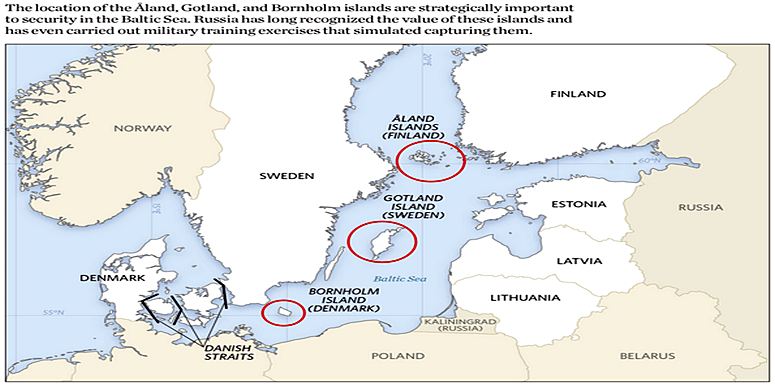
Week 6: Medieval Life: Feudalism
- Grammar levels: There are no Geography objectives this week.
- Political Map of Europe (12th Century)
- Upper and Lower Lorraine
- French-Comte
- French Royal Demesne(domains of the King)
- County of Barcelona
- Kingdom of Aries


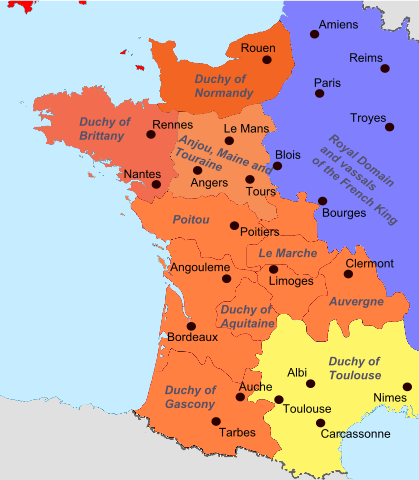
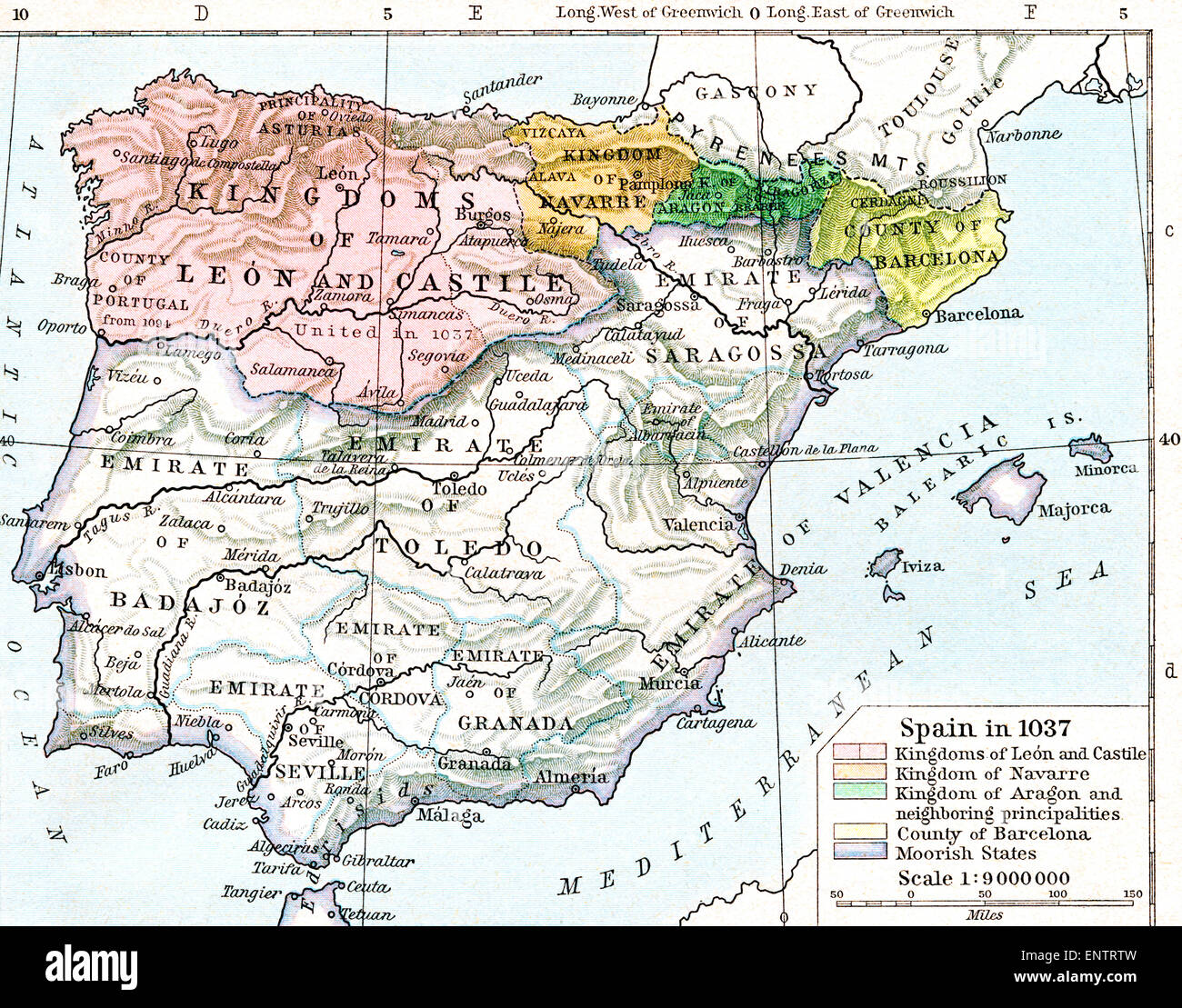
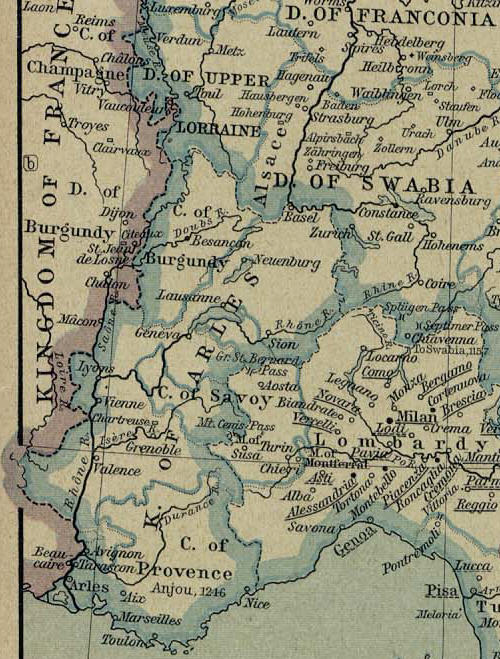
Week 7: The High Middle Ages
- Europe at the time of the Crusades
- Map of the first four Crusades
- Map of the First Crusade
- Map of the Second Crusade
- Map of the Third Crusade
- Map of the Fourth Crusade
- After the 4th Crusade
- Map of the Muslim Empire

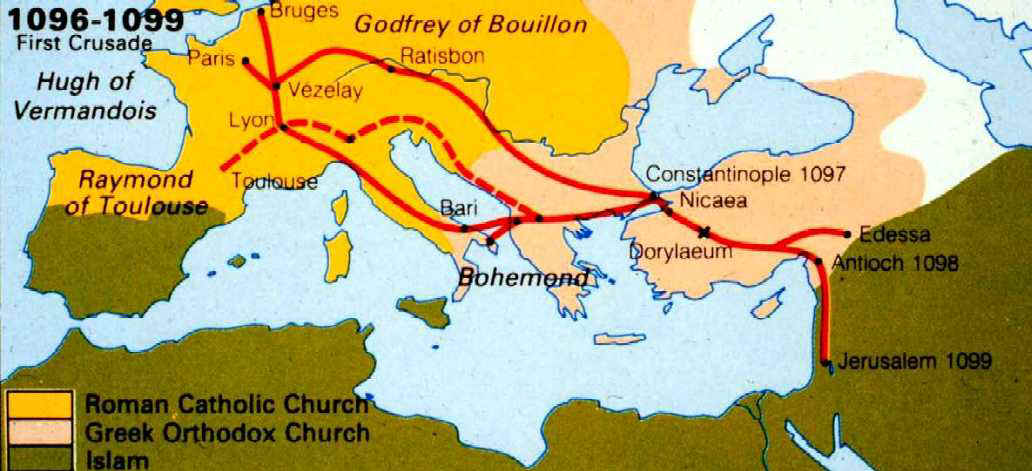
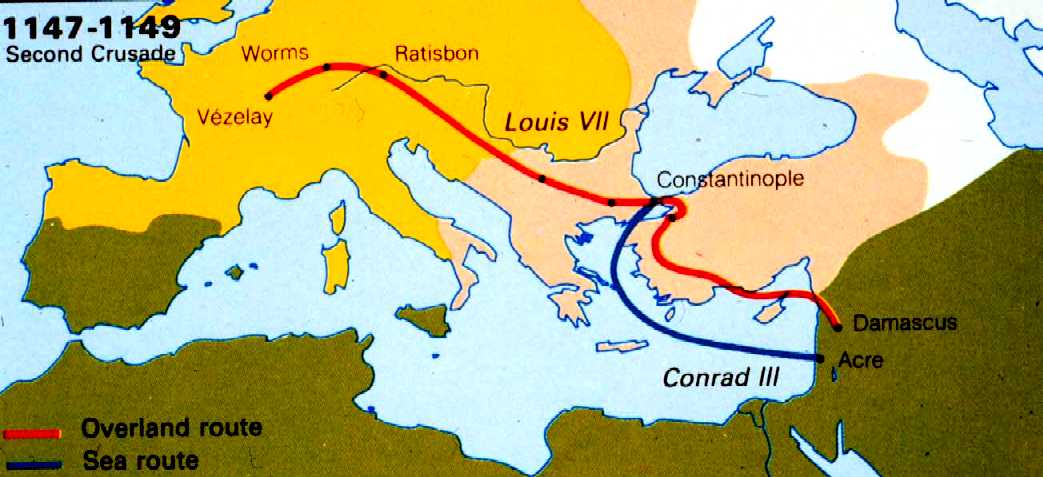

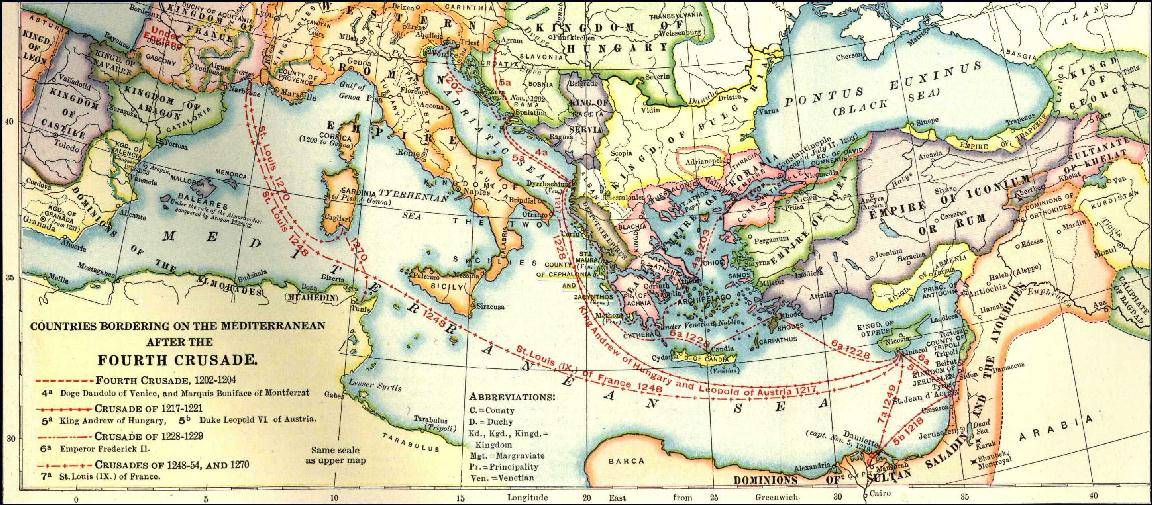
Week 8: The Mongols, Marco Polo, and the Far East
- Blank map of Japan. For answers click on upper left corner.
- A map showing the route of Marco Polo’s travels.
- “Sights & Sounds of The Marco Polo Odyssey”: This is a nine minute flash movie!
- The Mongol Dominions
- Map of Medieval Trade Networks
Week 9: The Reshaping of Medieval Europe
- Main Mediterranean and Black Sea Routes in Medieval Times.
Week 10: Early Lights of the Reformation
- Use this world map to do your unit review. (pdf file)
Unit 2 – Renaissance & Reformation
Week 11: Introduction to the Southern Renaissance
- Italy during the Renaissance, and a physical map of Italy.
Week 12: The Southern Renaissance & the Early Explorers
- Simple explanation of longitude and latitude.
- Excellent worksheet on using latitude and longitude.
- PBS activity for working with latitude and longitude.
- Learn to use a use a compass!
- See how charts and maps are made.
- Map of Columbus’ four voyages
- Learn about the Line of Demarcation.
- Prince Henry the Navigator: travel routes
- Bartolomeu Dias (Diaz): travel routes
- Vasco da Gama: travel routes
- Christopher Columbus: travel routes
- Parts of a Map
- Map Keys
- Compass Rose
- Map Grids
- Map Scales
- Map Legends
Week 13: The Southern Renaissance & the Age of Exploration
- Simple explanation of longitude and latitude.
- PBS activity for working with latitude and longitude.
- Learn to use a compass!
- How charts and maps are made.
- A map of Columbus’ four voyages.
- Learn about the Line of Demarcation.
- Sir Francis Drake: trace the path of his voyages.
- John Cabot: click on the map to view the path of his voyages.
- Giovanni da Verrazano: trace the path of his voyages.
- Jaques Carrier: trace the path of his voyages.
- John Hawkins: trace the path of his voyages.
Week 14: Spanish Dominion & the New World: Aztecs & Incas
- Blank map of South America. For answers click on upper left corner.
- Blank map of Central America. For answers click on upper left corner.
- Map of major landforms in South America and Central America.
- Exotic plants and animals from South America: Pantagonia, Panama, and Brazil.
Week 15: The Northern Renaissance & Its Scholars
- Blank European map to label where the artists and thinkers lived. (pdf file)
- Locate Wittenberg, Germany where Luther nailed his Ninety-Five Theses
- Historic festival commemorating Luther’s wedding in Wittenberg!
- The Hapsburg Empire: the Hapsburg Territories are included.
Week 16: The Reformation: Martin Luther & the German States
- Map of Worms, Germany.
- Map of Prussia 1415 – 1914
- Map of the Holy Roman Empire in 1180, 1360, 1460, 1550
- Links for many German and European maps.
- Map of the present religious distributions of the world.
- Geographical Distribution of Major World Religions


Week 17: Reformation in Switzerland, England, & Scandinavia
- Map of Switzerland
- A blank outline map of Switzerland
- Swiss Cantons
- Map of England
- Map of Sweden
- Use this blank European map as your resource.
- Useful map of religious divisions in the sixteenth century.
- Compare with map of Ancient Roman Empire. Click on “Spread of Christianity” while here.
- Sweden
- Switzerland


Week 18: Counter Reformation, French Huguenots, & the Netherlands
- Map of the Netherlands and Belgium.
- More helpful maps and information for this week.
- Pictures of windmills
- History of windmills
- Dikes: history and photos
Week 19: Elizabethan England & the Scottish Reformation
- Use this blank map of the British Isles this week.
- A map of the British Isles
- Cities of the British Isles here.
- England
- Inner and Outer Hebrides


Unit 3 – Of Crowns & Colonies
General Resources for this Unit
- A map of the 13 Colonies is found here.
Week 20: Early New World Colonies & Eastern Europe
- A blank map of North America (pdf file)
- How to make a salt map.
- Map of 13 Colonies (pdf file)
- Map quiz of 13 Colonies Answers
- Oceans around North America
- Major Geographical Regions of North America
- Waterways of North America
- Cape Cod Bay
- Delaware Bay
- Long Island Sound
- Chesapeake Bay
Week 21: Puritans in New England
- Blank map of Colonial America. (pdf)
- Blank map of the New England states (pdf file)
- Agriculture of New England
- Places in New England for your geography assignment.
- Narragansett Bay
- Native crops of Massachusetts
- Climate of New England
Week 22: Charters, Creeds, & the English Civil War
- Map of Colonial America (pdf file)
- To see a map of New France, click here.
- John Smith’s map of the Chesapeake Bay.
- Chesapeake Bay
- The White Mountains
- Narragansett Bay, Block Island, Block Island Sound, and Rhode Island Sound
- Long Island, Long Island Sound, and the Connecticut River
- Chesapeake Bay
- The Potomac River
- Susquehanna River
- Locations of early settlements (Portsmouth (New Hampshire), Providence, Hartford, New Haven, St. Mary’s City)
- Early settlements in Rhode Island (Portsmouth, Providence, New Port)
- Early settlements in Delaware (Dover)
- Early settlements in Maryland (Annapolis)

Week 23: Restoration Colonies & the Age of Louis XIV
- History and map of New York
- History and map of New Jersey
- Map quiz of North Carolina
- Map quiz of South Carolina
- New France
- Blank map of the New England states. (pdf file)
- Map of Colonial America. (pdf file)
- Landforms of New York: (Lake Champlain, Albany, New York City, Hudson River)
- Landforms of Vermont: (Green Mountains)
- Landforms of New Jersey: (Delaware Bay, Cooper’s Ferry (later Camden, NJ), Trenton, Elizabeth, Newark)
- Landforms of New France: click here and here.
- James Bay
Week 24: Dissenters in America & the Age of Reason
- Map quiz of Pennsylvania
- Map quiz of Delaware
- Map of Colonial America (pdf file)
- Map of Europe in the 18th Century
- Landforms of Pennsylvania (Monongahela River, Allegheny River, Susquehanna River, Philadelphia)
- Landforms of Delaware (Delaware River, Delaware Bay, Dover, Wilmington)
- The Allegheny Mountains
- Rohoboth Beach
Week 25: Colonists & Native Americans
- Map of Russia
- Map of Iroquois “Six Nations”
- Map of Colonial America (pdf file)
Week 26: Empires at Odds
- Map quiz of Georgia
- Map of Colonial America (pdf file)
- Map of Georgia
- Altamaha River
Week 27: Thirteen Established Colonies
- Map of Colonial America (pdf file)
Unit 4 – Age of Revolutions
Week 28: Shaping Influences on Colonial Culture
- GeoNet: click on “Northeast” for fun online games to play for review.
- The 13 Original Colonies
- The Colonies Commerce with England
- Economy of the Colonies
- Spanish land holdings in North America in the early 1750’s
- Major seaports of the colonies: Boston, Rhode Island, New York, Philadelphia, and Charles Town (now Charleston, SC) can be found on this map.
- New France territories of Acadia and Louisbourg.
- Appalachian Mountains


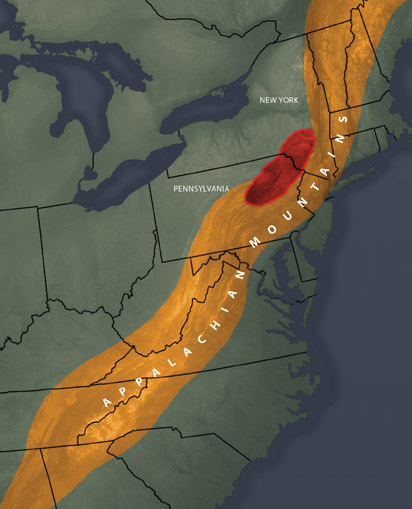
Week 29: French & Indian War
- Territorial holding before and after the Treaty of Paris.
- Spanish land holdings in North America in the early 1750’s
- The terrain of Canada and the Appalachian Mountains.
- Locations of key battles of the French and Indian War
- French and Indian War battles


Week 30: Give Me Liberty!
- Map of Colonial America (pdf file)
Week 31: First Battles for Independence
- Good, clear map of New France
- Use this blank outline map of North America this week.
Week 32: Waging the Revolutionary War
- A nice animated atlas that you can use for the rest of this year-plan.
- Battles of the Saratoga Campaign
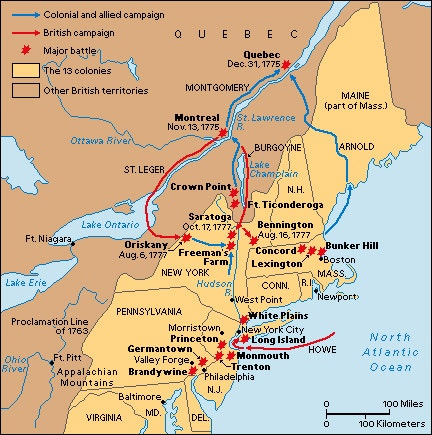
Week 33: America under the Articles of the Confederation
- Early Boston maps here and here.
- Daniel Boone’s travels in Kentucky.
- Yadkin River
- Boone’s Station
- Sycamore Shoals
- Rockcastle River
- Cumberland Gap
- Appalachian Mountains
- Northwest Territory
- The Northwest Territory created a new boundary between states where slavery would or would not be allowed as America expanded west. Look to see where this boundary was located.
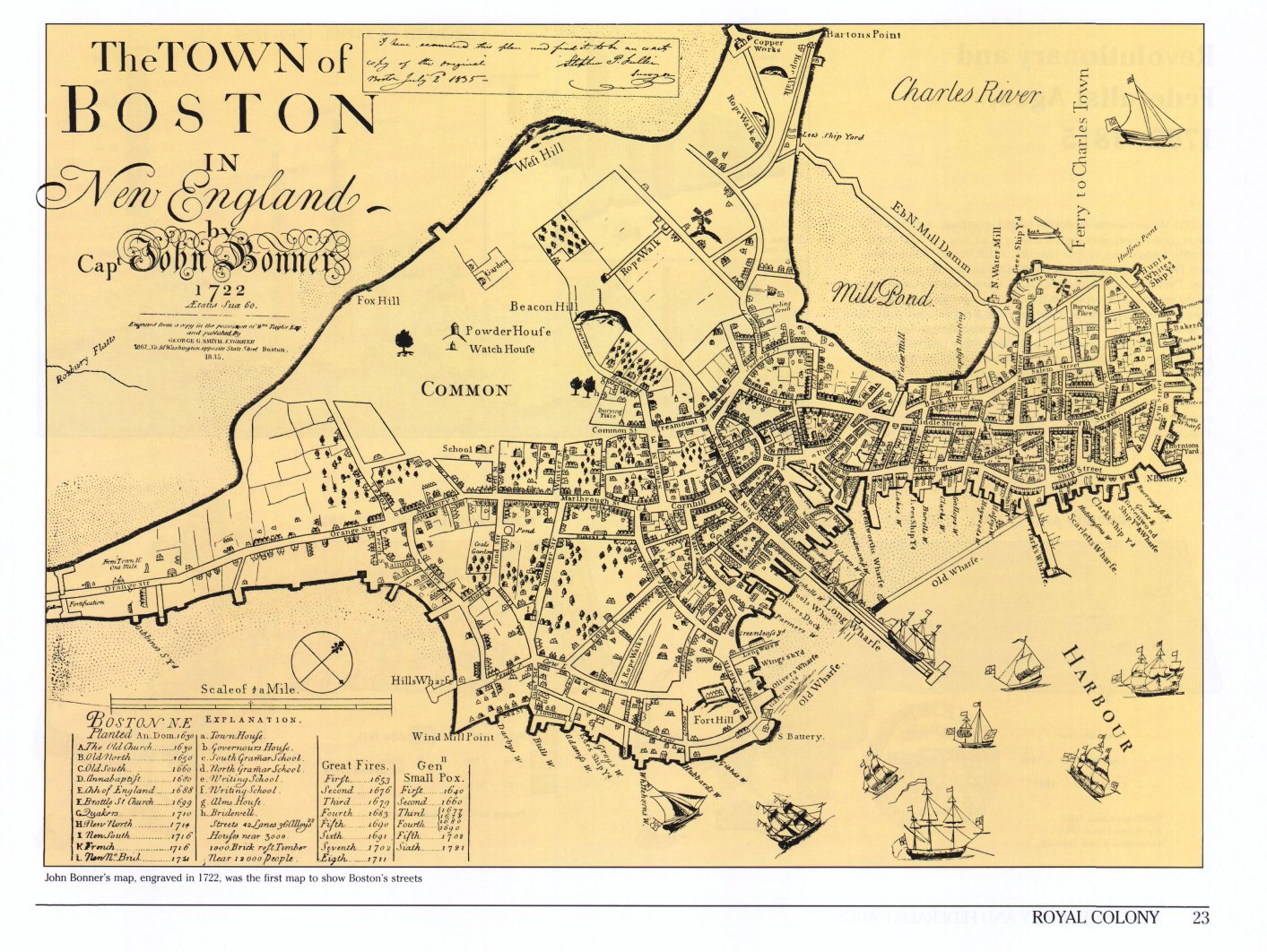


Week 34: Writing the Constitution
- Blank outline map of France
Week 35: Federal Republic & French Revolution
- A simple map for the Northwest Territory.
Week 36: Perilous Times: The Adams Administration
- If you have time, use this great link for reviewing geography of the states and 13 colonies.
Worldview
General
- ICLNet’s Christian books online – Bibles, primary source documents, etc. Enough treasure for a lifetimes research!
- Bible Gateway (Including Online Bible: many translations)
- Operation World: Year 2 encourages your children to pray for Muslims, Hindus and Buddhists. This site, for many, will replace the need for a copy of Operation World.
- BBC Religion and Ethics: this site enables you to read about various religions.
- The Ism Book: an online book for basic definitions that will help you in your worldview studies.
- A Treasury Of Primary Documents: organizing principle is “documents that pertain to Early American history.” Begins at 500 B.C. – 1800 A.D.
- Helpful information on the History of World Missions, including a time line.
- YWAM: missionary puzzles and coloring pages
Unit 1 – The Middle Ages
Week 1: Twilight of the Western Roman Empire
- Saint Valentine
- Augustine of Hippo
- Augustine Confessions
- Augustine Confessions
- SparkNotes: Augustine Confessions
Week 2: Byzantine Empire & the Eastern Orthodox Church
Week 3: Byzantine Empire & Rise of Islam
- Islam: links here and here.
- Learn more about Islam from ChristianAnswers.net.
- The Koran
- The Cross & the Crescent: A Christian Response to Islam.(pdf)
- Translation of the Islamic Call to Prayer.
- Muslim Population Worldwide

Week 4: The Making of Medieval Europe: Charlemagne
- Holy Roman Empire in 800 AD.
Week 5: Developments During the Viking Age
Week 6: Medieval Life: Feudalism
- Anselm’s writings: Read from the Monologium and Proslogium.
- Anselm: ontological arguments
- Anselm’s Cur Deus Homo (Why God Became Man)
- Pope Gregory VII
Week 7: The High Middle Ages
- St. Francis
- Bede, Missionary to England
- Benedictines
- Click here to read about the Dominicans.
- Read from the Catholic Encyclopedia about the teachings of Moses Maimonides.
- Also from the Catholic Encyclopedia, read the biography of Bernard of Clairvaux.
- Paragraph biography of Averroes
- An introduction to the origins of the Inquisition
Week 8: The Mongols, Marco Polo, and the Far East
- Need a substitute for Trial and Triumph this week? Read here about Waldensians.
- A Christian Response to Hinduism
Week 9: The Reshaping of Medieval Europe
Week 10: Early Lights of the Reformation
Unit 2 – Renaissance & Reformation
Week 11: Introduction to the Southern Renaissance
- A general description of humanism.
Week 12: The Southern Renaissance & the Early Explorers
- A good description of the Spanish Inquisition.
- Tomas de Torquemada
- Pope Alexander V
- Girolamo Savonarola
Week 13: The Southern Renaissance & the Age of Exploration
- Pope Leo X
- A general description of humanism.
Week 14: Spanish Dominion & the New World: Aztecs & Incas
Week 15: The Northern Renaissance & Its Scholars
- Biography of Erasmus
- William Tyndale
- Martin Luther
Week 16: The Reformation: Martin Luther & the German States
- From the Internet Encyclopedia of Philosophy: Biography of Martin Luther
- The Bondage of the Will
- Luther’s 95 Theses
- Justification and Imputed Righteousness by R.C. Sproul.
- Interesting discussions about Protestant positions on “infused righteous” and “imputed righteousness.”
- Catholic Encyclopedia on Justification
Week 17: Reformation in Switzerland, England, & Scandinavia
- Huldreich Zwingli
- John Calvin On Predestination
- A Brief Comparative Study of Arminianism and Calvinism.
- The English Reformation – history and timeline
- Thomas Cranmer
- Reformed theology: What is It?
- Huldreich Zwingli, chronology
- Conrad Grebel
- Michael Sattler
- Melchior Hoffman
- Jan Matthys
- Menno Simons with GodTube audio, Mennonites
- Jacob Ammann and the Amish
- Read more here about the Amish.
- Jacob Hutter and Hutterites
- Anabaptists
- Moravian Church
- Who are the Mennonites?
- “The Amish & the Plain People”
- English Martyrs: Anne Askew, Hugh Latimer.
Week 18: Counter Reformation, French Huguenots, & the Netherlands
- Roman Catholic Encyclopedia: Council of Trent
- Canons on Justification from the Council of Trent.
- Jeanne d’Albret: Jeanne III of Navarre
- Renee, Duchess of Ferrara
- Justification: Calvin vs. Trent
Week 19: Elizabethan England & the Scottish Reformation
- John Knox
- Read about Presbyterianism from the Catholic Encyclopedia
- Sir Francis Bacon
Unit 3 – Of Crowns & Colonies
Week 20: Early New World Colonies & Eastern Europe
Week 21: Puritans in New England
- Conformists–Puritans–Separatists
- Congregationalists
- Unitarian Society: history and beliefs
- Gustavus Adolphus
Week 22: Charters, Creeds, & the English Civil War
- Good link for Margaret MacLaughlan and Margaret Wilson
- The English Civil War
- The Puritan Revolution
- The Act of Toleration (1689)
- Westminster Confession of Faith
- Conformists–Puritans–Separatists
Week 23: Restoration Colonies & the Age of Louis XIV
- John Bunyan
- Conformists–Puritans–Separatists
- Edict of Nantes
- 35 Largest Christian Denominations in the United States
Week 24: Dissenters in America & the Age of Reason
Week 25: Colonists & Native Americans
- There are no Church History Objectives for this week.
Week 26: Empires at Odds
Week 27: Thirteen Established Colonies
Unit 4 – Age of Revolutions
Week 28: Shaping Influences on Colonial Culture
Week 29: French & Indian War
Week 30: Give Me Liberty!
Week 31: First Battles for Independence
- There are no Church History Objectives for this week.
Week 32: Waging the Revolutionary War
- There are no Church History Objectives for this week.
Week 33: America under the Articles of the Confederation
- There are no Church History Objectives for this week.
Week 34: Writing the Constitution
- There are no Church History Objectives for this week.
Week 35: Federal Republic & French Revolution
- There are no Church History Objectives for this week.
Week 36: Perilous Times: The Adams Administration
- There are no Church History Objectives for this week.
Literature
General
- A webpage full of great helps for this year-plan. Check it out!
- Lots of neat forms at Highland Heritage!
- Primary Source documents: an exhaustive site for teacher and older students. Begins at 500 BC and keeps going through Early American history.
- FreeBooknotes.com presents Cliff’s Notes-like help for many works.
- You won’t believe this Wordsmyth site. Make your own glossary. Type in a list of vocabulary words, and push send. IT’S FREE!
Unit 1 – The Middle Ages
Week 1: Twilight of the Western Roman Empire
- The Dream of the Rood text with some annotations
Week 2: Byzantine Empire & the Eastern Orthodox Church
- Lots of stories from the Arabian Nights
- The Koran
Week 3: Byzantine Empire & Rise of Islam
- Lots of stories from the Arabian Nights
- The Koran
Week 4: The Making of Medieval Europe: Charlemagne
Week 5: Developments During the Viking Age
Week 6: Medieval Life: Feudalism
- Vocabulary words for Canterbury Tales
- Enrichment from Harvard about Chaucer
Week 7: The High Middle Ages
- The Merry Adventures of Robin Hood by Howard Pyle. This is not the same version recommended in Tapestry, but will make a good alternate for Upper Grammar or Dialectic.
- LISTEN to Canterbury Tales!
- For your optional rhetoric lit assignment: Canterbury Tales
- Enrichment from Harvard about Chaucer
Week 8: The Mongols, Marco Polo, and the Far East
- The Scottish Chiefs by Jane Porter.
- Dante’s Inferno: A Virtual Tour of Hell (great link for rhetoric level, some nudity although drawings are very vague)
Week 9: The Reshaping of Medieval Europe
- The Scottish Chiefs by Jane Porter.
- Dante’s Inferno: A Virtual Tour of Hell (great link for rhetoric level, some nudity although drawings are very vague)
Week 10: Early Lights of the Reformation
- Hear a trumpet: Trumpeter of Krakow
- The Black Arrow by Robert Louis Stevenson
- Dante’s Inferno: A Virtual Tour of Hell (great link for rhetoric level, some nudity although drawings are very vague)
Unit 2 – Renaissance & Reformation
Week 11: Introduction to the Southern Renaissance
- I, Juan De Paraja study guide. Scroll down for the .pdf file to download.
- Sonnet 73
Week 12: The Southern Renaissance & the Early Explorers
- I, Juan De Paraja study guide. Scroll down for the .pdf file to download.
- The Second Mrs. Giaconda review
Week 13: The Southern Renaissance & the Age of Exploration
- The Faerie Queen
- I, Juan De Paraja study guide. Scroll down for the .pdf file to download.
Week 14: Spanish Dominion & the New World: Aztecs & Incas
- Tales from Shakespeare, by Charles and Mary Lamb, includes this week’s read aloud.
- Shakespeare for Kids
- Shakespeare for Teens: Why Teach Shakespeare?
- Morning Girl Teaching Guide (caution: nude picture top left)
- Summary from SparkNotes: Winter’s Tale, Two Gentlemen of Verona, Romeo and Juliet
Week 15: The Northern Renaissance & Its Scholars
- Biography of Erasmus
- Marlowe’s The Tragical History of Dr. Faustus
- Excerpt from Doctor Faustus
- SparkNotes from Doctor Faustus
- Summary from SparkNotes: Merchant of Venice, All’s Well That Ends Well
Week 16: The Reformation: Martin Luther & the German States
- The rhymes and history of Mother Goose
- Mother Goose on Enchanted Learning.
- Tales from Shakespeare, by Charles and Mary Lamb, includes this week’s read aloud
- Shakespeare for Teens: Why Teach Shakespeare?
- Shakespeare’s Sonnets 18, 116, 29
- How do you identify meter?
- SparkNotes for Much Ado About Nothing
- From Foxe’s Book of Martyrs: Chapter on William Tyndale
- Luther’s 95 Theses
- Latin version of the 95 Theses
- Selected works of Martin Luther
- Summary from SparkNotes: Much Ado About Nothing, Cymbeline, Twelfth Night
Week 17: Reformation in Switzerland, England, & Scandinavia
- The rhymes and history of Mother Goose
- Mother Goose on Enchanted Learning
- Take a look at this Shakespeare website for children. You’ll find *very* short versions of some of the bard’s plays.
- Tales from Shakespeare, by Charles and Mary Lamb, includes this week’s read aloud.
- Absolute Shakespeare
- Summary from SparkNotes: As You Like It, The Comedy of Errors, Pericles
Week 18: Counter Reformation, French Huguenots, & the Netherlands
- Tales from Shakespeare, by Charles and Mary Lamb, includes this week’s read aloud.
- Absolute Shakespeare
- Shakespeare’s Sonnets
- Taming of the Shrew
- Spark Notes for Taming of the Shrew
- Summary from SparkNotes: King Lear, The Taming of the Shrew, Hamlet
Week 19: Elizabethan England & the Scottish Reformation
- Take a look at this Shakespeare website for children. You’ll find *very* short versions of some of the bard’s plays.
- Tales from Shakespeare, by Charles and Mary Lamb, includes this week’s read aloud.
- Absolute Shakespeare
- Macbeth
- Spark Notes for Macbeth
- Summary from SparkNotes: The Tempest, A Midsummer Nights Dream, Othello
Unit 3 – Of Crowns & Colonies
Week 20: Early New World Colonies & Eastern Europe
- Pocahontas biography
- Sparknotes for Don Quixote
- Selected Poetry of George Herbert
- The works of George Herbert.
Week 21: Puritans in New England
- William Bradford biography
- Read from Bradford’s Letter-book here.
- William Bradford’s Of PlymouthPlantation
- The Pilgrim’s Progress by John Bunyun
- John Bunyan: This is an excellent link!!
- Sparknotes for The Pilgrim’s Progress
- Three part study guide for Pilgrim’s Progress: Part 1, Part 2, Part 3
- Bunyan’s Pilgrim’s Progress
Week 22: Charters, Creeds, & the English Civil War
- The Pilgrim’s Progress by John Bunyun
- John Bunyan: This is an excellent link!!
- Bunyan’s Pilgrim’s Progress
- Three part study guide for Pilgrim’s Progress: Part 1, Part 2, Part 3
- Sparknotes for The Pilgrim’s Progress
- John Winthrop’s A Model of Christian Charity
- Poems and study materials for Anne Bradstreet’s poetry. Every poem we’ve assigned, except “As Weary Pilgrim” can be found here.
- Dangerous Journey: (dialectic book) each chapter has its own video.
Week 23: Restoration Colonies & the Age of Louis XIV
- John Donne
- Poems by Donne (list on right side of page)
- Poems by Jonson (list on left side of page)
- Poems by Marvell (list on left side of page)
- Poems by Suckling (list on right side of page)
- Dangerous Journey: (dialectic book) each chapter has its own video.
- John Donne’s Holy Sonnets and the Trinity
Week 24: Dissenters in America & the Age of Reason
- 22-page pdf download study guide for The Witch of Blackbird Pond
Week 25: Colonists & Native Americans
- 22-page pdf download study guide for The Witch of Blackbird Pond
- Milton’s Paradise Lost
- Spark Notes for Paradise Lost.
Week 26: Empires at Odds
- Activities for Paddle-to-the-Sea
- Vocabulary list and comprehension questions for Paddle-to-the-Sea.
- 22-page pdf download study guide for The Witch of Blackbird Pond
- Milton’s Paradise Lost
- Spark Notes for Paradise Lost.
Week 27: Thirteen Established Colonies
- Spark Notes for Robinson Crusoe
- Milton’s Paradise Lost
- Spark Notes for Paradise Lost.
Unit 4 – Age of Revolutions
Week 28: Shaping Influences on Colonial Culture
- Swift’s Gulliver’s Travels
- Spark Notes for Gulliver’s Travels
Week 29: French & Indian War
- Social Studies for Kids: Benjamin Franklin
- The Autobiography of Benjamin Franklin
- Spark Notes for The Autobiography of Benjamin Franklin
Week 30: Give Me Liberty!
- Pope’s Rape of the Lock
- Essay on Man
- Henry Wadsworth Longfellow’s Paul Revere’s Ride
Week 31: First Battles for Independence
Week 32: Waging the Revolutionary War
- Word Search for And Then What Happened, Paul Revere?
- Paul Revere’s Ride by Longfellow
- Paul Revere biography
- Really nice (22-page pdf file) study guide for Johnny Tremain
- Rouseau’s Confessions
Week 33: America under the Articles of the Confederation
- From EnchantedLearning.com: short biography of Washington
- George Washington’s Rules of Civility
- Really nice (22-page pdf file) study guide for Johnny Tremain
- Political Sermons of the Founding Era: A Calm Address to Our American Colonies, Anonymous, A Constitutional Answer to the Rev. Mr. John Wesley’s Calm Address to the American Colonies
Week 34: Writing the Constitution
- Nice 7-page study guide (pdf file) for Carry On, Mr. Bowditch
- Political Sermons of the Founding Era: A Calm Address to Our American Colonies, Anonymous, A Constitutional Answer to the Rev. Mr. John Wesley’s Calm Address to the American Colonies
Week 35: Federal Republic & French Revolution
- George Washington’s Rules of Civility
- Biography of Phillis Wheatley
- Spark Notes for Robinson Crusoe
Week 36: Perilous Times: The Adams Administration
- Benjamin Banneker
- James Madison
- Spark Notes for Robinson Crusoe
Summer Reading:
Writing
General
- Here’s a great site to bookmark for all your graphic organizing needs and questions. What is a Graphic Organizer?
- If you would like to make personalized graphic organizers, click here.
- This site can be used as you are teaching and reviewing parts of speech. You’ll find matching, concentration, flash cards, and a word search.
- Click here for another grammar game.
- Daily Grammar Excellent site!
- Make online crossword puzzles here. These are great for reviewing vocabulary!
- Play Word Games
- At the right is a picture one of our users sent in of the sentence pocket suggested in Marcia’s introductory notes. Click on the picture to see all the details up very close!
SAT Preparation:
- The SAT online question of the day
- Go to this site to answer almost any question you may have about taking the SAT, PSAT, and more.
- Test preparation site. Looks great!
- SAT Vocabulary Words
- 5000 Collegiate Words with Brief Definitions
Writing College Admissions Essays
- College Essays: Write Ones That Get You into Every School On Your List
- 5 Ways College Application Essays and High School Essays Are Different
- College Admissions Essay Prompts
Evaluations and Rubrics:
- Great link for evaluating writing for grades 2-5. This is an interactive rubric for the student to use as a checklist.
- Click here to evaluate writing for grades 6-8. Another great interactive student checklist!
- Click here to develop rubrics automatically! Show your student his grading rubric (or better yet, have him develop one) before he starts his project or writing assignment!
Unit 1 – The Middle Ages
Week 1: Twilight of the Western Roman Empire
- Level 2: The Parts of Speech: to help you with your Grammar and Composition Notebook.
- Levels 3-11: Steps in the Writing Process.
- Levels 8-10: More advanced explanation of steps in the writing process.
Week 2: Byzantine Empire & the Eastern Orthodox Church
- Level 2: The Parts of Speech (printable for your Grammar and Composition Notebook.)
- Levels 3-7: For reviewing the steps in the writing process, click here.
- Levels 2-11: Graphic Organizers on Tap!
- Level 12: More advanced explanation of steps in the writing process.
Week 3: Byzantine Empire & Rise of Islam
- Level 2: Worksheet reviewing simple tenses in a pdf file.
- Level 3: Review the parts of speech with this online game.
- Garden of Praise: songs for all parts of speech
- Levels 9-11: Common Proofreading Symbols
Week 4: The Making of Medieval Europe: Charlemagne
- Levels 4-5: Want to use level-appropriate sentences from the Bible for dictation? Click here.
- Levels 4-12: If you are beginning to learn or review prepositions this week in grammar, click here for a crossword puzzle that will reinforce this knowledge.
- Levels 4-12: Preposition word search
Week 5: Developments During the Viking Age
- Level 1-3: Verb games
- Levels 4-5: Graphic Organizers on Tap!
- Level 6: Transition words
- Levels 10-11: Formal Outlines
Week 6: Medieval Life: Feudalism
- Level 1-3: Verb games
- Level 4-6: Good dictation activity.
Week 7: The High Middle Ages
- Levels 4-6: Cluster diagram (pdf file)
- Level 7: Cluster Diagram (pdf file)
- Level 11: Essays for College Applications
Week 8: The Mongols, Marco Polo, and the Far East
- There are no helpful links this week.
Week 9: The Reshaping of Medieval Europe
- Level 11: Checklist for taking essay tests
Week 10: Early Lights of the Reformation
- Level 10: Business letters
- Level 10: Business memos
- Level 10: Resumes
- Level 11: Go to these sites for helps and practice college application essays:
- AdmissionsEssays.com: FREE step by step analysis, structure, and writing guide!
- College Application Essays: helpful hints. Written from a secular perspective, but with some helpful hints.
Unit 2 – Renaissance & Reformation
Week 11: Introduction to the Southern Renaissance
- Level 2: Cluster diagram (pdf file)
- Level 6: Venn diagram
- Level 10: Instructions for building your own website.
Week 12: The Southern Renaissance & the Early Explorers
- Level 2: Very simple story map (pdf file).
- Level 6: Venn diagram
- Levels 7, 9: Writing a research paper
Week 13: The Southern Renaissance & the Age of Exploration
- Level 1: Need more practice on capitalization or punctuation? Click here for more worksheets.
- Level 6: Venn diagram
- Level 9: Instructions for creating an outline.
Week 14: Spanish Dominion & the New World: Aztecs & Incas
- Level 1: Another easy review for end punctuation. (pdf file)
- Levels 2, 6: Cluster diagram (pdf file)
- Level 6: Writing a research paper
- Levels 6, 8: Story map
- Level 11: Cause/Effect Essay, click here and here.
Week 15: The Northern Renaissance & Its Scholars
- Levels 1: Sample dictation sentences from the Bible.
- Levels 2-3: Cluster diagram (pdf file)
- Level 3: Definition of a realistic story, tips on how to write realistic dialogue
- Level 3: Very simple story map (pdf file) and describing wheel (pdf file)
- Level 4: Here is a cover that you can use for your state notebook. (pdf file)
- Level 4: Click here for a ready-to-use Table of Contents for your notebook. (pdf file)
- Levels 7 and 9: Rubric to evaluate your work before final completion
- Level 8: Tips for writing a rough draft.
- Level 11: Cause/Effect Essay, click here and here.
Week 16: The Reformation: Martin Luther & the German States
- Levels 2-3: Cluster diagram (pdf file)
- Level 3: Tips for writing a rough draft.
- Level 7: Describing wheel (pdf file) descriptive writing Workshop
Week 17: Reformation in Switzerland, England, & Scandinavia
- Levels 2-3: Play Word Games.
- Levels 4-5: Informal Outlines
- Level 6: Tips for writing a rough draft.
- Level 7: Expository Writing
Week 18: Counter Reformation, French Huguenots, & the Netherlands
- Levels 4-5: Online thesaurus
- Levels 4-5: Online dictionary
- Level 8: Checklist for taking essay tests
Week 19: Elizabethan England & the Scottish Reformation
- Levels 4-5: Cluster diagram (pdf file)
- Level 8: Checklist for taking essay tests
- Level 8: Tips on Essay Test taking.
Unit 3 – Of Crowns & Colonies
Week 20: Early New World Colonies & Eastern Europe
- Level 1: Cluster diagram (pdf file)
- Levels 2-4: Very simple story map (pdf file)
- Level 2: Sample Aesop’s fables to print/show students before beginning their fables.
- Great site: all the Aesop’s Fables you’ll ever need! All ages, but supervision is recommended. (We’ve not previewed this entire site, and it seems that stories from other sources are also posted.)
- Another source from which you can read/download/print a free copy of Aesop’s fables.
- Levels 3, 6, 9: Learn how to write plays from the Scholastic website.
- Levels 5-6: Story map for middle levels
- Level 8: Literary terms
- Levels 9, 11, 12: Story map
Week 21: Puritans in New England
- Level 1: Cluster diagram (pdf file)
- Level 2: Sample Aesop’s fables to print/show students before beginning their fables.
- Great site: all the Aesop’s Fables you’ll ever need! All ages, but supervision is recommended. (We’ve not previewed this entire site, and it seems that stories from other sources are also posted.)
- Another source from which you can read/download/print a free copy of Aesop’s fables.
- Levels 3, 6, 9: Learn how to write plays from the Scholastic website.
- Level 4: Very simple story map (pdf file)
Week 22: Charters, Creeds, & the English Civil War
- Level 1: Cluster diagram (pdf file)
- Level 2: Sample Aesop’s fables to print/show students before beginning their fables.
- Great site: all the Aesop’s Fables you’ll ever need! All ages, but supervision is recommended. (We’ve not previewed this entire site, and it seems that stories from other sources are also posted.)
- Another source from which you can read/download/print a free copy of Aesop’s fables.
- Levels 3, 6, 9: Learn how to write plays from the Scholastic website.
- Level 4: Very simple story map (pdf file)
- Level 10: Biography (review for high schoolers)
Week 23: Restoration Colonies & the Age of Louis XIV
- Level 1: Cluster diagram (pdf file)
- Level 2: Sample Aesop’s fables to print/show students before beginning their fables.
- Great site: all the Aesop’s Fables you’ll ever need! All ages, but supervision is recommended. (We’ve not previewed this entire site, and it seems that stories from other sources are also posted.)
- Another source from which you can read/download/print a free copy of Aesop’s fables.
- Levels 3, 6, 9: Learn how to write plays from the Scholastic website.
- Level 4: Very simple story map (pdf file)
- Level 10: Biography (review for high schoolers)
Week 24: Dissenters in America & the Age of Reason
- Level 1: Cluster diagram (pdf file)
- Level 2: Excellent site that you’ll use all through your book report mini-unit
- Level 3: Describing Wheel (pdf file), Very simple story map (pdf file)
- Level 3: Sample Aesop’s fables to print/show students before beginning their fables.
- Great site: all the Aesop’s Fables you’ll ever need! All ages, but supervision is recommended. (We’ve not previewed this entire site, and it seems that stories from other sources are also posted.)
- Another source from which you can read/download/print a free copy of Aesop’s fables.
- Levels 4, 5, 7, 9: Public Speaking Website
- Level 6: Story map for middle levels
- Level 8: Create your own Venn diagram.
- Level 10: Biography (review for high schoolers)
- Level 11: Good site, with an example definition essay.
Week 25: Colonists & Native Americans
- Levels 1, 6: Cluster diagram (pdf file)
- Level 3: Sample Aesop’s fables to print/show students before beginning their fables.
- Great site: all the Aesop’s Fables you’ll ever need! All ages, but supervision is recommended. (We’ve not previewed this entire site, and it seems that stories from other sources are also posted.)
- Another source from which you can read/download/print a free copy of Aesop’s fables.
- Levels 4, 5, 7, 9: Public Speaking Website
- Level 6: Story map for middle levels
- Level 10: Biography (review for high schoolers)
- Level 12: Instructions for building your own website.
Week 26: Empires at Odds
- Level 1: Cluster diagram (pdf file)
- Level 3: Sample Aesop’s fables to print/show students before beginning their fables.
- Great site: all the Aesop’s Fables you’ll ever need! All ages, but supervision is recommended. (We’ve not previewed this entire site, and it seems that stories from other sources are also posted.)
- Another source from which you can read/download/print a free copy of Aesop’s fables.
- Levels 4, 5, 7, 9: Public Speaking Website
- Level 6: Story map for middle levels
- Level 10: Biography (review for high schoolers)
- Level 11: Writing a process essay
- Level 12: Instructions for building your own website.
Week 27: Thirteen Established Colonies
- Level 1: Cluster diagram (pdf file)
- Level 3: Very simple instructions for writing friendly letters.
- Levels 4, 5, 7, 9: Public Speaking Website
- Level 6: Story map for middle levels
- Level 10: Biography (review for high schoolers)
- Level 12: Instructions for building your own website.
Unit 4 – Age of Revolutions
Week 28: Shaping Influences on Colonial Culture
- No links for this week.
Week 29: French & Indian War
- No links for this week.
Week 30: Give Me Liberty!
- No links for this week.
Week 31: First Battles for Independence
- Levels 3, 6, 8, and 10: Upper levels especially will find this site on meter helpful during your poetry unit
Week 32: Waging the Revolutionary War
- No links for this week.
Week 33: America under the Articles of the Confederation
- No links for this week.
Week 34: Writing the Constitution
- No links for this week.
Week 35: Federal Republic & French Revolution
- No links for this week.
Week 36: Perilous Times: The Adams Administration
- No links for this week.
Government
General
- Modern History Sourcebook: original historical documents you can use to find sites for your children to read! Older students can read the originals!
- All ages will love this site on US Government.
- Library of Congress – A Closer Look!
Unit 1 – The Middle Ages
Week 1: Twilight of the Western Roman Empire
- Our Government defined
- Forms of government
Week 2: Byzantine Empire & the Eastern Orthodox Church
Week 3: Byzantine Empire & Rise of Islam
Week 4: The Making of Medieval Europe: Charlemagne
- No links for this week.
Week 5: Developments During the Viking Age
Week 6: Medieval Life: Feudalism
Week 7: The High Middle Ages
- Estates-general
- Magna Carta: the text
- Spark notes: the relationship between France and England.
Week 8: The Mongols, Marco Polo, and the Far East
Week 9: The Reshaping of Medieval Europe
- No links for this week.
Week 10: Early Lights of the Reformation
- No links for this week.
Unit 2 – Renaissance & Reformation
Week 11: Introduction to the Southern Renaissance
- There are no objectives this week.
Week 12: The Southern Renaissance & the Early Explorers
Week 13: The Southern Renaissance & the Age of Exploration
Week 14: Spanish Dominion & the New World: Aztecs & Incas
Week 15: The Northern Renaissance & Its Scholars
- Spark Notes for Utopia
Week 16: The Reformation: Martin Luther & the German States
Week 17: Reformation in Switzerland, England, & Scandinavia
- John Calvin: scroll down to read about how he affected government
- The Anabaptists
Week 18: Counter Reformation, French Huguenots, & the Netherlands
Week 19: Elizabethan England & the Scottish Reformation
- James I of England (VI of Scotland)
- English monarchs
Unit 3 – Of Crowns & Colonies
Week 20: Early New World Colonies & Eastern Europe
Week 21: Puritans in New England
Week 22: Charters, Creeds, & the English Civil War
- Fundamental Orders of Connecticut
- Background information on the Fundamental Orders.
- U.S. Government (colonial times): from Yale Law School, primary source documents from 122 B.C. to the 21st Century. (These are the documents listed in the Week 22 Teacher’s Notes.)
Week 23: Restoration Colonies & the Age of Louis XIV
Week 24: Dissenters in America & the Age of Reason
Week 25: Colonists & Native Americans
Week 26: Empires at Odds
Week 27: Thirteen Established Colonies
Unit 4 – Age of Revolutions
General Resources for this Unit
- U.S. Government for Kids: everything you need to know for government for kids.
- Congress for Kids: at each webpage you can read a bit about the topic and then click on “Show What You Know” for a reinforcement activity. If you click on “Play More” it takes you to a list of links for games, quizzes, maps, etc.
Arts & Activities
General
- Great food link!
- European Artist: parents please preview; could contain classic nudity
- Use this site for great pictures when making lap books.
- Here’s real help with Feast Nights: food timeline and recipes galore! Enjoy!
- A timeline of classical music where you can also listen to the great composers!
- Jamestown Online Adventure: Play an online game to see if you know better than the early settlers did.
- Puzzlemaker input a list of words and this site will generate crosswords, word searches, codes, etc.
- Cookie Dough Recipe: A great alternative to salt dough maps.
- 2 c. smooth peanut butter
- 2 1/2 c. powdered milk
- 2 1/2 c. powdered sugar
- 2 c. white corn syrup
- Blue icing – lakes and oceans
- Green sprinkles – plains
- Clear sprinkles – deserts
- Chocolate chips – mountains
- Red candy strips – rivers
- M&Ms – capitals
- Try Crayola’s Model Magic: a great lightweight soft modeling substance. It air-dries quickly, and after it’s dry, it can be sanded, painted, or decorated. Model Magic can replace Fimo for most projects suggested in Tapestry.
Unit 1 – The Middle Ages
Week 1: Twilight of the Western Roman Empire
Week 2: Byzantine Empire & the Eastern Orthodox Church
- St. Patrick website! Caution to parents: Site does mention ale & beer.
- Connected to the above: links to pictures of Byzantine art. Lots of model icons and pictures of Byzantine cathedrals.
- This site explains how medieval manuscripts were made. This site helps you to make your own.
- How to make a scroll.
- How to make stained glass: a video series for beginners!
- Tissue Paper stained glass project.
- Let’s Do Dewey
Week 3: Byzantine Empire & Rise of Islam
- Decorated Koran book covers
- Islamic Art for Kids
- A virtual tour of the Taj Mahal.
- Make a paper Taj Mahal.
- Islamic Art
Week 4: The Making of Medieval Europe: Charlemagne
- For your display board: Falconry, North American Falconers Association, American Falconry
- Learn about the Middle Ages, feudalism, knights, chivalry, and heraldry! Click here for software to help kids to make their own shields (coats of arms). Click here for an online heraldry game.
- Origami Viking Helmet Folds
- Making a Viking Longboat.
- Take a virtual tour of a Viking building
- Learn about heraldry.
Week 5: Developments During the Viking Age
- How to make a simple viking ship
- Make a Viking ship out of a milk carton.
- How to make an advanced viking ship (.pdf)
Week 6: Medieval Life: Feudalism
- Build your own model castle. Free downloadable directions! Outstanding!
- Medieval Castle Building
- Castles on the Web: GREAT site for all things having to do with castles, heraldry, and medieval weaponry.
- Some really neat coloring pages of castles and knights. Fairly detailed, for those with good fine motor skills.
- Chainmail patterns
- Make a paper king’s crown or queen’s crown.
- See Rembrandt’s “Sacrifice of Isaac” at the State Hermitage Museum.
Week 7: The High Middle Ages
- Limbourg Brothers Illuminated Manuscripts. Wow!
- Lots of Limbourg Brothers Illuminations!
- Make your own illumination pages!
- Gothic painting
- Gothic Architecture
- Nice coloring pages for The Middle Ages!
- Middle English Lyrics and Songs
- Medieval book excerpts: parents please preview content!
- The Bayeux Tapestry
Week 8: The Mongols, Marco Polo, and the Far East
- For your display board: Japanese armor
- The Perfect Armor
Week 9: The Reshaping of Medieval Europe
- A great idea for making stained glass looking projects is to use window cling paints! Special black paints (looks like leading) are filled in with special colored paints. When dry you can peel it off and apply to a window or mirror. Check out “DecoArt Liquid Rainbow Paint, Peel and Stick-On Transparent Paint”, and “Window Art” by Barbara Kane (Klutz).
Week 10: Early Lights of the Reformation
- Learn about the origin of your family’s surname!
- Finish all hands-on projects.
Unit Celebration: Medieval Feast
- Medieval Feast recipes: Click here or here.
- Medieval costumes
- Another site about medieval costumes
- General information about Medieval Feasts.
- A user shared: “We are getting ready for our feast on Saturday, and I went shopping for material to attempt to make costumes. Check out Halloween costume clearance sales! I found great costumes for a nominal fee! Most were priced from $.74 – $4.99. Some things need to be altered a bit, but it cut my work dramatically! Happy Feasting!”
- Wassail Song
Unit 2 – Renaissance & Reformation
General Resources for this Unit
- See pictures of Inca weaving patterns and modern Incas weaving.
- European artwork: Select date, Europe, part of Europe you want to search, and “Works of Art” (below the timeline).
- Aztec Calendar
- Renaissance music
Week 11: Introduction to the Southern Renaissance
- 18th-Century Paper Doll Game
- Giotto, Kiss of Judas
- Florentine Renaissance Artist: from the Met (classic nudity)
- Renaissance Art in Florence. Excellent links. (Classic Nudity)
- Durer’s woodcut The Four Horsemen from the Apocalypse
- Donatello: Repentant Magdalene, Tabernacle of the Annunciation
- Paolo Veronese, Finding of Moses
- Music in the Renaissance
- Elements and Principles of art: nice video.
- The Elements of Design: here.
- Elements of Design: Line
- Elements of Design: Color, here
- Elements of Design: Value
- Elements of Design: Texture, here.
- Elements of Design: Form and Space
- Principles of Design: Contrast, Emphasis, Balance, Repetition, and Unity


Week 12: The Southern Renaissance & the Early Explorers
- How to use a compass.
- Sky Map Online
Week 13: The Southern Renaissance & the Age of Exploration
- Activities to learn about spices (pdf)
- Michelangelo website
- Michelangelo: Studies for the Libyan Sibyl
- The Vatican site for the Sistine Chapel and The Last Judgement – cool zoom tool! – includes some classical nudity.
- Renaissance art in Rome
- Raphael: The Vatican site for The Raphael Rooms – cool zoom tool! – includes some classical nudity, School of Athens
Week 14: Spanish Dominion & the New World: Aztecs & Incas
- Make an Aztec Sun Stone
- Aztec calendar
- Download this online Aztec game of Patolli.
- Weaving project: Make a Change Purse, Fiesta Table Decorations
- What is a Hydrometer? Making and using a hydrometer.
- Tertiary Colors
- Proportional Drawing: Face
- Use a grid and draw a photograph
- Still life for young children. Modern Still Life.
- El Greco: The Assumption of the Virgin, Madonna and Child and Saint Martina and Saint Agnes, Christ Driving the Traders from the Temple
- Venetian Renaissance Timeline
- Venetian School
- Renaissance Art Tour
- Titian: Crowning with Thorns
- Tiepolo at the Met
- Veronese: Pieta (with info about composition), Marriage at Cana
- 18th Century Venetian Painting at the Met.
Week 15: The Northern Renaissance & Its Scholars
- From the Metropolitan Museum of Art: Pieter Breugel the Elder, Durer, Rembrandt, Vermeer, Still Life Painting in Northern Europe
- The Printed Image in Europe: History and Techniques, at the Met. Explore the difference between woodcuts, engravings, etchings, and more.
- Van der Weyden’s biography and paintings.
- Van Eyck: The Arnolfini Portrait
- Psychology of Color
- Color Theory, Color Lessons
- Principles of Proportion
- The Elements of Art and Principles of Design
- Grid Drawing: simple and advanced.
- Explore Leonardo’s Studio.
Week 16: The Reformation: Martin Luther & the German States
- Patterns and ideas for Renaissance costumes.
- Beautiful article and images on Art from the Reformation from the Metropolitan Museum of Art.
- Hymns of Martin Luther
- Learn Luther’s hymns in German or English! Entire text.
- Learn about tints and shades.
- Drawing faces and their features.
- Teach kids how to draw basic and complicated emotions.
- Silhouette project
- How to draw hair: here and here.
- Drawing a three-quarter view, Parents: beware as there is some nudity near the bottom of the page.
- View sketches of Leonardo’s ornithopter then see one under development.
- Picture of Leonardo’s helical air screw with background information on helicopter pioneers.
- Explore Leonardo’s Studio.
Week 17: Reformation in Switzerland, England, & Scandinavia
- Patterns and ideas for Renaissance costumes.
- Shakespeare’s food
- Lots of good information on Henry VIII.
- FREE printable game about Henry VIII.
- Rembrandt for kids.
- Beautiful and informative Rembrandt show from the National Gallery.
- Vermeer at the Metropolitan Museum of Art.
- Amish Virtual Field Trip
- Mennonite Virtual Field Trip
- Drawing people in full form (scroll down) Parents: beware as there is some nudity near the bottom of the page.
- Learn about flying machines in Leonardo’s Studio.
- Learn about and build an Anemometer.
Week 18: Counter Reformation, French Huguenots, & the Netherlands
- Caravaggio’s The Crucifixion of Saint Peter 1600 and The Conversion on the Way to Damascus 1600. Click on the big blue letter ‘I’s for more information and explanation.
- Ruben’s Descent from the Cross, 1612-14
- Baroque Music Banquet: listen to composers from the Baroque era.
- Good explanation of the Baroque era
- Gian Lorenzo Bernini
- Caravaggio
- Peter Paul Rubens
- Trebuchet plans and instructions: this is a little advanced and may need adult supervision.
Week 19: Elizabethan England & the Scottish Reformation
- Make a paper Globe Theatre.
- Make Elizabethan (Masquerade) masks for your Unit Celebration.
Unit 3 – Of Crowns & Colonies
Week 20: Early New World Colonies & Eastern Europe
Week 21: Puritans in New England
- No links for this week.
Week 22: Charters, Creeds, & the English Civil War
Week 23: Restoration Colonies & the Age of Louis XIV
Week 24: Dissenters in America & the Age of Reason
Week 25: Colonists & Native Americans
Week 26: Empires at Odds
- Preparing Snacks Using Colonial Recipes
- Listen to music by Mozart, Schubert, Beethoven, and Vivaldi.
- George Frideric Handel
- Native American recipes
- Colonial Costumes for your Unit Celebration.
Week 27: Thirteen Established Colonies
Unit 4 – Age of Revolutions
General Resources for this Unit
- Two websites that offer colonial recipes: recipes only, or follow links at this site.
- Interactive activities for young students to play and learn about Native Americans.
- Native Tech: links to games, recipes, weaving, Native American life, etc.
- 18th Century Men’s Fashion
Week 28: Shaping Influences on Colonial Culture
Week 29: French & Indian War
- Colonial Fun and Games
- Make a quill pen.
- Make your own hex signs
- Pemmican recipe
- The New England Primer, 1777 edition
- Fox & Geese
- Colonial Culture
Week 30: Give Me Liberty!
- No links for this week.
Week 31: First Battles for Independence
- No links for this week.
Week 32: Waging the Revolutionary War
- No links for this week.
Week 33: America under the Articles of the Confederation
- Wig making resource. This site includes step by step instructions for how to make a variety of wigs and the information on it can be adapted for making colonial wigs.
- 18th century clothing: interactive guide
Week 34: Writing the Constitution
- Make a watercolor painting.
Week 35: Federal Republic & French Revolution
Week 36: Perilous Times: The Adams Administration
- No links for this week.
Field Trips
On this page, we hope to post field trip ideas from YOUR state that dovetail with Tapestry subjects as organized in our week-plans. Please submit your ideas via email, and please try to include the following information:
- Your email address (for our sake, in case we have questions, but you can tell us if you’re willing to have your email linked as a contact person for more info about your recommendation).
- The name of the attraction.
- ANY online links to explain, give information, about the attraction.
- A short paragraph explaining why the attraction would serve homeschoolers.
THANKS for your help! We will post states as their submissions come in, and under the weeks as listed below:
**IMAX often has great films that are an excellent addition to your academic studies. Find out what is playing, and where, to schedule this activity for your family.
Unit 1 – The Middle Ages
Week 1: Twilight of the Western Roman Empire
- No links for this week.
Week 2: Byzantine Empire & the Eastern Orthodox Church
- Virtual field trip to the Metropolitan Museum of Art: view Byzantine works of art!
- Visit an Eastern Orthodox Church. Click here to find one near you.
- Greek Festival in Columbus, Ohio.
Week 3: Byzantine Empire & Rise of Islam
- A user suggests taking a virtual tour of the Taj Mahal.
Week 4: The Making of Medieval Europe: Charlemagne
- Find a castle to visit near your home.
- Ravenwood Castle in New Plymouth, Ohio. A user recommends this bed and breakfast castle in which you can stay in one of the rooms (the King Arthur site was her favorite) or rent a smaller castle of your own in the village. A complimentary breakfast is served in the castle and you may pay extra for dinner and lunch as well. Jan’s family actually stayed in a gypsy wagon in the woods across from the castle which fit in their budget nicely.
Week 5: Developments During the Viking Age
- A user recommends the Higgins Armory Museum in Worchester, Massachusetts. Worth the drive, residents of CT, MA, NH, and VT will find this to be a satisfying and interesting field trip. Here are a few reasons that she encourages this trip:
- Young children to adults can try on and dress up in replica metal helmets and simple period costumes.
- Get close to the armor and weapons in the main hall, appreciating the details.
- Impressive authentic and replica chain mail displays and detailed descriptions of period curiosities.
- Several cultures are represented…the best being the Middle Ages.
- Great gift shop that offers items we can really use.
Week 6: Medieval Life: Feudalism
- A user recommends The Art Institute of Chicago, Illinois. The Harding Collection of Arms and Armor is great to supplement this week’s study. Oh — and admission is free on Tuesdays!
Week 7: The High Middle Ages
- No links for this week.
Week 8: The Mongols, Marco Polo, and the Far East
- Medieval fair in the Northwest. “Ye Merrie Greenwood Players”
Week 9: The Reshaping of Medieval Europe
- Medieval Show: Make online reservations for your unit celebration: Buena Park, CA; Dallas, TX; Schaumburg, IL; Toronto, ON; Lyndhurst, NJ; Hanover, MD; Myrtle Beach, SC; Kissimmee, FL.
- Camlann Medieval Village in Carnation, Washington (near Seattle). A living-history-museum project portraying rural England in the year 1376.
Week 10: Early Lights of the Reformation
- Word Spring Discover Center in Orlando, Florida. Great place to learn about the art and science of translation and how God’s word carries hope around the world to people in their own language.
Unit 2 – Renaissance & Reformation
Week 11: Introduction to the Southern Renaissance
- Renaissance Festivals in Plantersville, Texas; Holly, Michigan; or Manheim, Pennsylvania. (School days available; check the links for dates.)
- National Gallery of Art in Washington, DC. A user recommends a guided tour about Renaissance art. An educational tour can be arranged in advance. Of course, it is all FREE!
Week 12: The Southern Renaissance & the Early Explorers
- Visit the Nina, the most historically accurate replica of a Columbus ship ever built. Click here to see if this exhibit is near you.
- Corpus Christi has replicas of the Pinta and the Santa Maria.
Week 13: The Southern Renaissance & the Age of Exploration
- No links for this week.
Week 14: Spanish Dominion & the New World: Aztecs & Incas
- Cambridge, MA The Peabody Museum at Harvard. A large collection of Aztec items, carvings and replicas of wall paintings that was quite impressive. They also offer a 60 minute hands-on class for 4-7th graders.
Week 15: The Northern Renaissance & Its Scholars
- No links for this week.
Week 16: The Reformation: Martin Luther & the German States
- No links for this week.
Week 17: Reformation in Switzerland, England, & Scandinavia
- A field trip we have enjoyed several times is MennoHof. MennoHof is an interpretive center for the Amish and Mennonite faiths, located in Shipshewana, Indiana.The museum has several parts, including a history of the Reformation that is portrayed in a room made to look like a dungeon in which Anabaptists were imprisoned. Be sure to watch for the “Anabaptist Catcher” hanging on the wall. There are further exhibits which depict the church history and beliefs of several groups, particularly the Amish, Mennonite, and Hutterites.The museum is appealing to children, with a model of a ship that immigrants traveled on, a play area with Amish-made toys, and a “Tornado Room” (too scary for the littlest ones) explaining the Mennonite role in disaster relief today. You might want to browse their small bookstore area, too. One of my favorite cookbooks came from MennoHof.I specifically remember both Zwingli and Michael Sattler from the history portion of the museum. The exhibits do an excellent job of relating the church history to an understanding of the varying modern-day practices of the Amish, Mennonites, and Hutterites. If you wish to understand the faith basis for the lifestyles modeled by these groups, this is the place to be.
Week 18: Counter Reformation, French Huguenots, & the Netherlands
- French Huguenot Church in Charleston, South Carolina.
Week 19: Elizabethan England & the Scottish Reformation
- No links for this week.
Unit 3 – Of Crowns & Colonies
Week 20: Early New World Colonies & Eastern Europe
Week 21: Puritans in New England
- Planning your (must do if you can) trip to Plimouth Plantation, Massachusetts!
- The Plimouth Grist Mill
- Mount Vernon Estate (George Washington)
- Thomas Jefferson’s Monticello
- Colonial Williamsburg (VA)
- Valley Forge National Historical Park near Philadelphia, PA.
Week 22: Charters, Creeds, & the English Civil War
- No links for this week.
Week 23: Restoration Colonies & the Age of Louis XIV
- No links for this week.
Week 24: Dissenters in America & the Age of Reason
- No links for this week.
Week 25: Colonists & Native Americans
- No links for this week.
Week 26: Empires at Odds
- No links for this week.
Week 27: Thirteen Established Colonies
- A user recommends the Spanish colonial field trip she and her family went on to El Rancho de las Golondrinas in Santa Fe, New Mexico. She said, “The date is 1820, but we used at the end of year 2 Unit 3. They have demonstrators for many colonial crafts like candle dipping, dying wool, a school house, sheep shearing, making tortillas, a mill, etc. Best time to go is special events because they have more demonstrators.”
Unit 4 – Age of Revolutions
Week 28: Shaping Influences on Colonial Culture
- No links for this week.
Week 29: French & Indian War
- No links for this week.
Week 30: Give Me Liberty!
- Paul Revere House in Boston.
Week 31: First Battles for Independence
- A great recommendation for a field trip to the Peabody Museum on the Harvard University campus in Cambridge, MA. There is a great deal of history just on the campus alone. We bought a self guided tour book at the visitor center for $2.00 and then walked around. The tour points out buildings where George Washington’s troops stayed during the Revolutionary war and other interesting facts. Then the Peabody Museum has a large exhibit on Native Americans; they break the tribes into different regions of the country. There are many real artifacts that made everything we have been studying come to life! Definitely worth the trip if you live in the area. (One warning though: there is a section of the museum that focuses on natural history and it is BIG into Darwinism. If necessary, you can talk about it/prepare ahead of time.)
Week 32: Waging the Revolutionary War
- A user in NH urges families to consider walking the Freedom Trail through Boston, Massachusetts. She shares this about her experiences there:This is a fool-proof hike taking participants to see some of the most well-known historical sites in Boston. It is a free, self-guided path from Boston Common out to the Bunker Hill Monument. See the Old North Church (one if by land, two if by sea) the graves, homes, and monuments of revolutionary leaders. Paul Revere’s home, Boston Latin School, Fanuel Hall, Quincy Market and much more add opportunities to relax and/or eat along the way. Free maps of the trail are available at Boston Common Station.How do you walk the Freedom Trail? Well, we took the “T” (public rail system) to Boston Common. Once above ground there is a huge, can’t-miss-it map erected for visitors that points the way clearly to the sidewalk adjacent to the “T” portal. One simply follows the red stripe and big, bronze medallions embedded on the sidewalks through Boston. Voila! You will pass other T stations in case you need to abandon the trek and don’t want to go all the way back to the Common. (The “T” lines are all color coded and are extremely intuitive and user friendly to ride.)As we wove through the North End, we enjoyed spring flowerboxes on almost every home and shop. We sampled delicious goodies and took great historical photos along the way including our tour of the Old North Church (small fee) and Paul Revere’s Home. If you are especially observant in graveyards and look for placards on buildings you will be rewarded with a lot of those “connected to history moments.” I love that feeling, like when we stood on the very cobble stones that Paul Revere, John Adams, Benj. Franklin and others stood on- right outside Mr. Revere’s doorstep!Ultimately, we crossed the Charles River to Bunker Hill. Along the shore of the Charles there is Old Ironsides and the Boston Tea Party Ship (replica) that you can tour. We chose to explore Old Ironsides and had a guide who explained the life of a naval man of the times in great detail. It was well worth the time, and little extra walking, to experience this facet of American History.All totaled, it was a pretty long day. But, to be fair, we walked at a comfortably slow pace, stopped frequently to explore, read, soak in the history, discuss relevant topics and eat. We checked out every nook and cranny while hiking, and relaxed on the Bunker Hill lawn watching children fly kites before heading back to North Station to be out of the city for dinnertime. It was an unforgettable day, and for our family, we plan NOT to make it a once in a lifetime experience, but hike the trail again!
Week 33: America under the Articles of the Confederation
- Go on a pilgrimage to INDEPENDENCE HALL HISTORIC PARK.
- Paul Revere House in Boston, Massachusetts.
- Daniel Boone Homestead in Birdsboro, PA.
Week 34: Writing the Constitution
- Revolutionary American Village in Montevallo, Alabama. This looks like a great place for a family field trip!
Week 35: Federal Republic & French Revolution
- No links for this week.
Week 36: Perilous Times: The Adams Administration
- Karl C. Harrison Museum of George Washington in Columbiana, Alabama.
Year Three Supporting Links
History
General
- This classic, beloved game is now available to play for free! Play Oregon Trail online!
- Another great game, also available and free to play! Play Amazon Trail online!
- BBC Primary History
- Animated Battle of Trafalgar
- Battle of Trafalgar
- 19th Century America Primary Documents: links to dozens of sites for all year!
- Interactive activities and helps for those who use Western Civilization by Spielvogel
- Internet Modern History Sourcebook: teacher’s use initially. If older students want to read originals for themselves, they are here.
- All ages will love this site on US Government. This site transcends unit boundaries.
- Several books assigned for literature, and some not assigned but interesting to Rhetoric level students (like works of Voltaire and Darwin) are found here.
- The Story of Mankind by Hendrik Van Loon is now online: read from the screen or print to your heart’s content.
- Eyewitness History is GREAT! It has first-hand accounts, graphics, and a wonderful user-friendly interface. Bookmark today and use it all four years! I recommend that you start by clicking on “index” and then scroll through, noting upcoming topics in your Year-Plan! Enjoy!
Timelines:
- Timeline Book Instructions
- Timeline Maker
- Interactive Technology Timeline from PBS.
- Great animated timeline of the 1800’s!
Presidents:
- Do you want pictures only? Click here for a picture gallery.
- Another excellent site for studying the Presidents: POTUS (Presidents of the United States)
- Coloring pages of every president for your Lower Grammar kids
- Make a full color book on the Presidents.
- Site for inaugural addresses of the presidents
States:
- Use this site as you are making your deck of state cards. 50states.com
- This site shows the dates that each state entered the Union.
- Flashcards of the 50 States: Outline of State, flag, bird, small map showing where the state is located in the region. The back has info about the state.
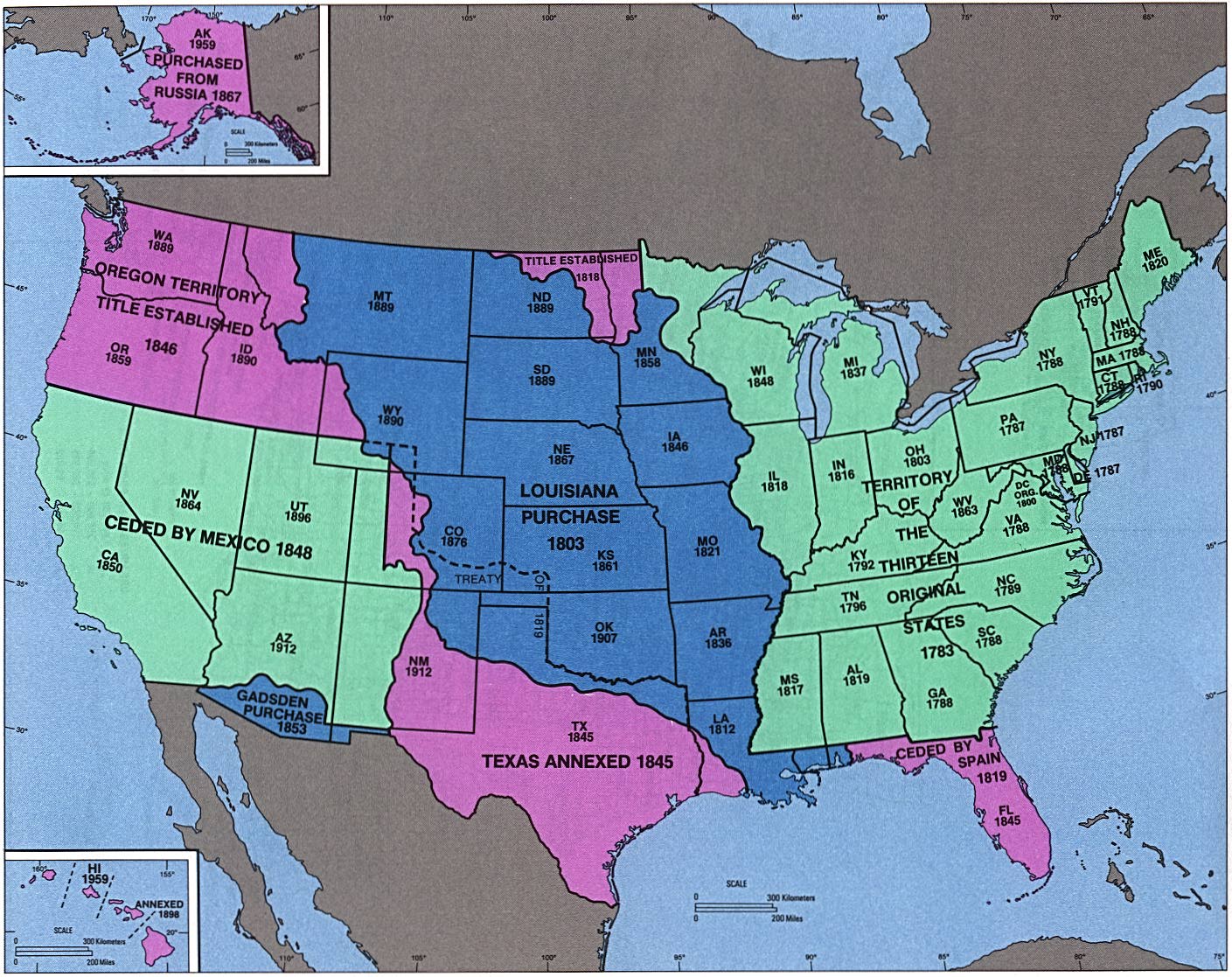
Unit 1 – Napoleon’s World
General Resources for this Unit
- You might want to start by having your oldest students read this selection on “How to Read a History Assignment”.
Week 1: When John Adams Was President
- George Washington
- John Adams
- Archiving Early America: The Alien and Sedition Acts
- Thomas Jefferson
- James Madison
- Lord Horatio Nelson
- Maximilien Robespierre
- Excerpts from Robespierre’s speech “Justification of the Use of Terror”
- Napoleon Bonaparte
- A comprehensive site linking more than you’ll ever need on the French Revolution.
- History of the White House
Week 2: Napoleon: The Man and His Career
- PBS on Napoleon: parents, screen first, please!
- Horatio Nelson
- Alexander I of Russia
- Short biography about Francis I of Austria
- William Pitt the Younger
- Maurice de Talleyrand
- Arthur Wellesley
- The Continental System
- The Third Coalition
- Napoleon’s Coronation
Week 3: Early Industrial Revolution
- Eli Whitney
- Robert Fulton
- Samuel Slater
- Francis Cabot Lowell
- John Kay
- James Hargreaves: click here and here
- Richard Arkwright
- Samuel Crompton
- Edmund Cartwright
- James Watt
- Thomas Newcomen
- Abraham Darby
- Richard Trevithick
- Robert Owen: Click here and here
- Henry Cort
Week 4: Jefferson and the Louisiana Purchase
- Facts about Thomas Jefferson
- From Enchanted Learning: Thomas Jefferson. Use this week and next.
- Quotations of Thomas Jefferson on Religion and Liberty
- Meriwether Lewis
- William Clark
- Sacagawea
- Aaron Burr
- Twelfth Amendment
- Marbury vs. Madison
Week 5: Jefferson and the Supreme Court
- From Enchanted Learning: Thomas Jefferson.
- Monticello
- The United States Constitution
- John Marshall
- Judicial Branch
- Short biography of Aaron Burr
- Civil Law (Continental Europe and Louisiana)
- Precedent Law
- Writ of mandamus
- Judicial review
Week 6: Madison and the War of 1812
- James Madison
- Dolley Madison
- Key Events & Causes of the War of 1812: click here and here.
- War of 1812: timeline of events that lead to the war.
- Treaty of Ghent
- Story of the Star Spangled Banner
- Star Spangled Banner (complete version)
Week 7: Reshaping Europe and South America
- Simon Bolivar
- Francisco de Miranda
- The Congress of Viena: click here and here.
- The History of South America
Week 8: South America in Transition
- Peru, Bolivia, Chile, Argentina, Uruguay and Paraguay
- The Boys’ Life of Abraham Lincoln
- Robert E. Lee’s Childhood
Week 9: Monroe and the American Hemisphere
Unit 2 – The Age of Industry & Expansion
Week 10: John Quincy Adams and Political Realignments
- John Quincy Adams
- Election of 1824
- Inaugural Address by John Quincy Adams
- Tariff of Abominations
- Louis Braille Biography
- The Erie Canal: A Journey Through History
- For the dialectic Accountability Question 9, click here and here.
Week 11: Jacksonian Democracy
- Biography of Andrew Jackson
- Elections of 1828 and 1832
- Indian Removal Act of 1830
- Biography of Sequoyah
- Facts for Kids: Cherokee Tribe
- More about the Cherokee
- Chart showing lots of good information about Native Americans. Excellent!
Week 12: Revolutions in Texas & Europe
- Jackson’s Second Inaugural Address
- Sam Houston
- Santa Anna
- James Bowie
- William Travis
- The Battle of the Alamo
- Paris and the Revolution of 1830
Week 13: Victorian England
- Victorian Era
- Prince Albert
- Lord Melbourne
- Leopold I
- George IV
- William IV
- Charles X
- Louis Philippe
- Victorian England: great for grammar students
- The impact of inventions on everyday life: The washing machine
- Lighting of the Victorian Home
- Heating, Lighting, and Hygiene in the Victorian Era
- Cooking in the Victorian Era
- The Victorians: great site for your mini-unit report.
Week 14: Victorians at Home and Abroad
- Australian Flora and Fauna
- Victorian England
- Victorian England: great for grammar students
- New Zealand
Week 15: Manifest Destiny
Week 16: Sea to Shining Sea
- James K. Polk
- Manifest Destiny
- Prelude to the Mexican American War
- Mexican American War
- Marcus Whitman and Narcissa Prentiss(Whitman)
- Telegraph
- Samuel Morse: inventor of the electric telegraph and Morse Code.
- Morse Code Chart
- The History of the Photograph: Excellent links here and here
Week 17: The Oregon Trail
Week 18: 1848: Gold Dust & Gunpowder
Unit 3 – Nations Uniting & Dividing
Week 19: Westerners in Asia
- Compromise of 1850 and the Fugitive Slave Act
- Commodore Perry and the Opening of Japan
- Florence Nightingale
- Millard Fillmore
- Li Hongzhang
- Hudson Taylor
Week 20: Franklin Pierce & the Crimean War
- Crimean War
- Great PDF worksheets and activities about Florence Nightingale for grammar years.
- Florence Nightingale
- Franklin Pierce
- John Brown
Week 21: America Divides & Italy Unites
- Civil War
- Civil War Potpourri webpage.
- Jeffersonian View of the Civil War: Read with caution and the willingness to learn others’ viewpoints. Not a scholarly piece per se, but it does make excellent fodder for debate.
- Tax museum and the financing of the Civil War.
- The Dred Scott
- Missouri’s Dred Scott Case, 1846-1857
- James Buchanan
Week 22: Lincoln and the Start of the Civil War
- Information about Abraham Lincoln’s Inauguration
- Abraham Lincoln’s Inauguration Speech
- Abraham Lincoln
- From Spartacus Educational: Abraham Lincoln
- Detailed information on the battles of the Civil War. Click each picture for specific battles.
- The Battle of the Ironclads.
- Civil War guns: Muskets 101
- Short site for all ages on Camp Life.
- Civil War timeline
Week 23: Decisive Years of the Civil War
- PBS web site which encompasses the entire American history of slavery. Good for D and R levels.
- Biography of Clara’s life. Text is Dialectic level up.
- Another biography of Clara Barton.
- Other information on Civil War nurses.
- Read this first-hand account of abolitionist Levi Coffin, aid to over 3,000 slaves on the Underground Railroad.
- Learn and hear Civil War songs! All ages.
- Detailed information on the battles of the Civil War. Click each picture for specific battles.
- The Emancipation Proclamation
- The Gettysburg Address
- Julia Ward Howe, author of the Battle Hymn of the Republic. Good picture. Text is dialectic and up.
- Abraham Lincoln’s Second Inaugural Address, or click here for the inaugural addresses of all of the presidents.
- Looks like FUN! Check out this National Geographic Site: A game for the Underground Railroad.
- Christianity Today has an excellent article written by Mark Noll entitled “The Puzzling Faith of Abraham Lincoln”.
- Online quiz for Lower Grammar students about Lincoln’s life.
Week 24: Closing Years of the Civil War
- Railroad timeline
- Reconstruction: outline and summary of events.
- Abraham Lincoln
Week 25: Andrew Johnson vs. Radical Reconstruction
- An Eyewitness Account by the Lakota Chief Red Horse recorded in pictographs and text at the Cheyenne River Reservation, 1881. Click on the various episodes on the left to see great images!
- Plains Indians and horses: Scroll down and find some nice pictures. Text is Dialectic up, and a little hard to read.
- The Plains Indians and their dependence on buffalo: This site encompasses art and history. A Native American artist created this tapestry and kids are encouraged to think constructively in order to understand its meaning. Explanations and online matching activity are provided.
- HUGE gorgeous site with all kinds of links to follow up. Westward Expansion is only ONE part of this site on the Gilded Age
- Andrew Johnson
Week 26: Ulysses Grant & the Plains Indians Wars
- Very short bio with good picture of Bismarck.
- This link is from The Henry Ford museum site. Use this link again in Year 4.
- Ulysses S. Grant
Week 27: Technological Progress & the Unification of Germany
- Biography of Henry Stanley
- Otto Von Bismarck
- History of the Suez Canal
- The Great Chicago Fire
- Ferdinand de Lesseps and the Panama Canal
- Benjamin Disraeli
- Biography of William Gladstone
- David Livingstone
- Louis Pasteur
- Biography of George Eastman
- The History of Alexander Graham Bell
- Biography of Thomas Edison
- Issac Singer
- Alfred Nobel
- Christopher Sholes
- Levi Strauss
Unit 4 – The Gilded Age
Week 28: Introducing Africa and Reforming Empires
- Detailed History of Lord Palmerston
- William Gladstone
- Biography of Benjamin Disraeli
- Lord Salisbury
- Quick Biography of Nicholas I
- Alexander II
- Alexander III
- Charles Boycott
- Africa Studies
Week 29: The Scramble for Empire
- Imperialism
- Helpful, basic site on Imperialism.
- Biography of Rutherford Hayes
- Biography of James Garfield
Week 30: Imperialism and Culture
- Biography of Chester Arthur
- James Africanus Horton
- Edward Wilmot Blyden
- The First American Centennial
- The Centennial Exhibition (1876 Philadelphia).
Week 31: Waves of Immigrants
- Online handbook of the Statue of Liberty
- Statue of Liberty to Assemble
- History and timeline of Andrew Carnegie
- Joseph Pulitzer
- Frederic Auguste Bartholdi
- Ellis Island
- Ellis Island History
- History Videos of Ellis Island (scroll through and watch videos at the bottom of the page)
- Jacob Riis
Week 32: Captains of Industry
- Biography of Benjamin Harrison
- Andrew Carnegie
- John Davison Rockefeller
- John Pierpont Morgan
- Biography of Cornelius Vanderbilt
Week 33: Labor Issues and the New South
Week 34: Farmers, Populists, Gold Strikes and Gold Standards
- Biography of Thomas Watson
- Mary Elizabeth Lease
- Biography of William Jennings Bryan
- Andrew Carnegie
- George M. Pullman
- Sam McClure and McClure’s Magazine.
- Ida Tarbell
- Lincoln Steffens
- William Jennings Bryan: Cross of Gold (speech text and audio)
- Political Cartoons of 1896
Week 35: Powerful Men and Inspiring Women
- Otto van Bismarck
- Wilhelm II
- Theodore Roosevelt
- A biography of Sanford B. Dole
- Queen Liliuokalani
- Life history of Helen Keller
- Marie Curie
- Pierre Curie
- Anne Sullivan
Week 36: The Balkan Problem & American Imperialism
Geography
We suggest that you use a good world history atlas so that your students can have practice at the skill of using maps and legends. Click the link below for our recommendation. The next choice is to use the supporting links that you find here. Please only let your student look at the teacher map in Map Aids as a last resort.
General
Online Maps, Map Vendors, and More!
- Euratlas
- National Geographic: modern maps (source; printable) for every country in the world.
- More great outline maps: easy to use and nice and clear!
- Excellent link for all units! Click here for the Historic Atlas Resource.
- An excellent site for reviewing geography. Click here and scroll down to “All of our Maps and Software”. Free downloadable games for each continent, includes capitals and where the country belongs!
- Great historical map site.
- Interactive Historic Atlas.
- Creator has done a superb job making this site, which will be lots of help in all four year-plans.
- MegaMaps: print up maps from the size of a single page to 7 feet across!
- Imperial History of the Middle East: Who has conquered the Middle East over the course of world events? View this 90-second flash presentation!
States:
- Use this site as you are making your deck of state cards: 50states.com
Unit 1 – Napoleon’s World
Week 1: When John Adams Was President
- A helpful site for geography terms.
- The Key to Understanding Maps
- Map showing dates that each state entered the union
- Here is a pdf. file to download if you need a blank world map.
Week 2: Napoleon: The Man and His Career
- Full map of Europe in year 1800
- Germany and Italy before Napoleon.
- French Empire at its greatest extent, c. 1811
- From USGS: Map projections
- From National Geographic: introduction to latitude and longitude
- National Geographic Map Skills: PreK-6th grade.
- Here is a .pdf file to download if you need a blank world map.
- Blank .pdf map of Europe for you to label.

Week 3: Early Industrial Revolution
- Labeled map of the British Isles.
- Another good map of the United Kingdom
- Identify the Cape of Good Hope in South Africa here.
- Blank map of the British Isles.
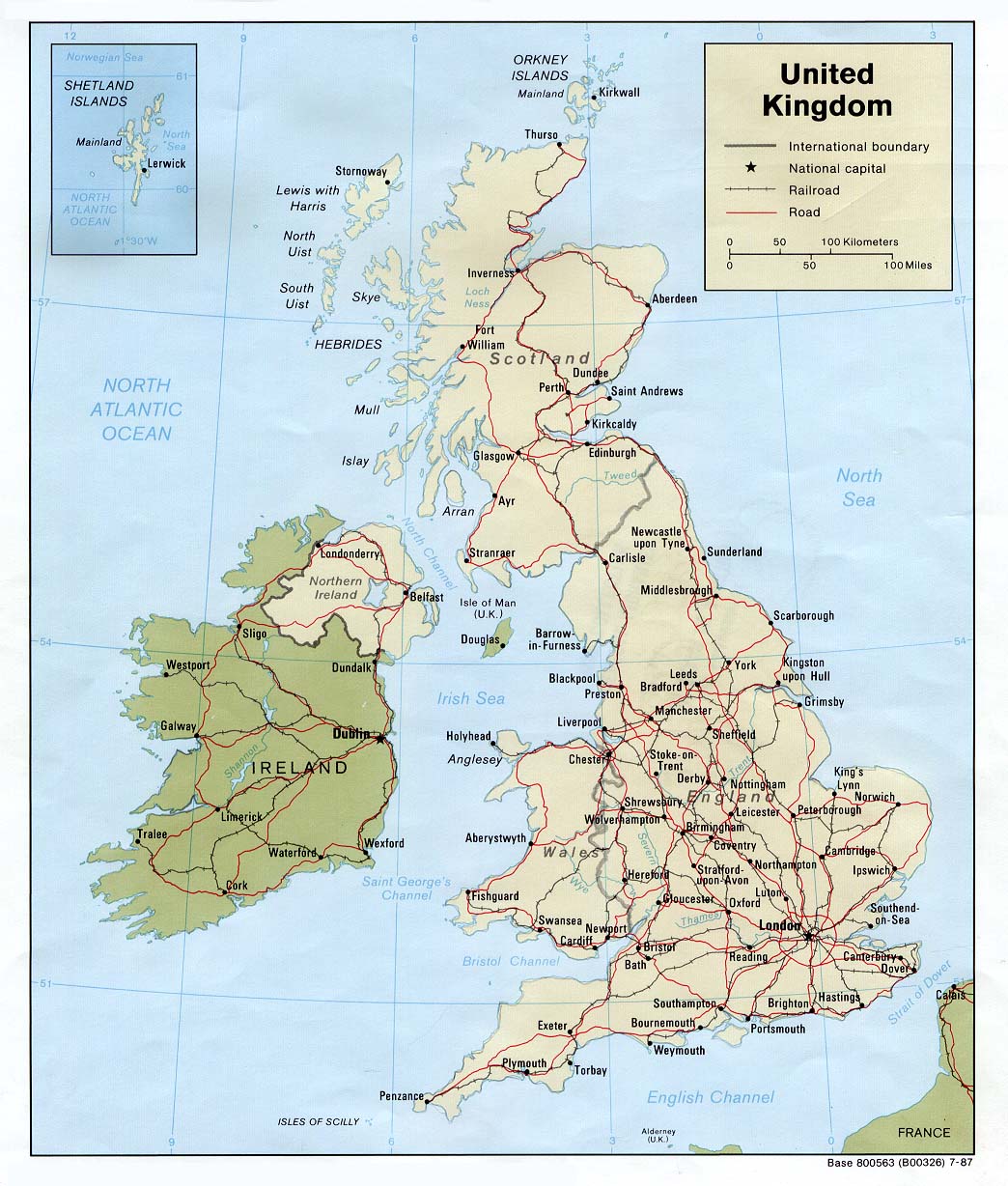

Week 4: Jefferson and the Louisiana Purchase
- Map showing the Louisiana Purchase, Oregon Country, holdings of Spain, Illinois Territory, Michigan Territory, Indiana Territory, and the Mississippi Territory
- Another map of the Louisiana Purchase, showing the modern U.S. states
- Path of Lewis and Clark with rivers.
- Blank map of the United States with labeling.
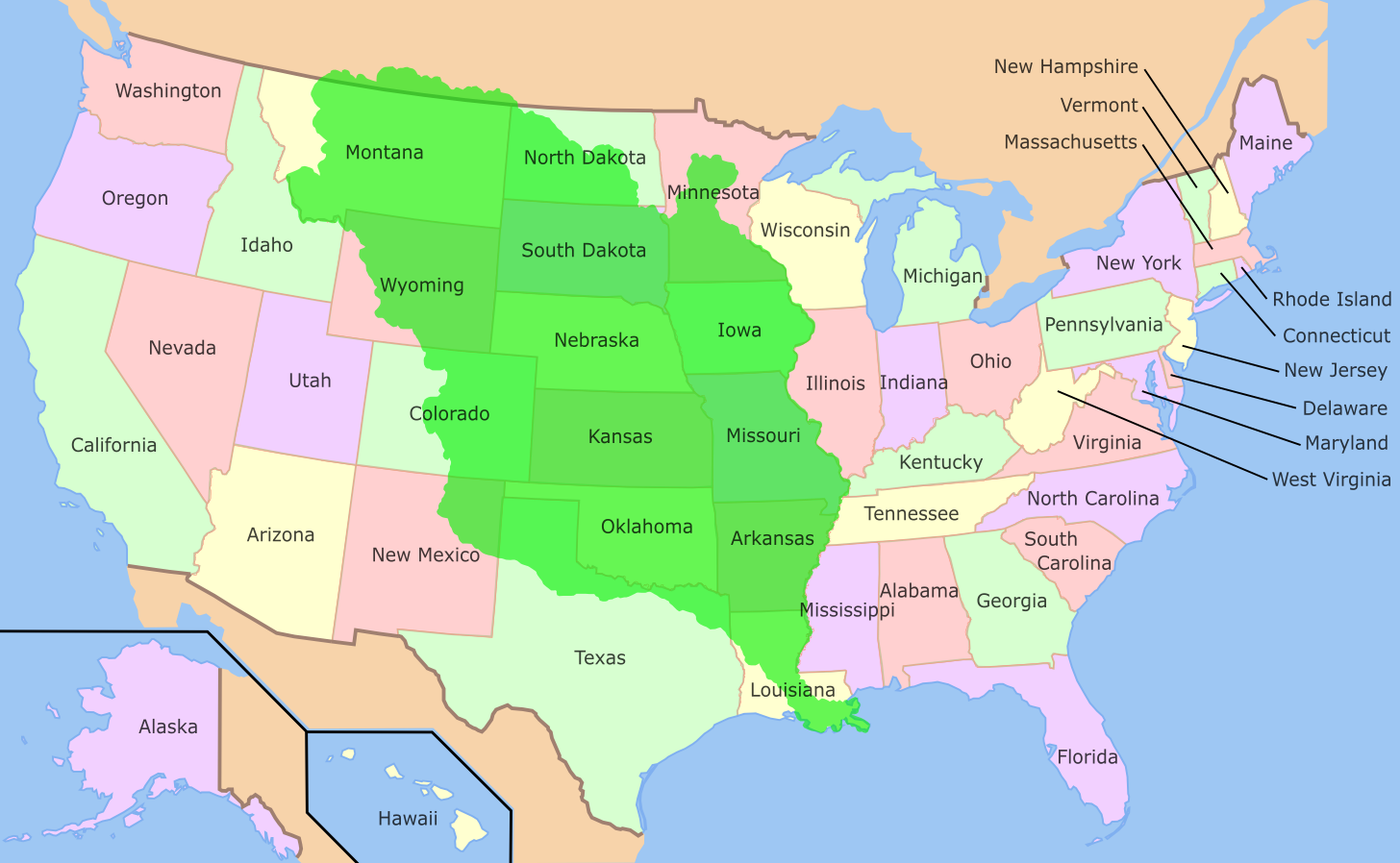

Week 5: Jefferson and the Supreme Court
- There are no objectives this week.
Week 6: Madison and the War of 1812
- Battles of the War of 1812
- The Northern Frontier in the War of 1812
- War of 1812 battle maps.
- War of 1812.


Week 7: Reshaping Europe and South America
- From Enchanted Learning: South America
- From Enchanted Learning: Flags of South America
- Plants of South America
- From Enchanted Learning: South American Animals
- South America Map Puzzle
- Map of South America
- Blank outline maps of South America
- Map of Europe at the time of the Congress of Vienna.
- Map of Napoleonic Europe. This Map includes Napoleon’s conquests and battles.
- San Diego Zoo’s page for South American Animals
- Caribbean Islands
- Viceroyalty of New Granada
- Europe 1800
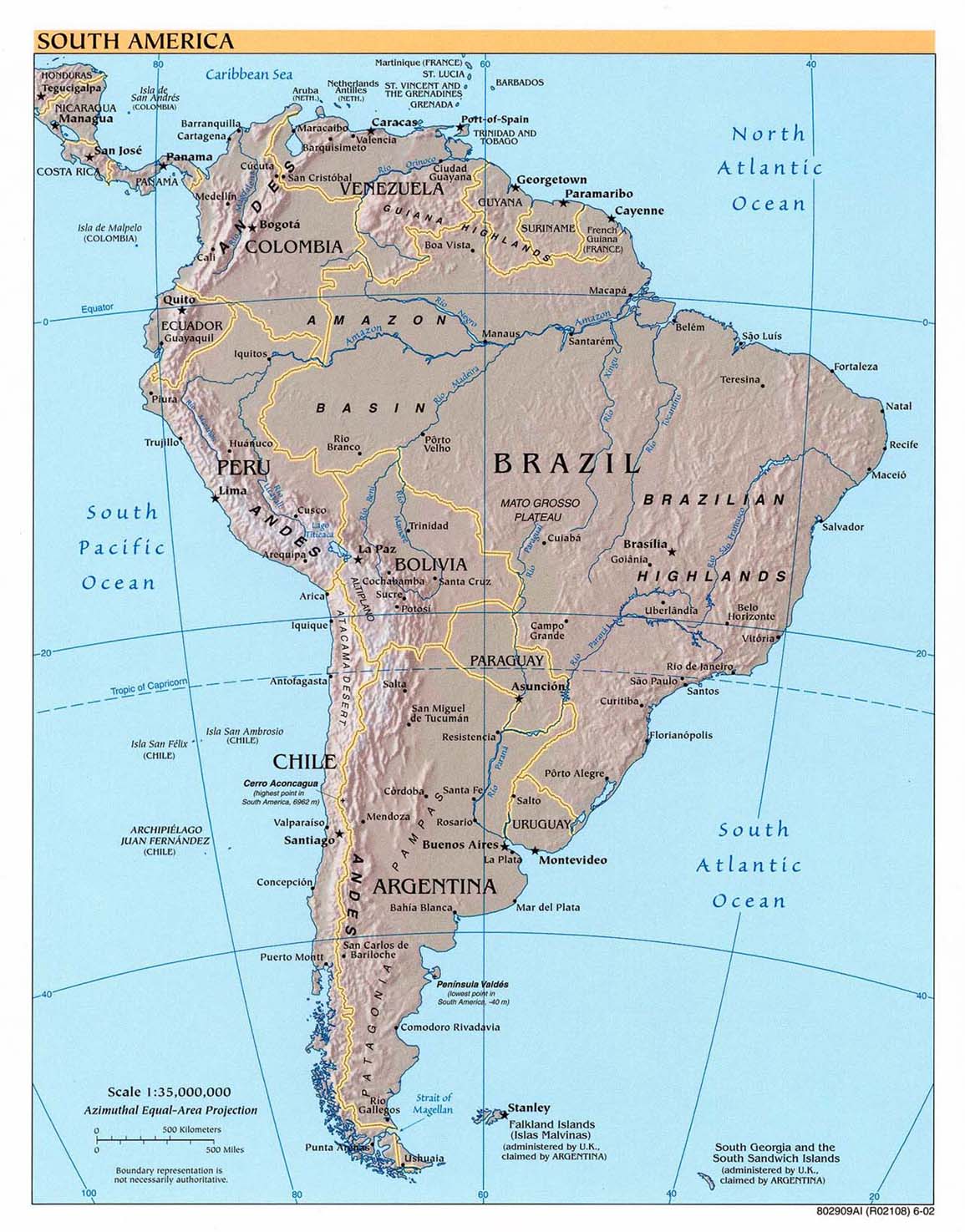
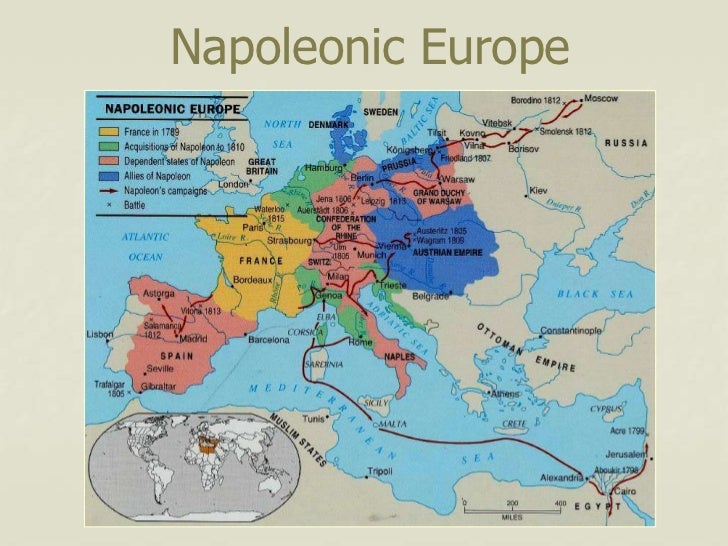
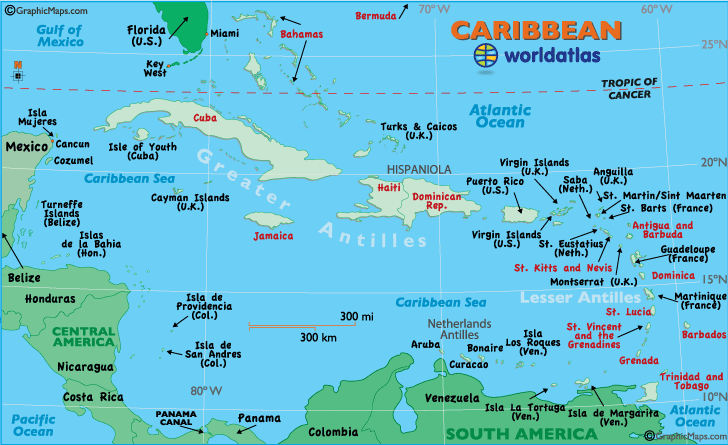

Week 8: South America in Transition
- From Enchanted Learning: South America
- From Enchanted Learning: Flags of South America
- From Enchanted Learning: South American Animals
- South America Map Puzzle
- Blank outline maps of South America
- Map of Europe at the time of the Congress of Vienna.
- Map of Napoleonic Europe. This Map includes Napoleon’s conquests and battles.
Week 9: Monroe and the American Hemisphere
- Map of Europe after the Congress of Vienna
- Your choice of a blank map of South America, or one with labels.
- Map of Europe at the time of the Congress of Vienna.
- Map of Napoleonic Europe. This Map includes Napoleon’s conquests and battles.
- South American Independence
Unit 2 – The Age of Industry & Expansion
Week 10: John Quincy Adams and Political Realignments
- Map of Erie Canal
- Map of Texas Rivers
- Map of Texas
- Texas Climate

Week 11: Jacksonian Democracy
- Map showing the Five Civilized Tribes
- Picture of The Great Smoky Mountains.
Week 12: Revolutions in Texas & Europe

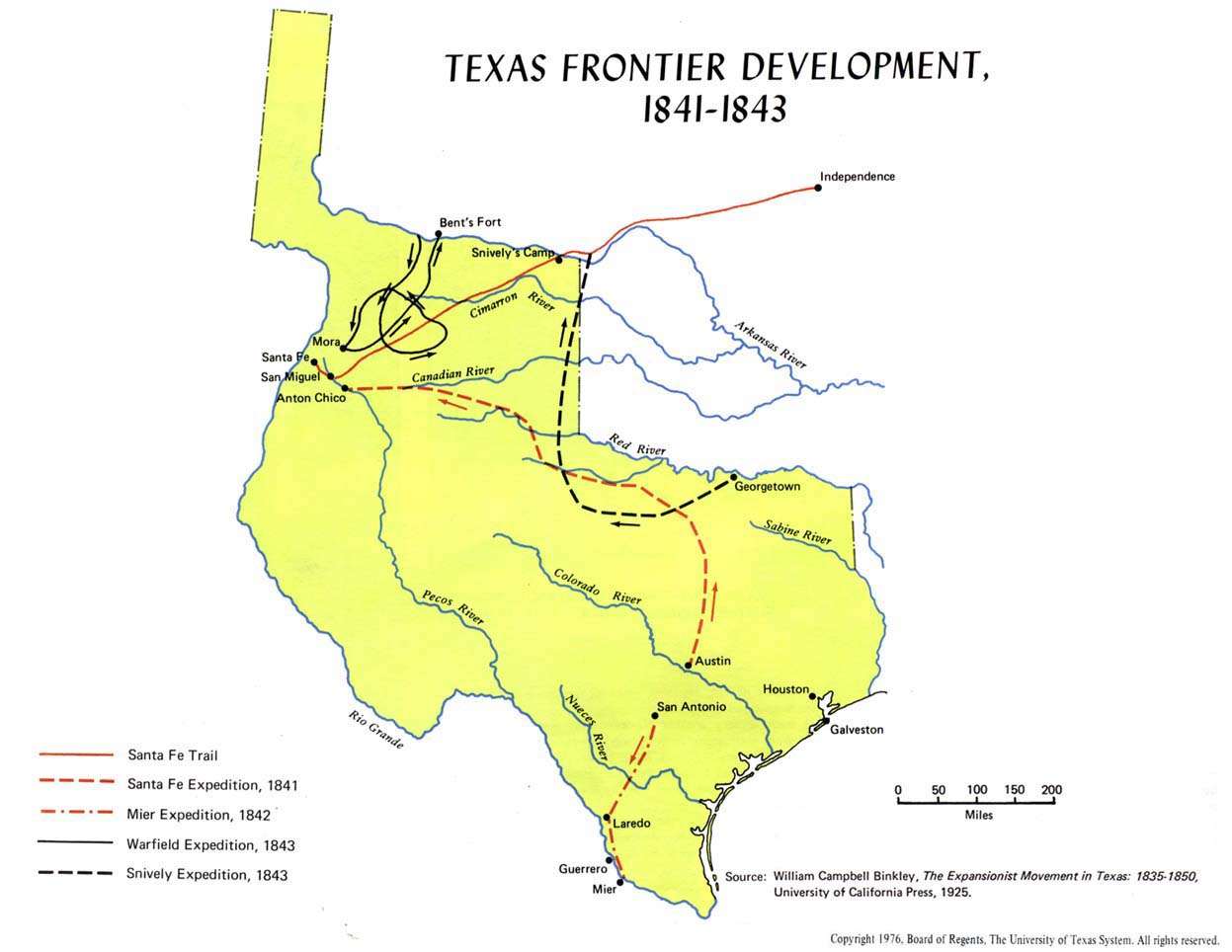
Week 13: Victorian England
- Interactive map: The War of 1812.
- Blank outline map of the War of 1812 (pdf file)
- Use this map or this one to find locations of various Native American tribes.
- Interactive map to Native Americans (Grammar Students)
- Blank outline map of the US (pdf file)
- The British Isles
- The climate of the British Isles.
Week 14: Victorians at Home and Abroad
- Blank map of Australia
- Nice map of Australia.
- Map of New Zealand
- The major climate regions of Australia.
- The climate regions of the British Isles.

Week 15: Manifest Destiny
Week 16: Sea to Shining Sea
- Map of Mexican Territory
- The Mormon Trail
- The climate of California.
- Major Mountain Ranges of the West: click here
- Major Rivers: Nebraska, Wyoming, Utah

Week 17: The Oregon Trail
Week 18: 1848: Gold Dust & Gunpowder
- The Gold Rush map
- The Continents and Oceans of the world.
- Atlantic Ocean
- Pacific Ocean
- Cape Horn, South America
- Strait of Magellan
- Salt Lake City, Utah
- San Francisco, CA
- Sacramento, CA
- Coloma, CA Where Sutter’s Mill was located
- Platte River
- Humboldt River
- San Francisco Bay
- Great Salt Lake
- Forty Mile Desert (now called Lahontan Valley)


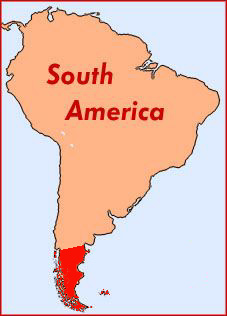
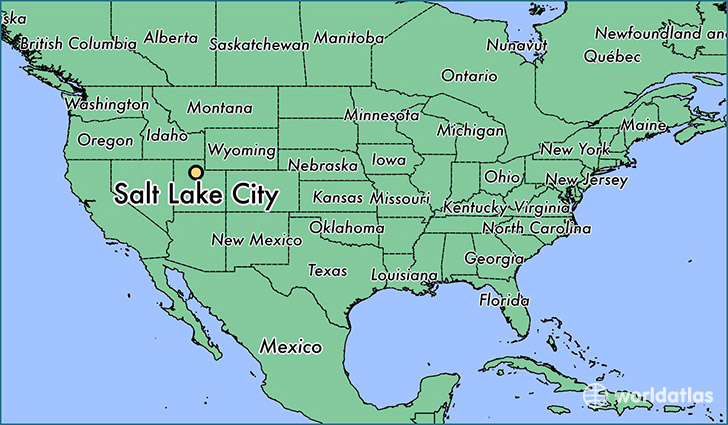

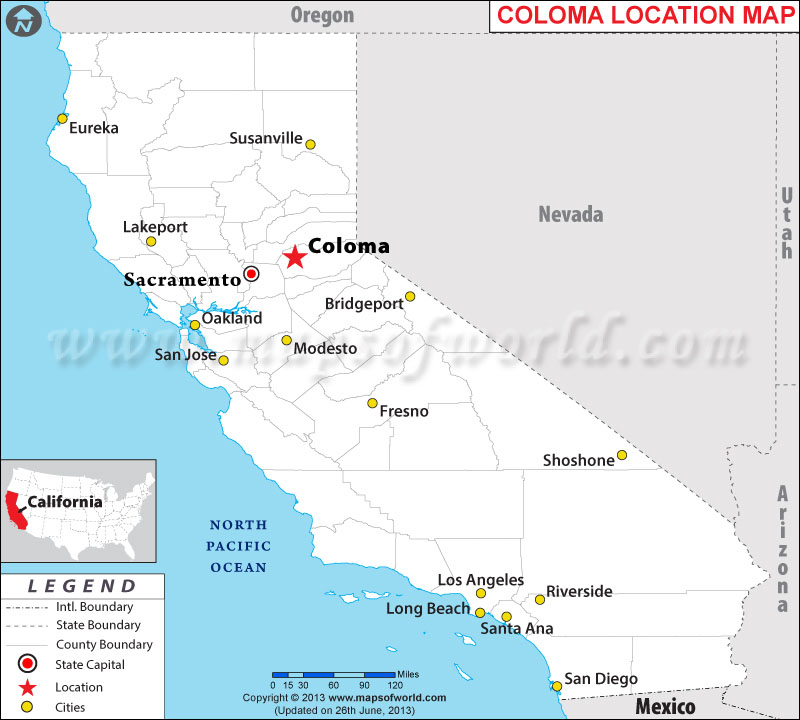
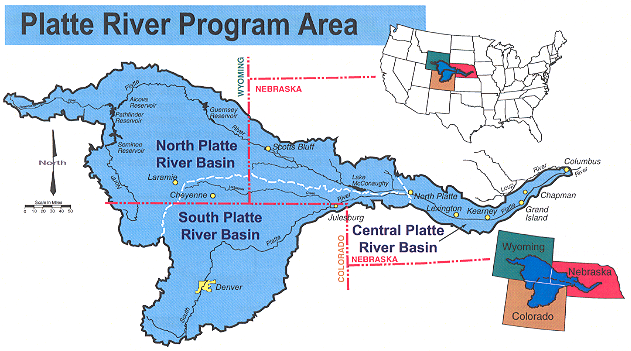


Unit 3 – Nations Uniting & Dividing
Week 19: Westerners in Asia
- Blank outline map of China
- The same site at Enchanted Learning offers more information about China. Excellent!
- All the outline maps, geographical information, and map labels you’ll need for a study of China.
- Map of China
- Map of Japan
- Outline map of Japan
- Pictures of China, Japan and India
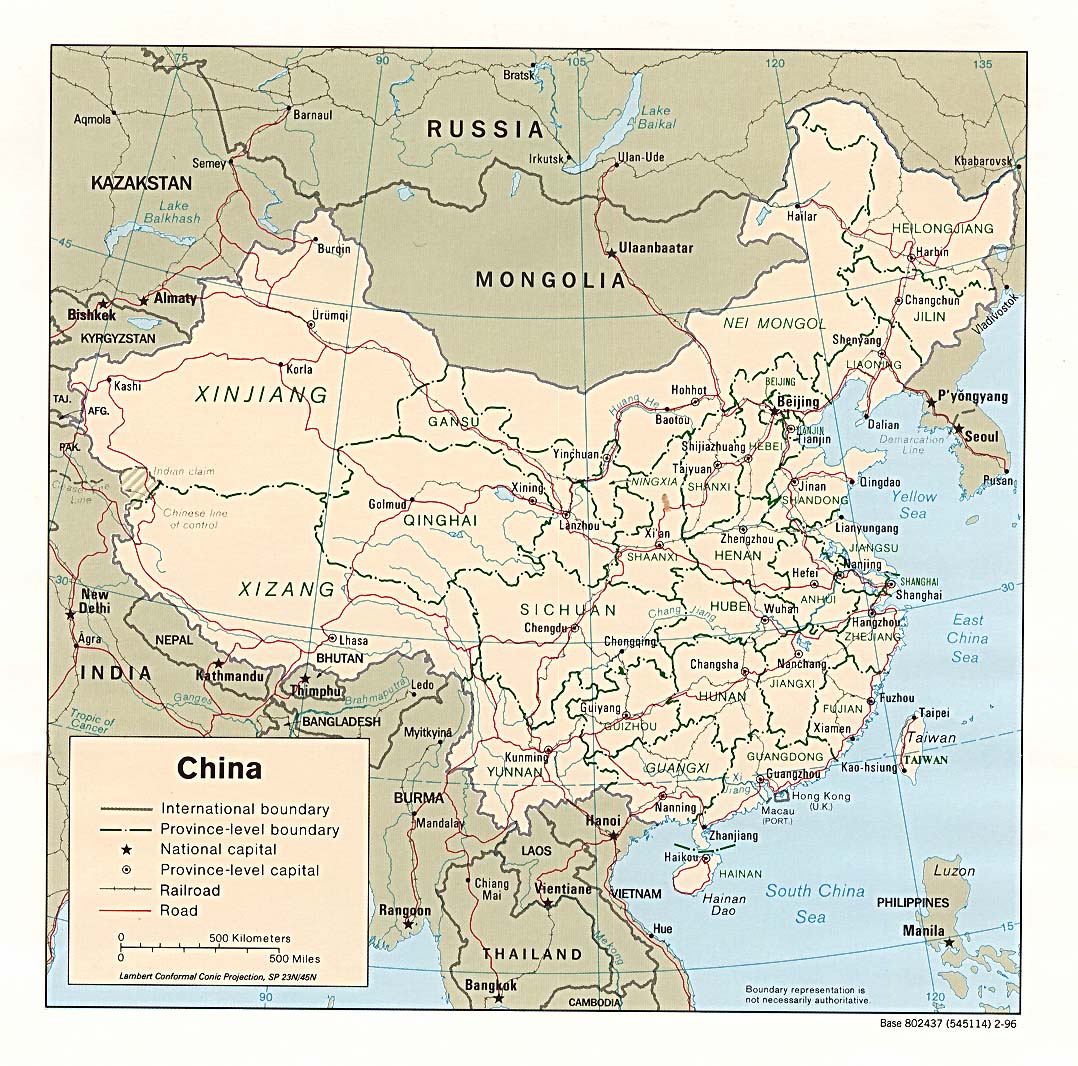
Week 20: Franklin Pierce & the Crimean War
- No links for this week.
Week 21: America Divides & Italy Unites
- Very clear map showing slave and free states.
- Blank outline map of the United States. This is a pdf file.
- This is a really neat animated atlas that you can use anytime while studying the rest of this year-plan. Don’t miss it!
Week 22: Lincoln and the Start of the Civil War
- WOW! Wonderful, clear maps of Civil War battles, state by state. GREAT resource for kids (Upper Grammar and up).
- Union and Confederate Boundaries: Free states and slave states in each area.
- Abraham Lincoln: The places he worked and lived can be found here and here.
- A blank map of the United States.

Week 23: Decisive Years of the Civil War
- No links for this week.
Week 24: Closing Years of the Civil War
- No links for this week.
Week 25: Andrew Johnson vs. Radical Reconstruction
- Blank outline map of the United States. This is a pdf file.
- Iroquois Tribes
- Map of battles, posts, and tribes.
- The South During Reconstruction
- Boarders and five military districts during Radical Reconstruction
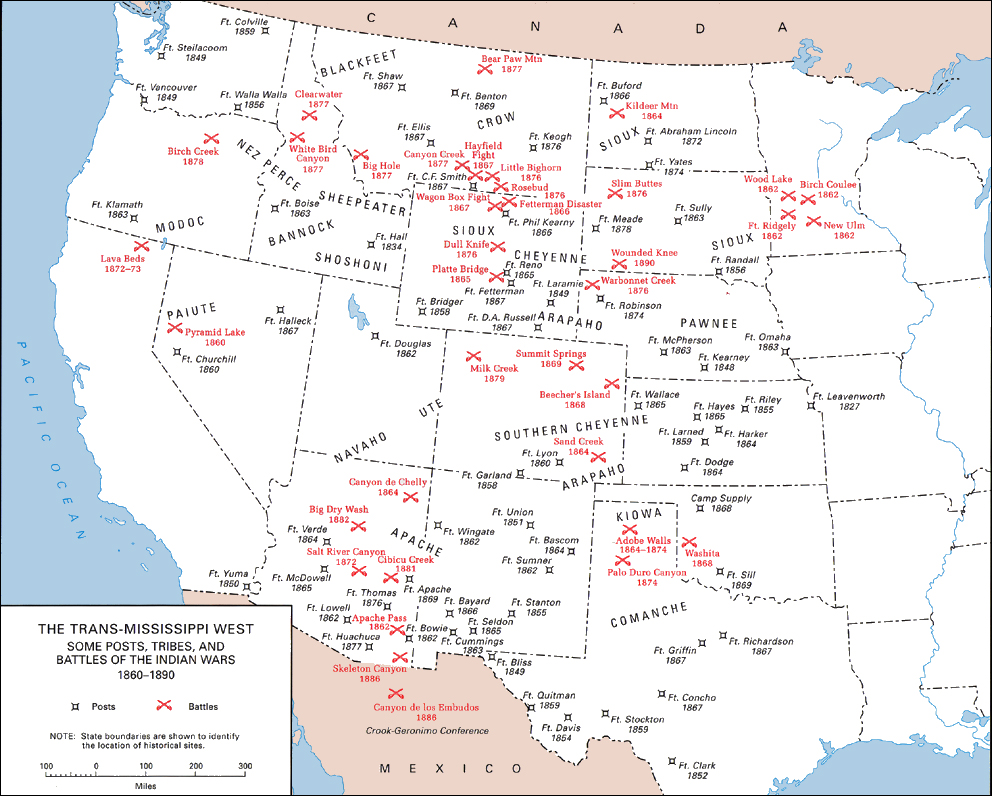

Week 26: Ulysses Grant & the Plains Indians Wars
- Toward the Unification of Germany
- Another helpful map showing the unification of Germany
- Several maps, showing the progression of the states from 1812 to 1990
- A blank map of Germany, ready for printing and labeling.
- Plains Indians
Week 27: Technological Progress & the Unification of Germany
- Location of the Suez Canal
- Map of Bismarck’s new German Empire
Unit 4 – The Gilded Age
General Resources for this Unit
- Great Maps of Africa
- Great Videos about Africa
Week 28: Introducing Africa and Reforming Empires
- West Africa Geography and Information
- Blank outline map of Africa
- A labeled map of Africa and Southwest Asia. (pdf file)
- Interactive map of Africa. Really cool!
- Map of Africa’s Bodies of Water.
Week 29: The Scramble for Empire
- Fun site: The Sun Never Sets on the British Empire.
- Map and information about Eastern Africa
- Map and information about Central Africa
- The scramble for Africa
- Map of Africa, Imperial boundaries, 1914
- European Colonies in Africa and Asia
- European Colonies in Asia
Week 30: Imperialism and Culture
- European Colonies in Africa and Asia
- European Colonies in Asia
Week 31: Waves of Immigrants
- Great interactive map that shows the way immigrants moved across America.
- Download this blank world map. (pdf file)
- US Territorial Maps 1775-1920
Week 32: Captains of Industry
Week 33: Labor Issues and the New South
Week 34: Farmers, Populists, Gold Strikes and Gold Standards
- Blank outline of North America
Week 35: Powerful Men and Inspiring Women
- Review geography terms
Week 36: The Balkan Problem & American Imperialism
- Map of Cuba
- Blank China outline map
- Map of South Pacific islands
- Blank outline map of Hawaii
Worldview
General
- Great site on Kierkegaard!
- Another massive site: teacher’s use initially. You’ll use it to find sites for your children. If they want to read the originals, they are here!
- Worldwide Missions: Year 3 encourages you and your children to pray for Hindus and Buddhists. Three weeks are devoted to the lives of the missionaries. You will enjoy reading summaries of their lives. Site contains statistics that give a clear picture of prayer. Use of this site removes the need to purchase Operation World.
- The Ism Book: an online book for basic definitions that will help you in your worldview studies.
- YWAM: missionary puzzles and coloring pages
Unit 1 – Napoleon’s World
Week 1: When John Adams Was President
- Christian History: William Carey
- Biography and more links about William Carey
- From Probe Ministries: Hinduism
- India religious population
Week 2: Napoleon: The Man and His Career
- Christian History: William Carey
- Biography and more links about William Carey
- Immanuel Kant
Week 3: Early Industrial Revolution
Week 4: Jefferson and the Louisiana Purchase
Week 5: Jefferson and the Supreme Court
Week 6: Madison and the War of 1812
Week 7: Reshaping Europe and South America
- Adoniram Judson
- Georg Wilhelm Friedrich Hegel
- Adoniram Judson Story: YouTube video
Week 8: South America in Transition
- Adoniram Judson
- Georg Wilhelm Friedrich Hegel
- Adoniram Judson Story: YouTube video
Week 9: Monroe and the American Hemisphere
- Adoniram Judson
- Georg Wilhelm Friedrich Hegel
- Adoniram Judson Story: YouTube video
Unit 2 – The Age of Industry & Expansion
Week 10: John Quincy Adams and Political Realignments
- Charles Grandison Finney and the Revival
- James Mill biography
- Leaders of the First Great Awakening
Week 11: Jacksonian Democracy
- Charles Grandison Finney and the Revival
Week 12: Revolutions in Texas & Europe
Week 13: Victorian England
- Muller in brief.
Week 14: Victorians at Home and Abroad
- Muller in brief.
- Charles Darwin
Week 15: Manifest Destiny
- Latter-day Saints
- Joseph Smith—History from The Pearl of Great Price
- Parent use only: from The Church of Jesus Christ of Latter-day Saints websites: History of the Church. Use this link to understand Mormon’s teachings and then present what you’ve found to your children.
Week 16: Sea to Shining Sea
Week 17: The Oregon Trail
- The Mormon Pioneer Trail: click on History & Culture on the left side of the page
Week 18: 1848: Gold Dust & Gunpowder
Unit 3 – Nations Uniting & Dividing
Week 19: Westerners in Asia
- Christian History on Hudson Taylor
- Another brief biography of Hudson Taylor.
- Soren Kierkegaard
Week 20: Franklin Pierce & the Crimean War
- No links for this week.
Week 21: America Divides & Italy Unites
- No links for this week.
Week 22: Lincoln and the Start of the Civil War
- Edited J. S. Mill’s Essay on Liberty, Chapter 1, assigned this week in Pageant of Philosophy
- Biography on William Booth.
- Another brief biography on William Booth
- Battle Hymn of the Republic.
Week 23: Decisive Years of the Civil War
- J. S. Mill’s treatise On the Subjection of Women (abridged). Required reading for this week’s Pageant of Philosophy.
- Christian History: Christianity among slaves and black freedmen.
- Christmas carols and the Civil War (on Christian History site. May move.)
- Information on Christian revivals in the camps of both Northern and Southern soldiers.
- Biography of William Booth
- Photos of Civil War Clergy.
- Battle Hymn of the Republic
Week 24: Closing Years of the Civil War
- Composite page on Moody, with helpful resources and links. Older students or Teachers.
- A close friend of Moody was Horatio Spafford, writer of the beloved hymn It Is Well With My Soul. Spafford’s faith carried him through the great Chicago fire, and the tragic losses of his son and four daughters. Read his story: click here.
- Christian History: Dwight L. Moody
- Biography of William Booth
- Karl Marx’s Theory of Economics
- Religious Revival in Civil War Armies
Week 25: Andrew Johnson vs. Radical Reconstruction
- No links for this week.
Week 26: Ulysses Grant & the Plains Indians Wars
- Charles Darwin’s Origin of Species (selections). Required reading for this week’s Pageant of Philosophy.
Unit 4 – The Gilded Age
Week 27: Technological Progress & the Unification of Germany
- Encyclopedia Britannica on David Livingstone
- Christian Biography Resources on David Livingstone
- Missionary Biography of David Livingstone
Week 28: Introducing Africa and Reforming Empires
- Christian Biography Resources on Mary Slessor
- Missionary Biography of Mary Slessor
- A Kids Glimpse of the life of Mary Slesser
- Wonderzone: a great Christian site where kids can learn about missionaries through online stories. “Danger in Calabar” follows Mary Slessor through the jungles as she teaches tribesmen about God. You must sign up for an account to enter the site.
- The life and written work of John Henry Cardinal Newman
- Excerpts from Vatican I (.pdf)
Week 29: The Scramble for Empire
- Christian Biography Resources on Mary Slessor
- Missionary Biography of Mary Slessor
- A Kids Glimpse of the life of Mary Slesser
- Wonderzone: a great Christian site where kids can learn about missionaries through online stories. “Danger in Calabar” follows Mary Slessor through the jungles as she teaches tribesmen about God. You must sign up for an account to enter the site.
- Stanford Encyclopedia of Philosophy on Friedrich Nietzsche
- Friedrich Nietzsche Biography
Week 30: Imperialism and Culture
- Christian Biography Resources on Mary Slessor
- Missionary Biography of Mary Slessor
- A Kids Glimpse of the life of Mary Slesser
- Wonderzone: a great Christian site where kids can learn about missionaries through online stories. “Danger in Calabar” follows Mary Slessor through the jungles as she teaches tribesmen about God. You must sign up for an account to enter the site.
- Stanford Encyclopedia of Philosophy on Friedrich Nietzsche
- Friedrich Nietzsche Biography
Week 31: Waves of Immigrants
- Frontier Revivalism
- Christian Biography Resources: Dwight Lyman Moody
- D.L. Moody: Story and a great short video about his life.
Week 32: Captains of Industry
- Frontier Revivalism
- Christian Biography Resources: Dwight Lyman Moody
- D.L. Moody Story and a great short video about his life
- Lottie Moon for older students. You can view her biography, letters, and a short video on her life.
Week 33: Labor Issues and the New South
- Frontier Revivalism
- Christian Biography Resources: Dwight Lyman Moody
- D.L. Moody Story and a great short video about his life
- Lottie Moon for older students. You can view her biography, letters, and a short video on her life.
Week 34: Farmers, Populists, Gold Strikes and Gold Standards
- Everything you need on Charles Spurgeon: the Prince of Preachers. PLEASE read one of his wonderful sermons! (Danger: they are habit forming!)
- Christian Biography Resources: Charles H. Spurgeon
- Spurgeons’ Sermons and Audio Sermons
- Christian History: Charles H. Spurgeon
- Lottie Moon for older students. You can view her biography, letters, and a short video on her life.
- William James: American Philosopher
- William James biography
Week 35: Powerful Men and Inspiring Women
- Everything you need on Charles Spurgeon: the Prince of Preachers. PLEASE read one of his wonderful sermons! (Danger: they are habit forming!)
- Christian Biography Resources: Charles H. Spurgeon
- Spurgeons’ Sermons and Audio Sermons
- Christian History: Charles H. Spurgeon
- William James: American Philosopher
- William James biography
Week 36: The Balkan Problem & American Imperialism
- Everything you need on Charles Spurgeon: the Prince of Preachers. PLEASE read one of his wonderful sermons! (Danger: they are habit forming!)
- Christian Biography Resources: Charles H. Spurgeon
- Spurgeons’ Sermons and Audio Sermons
- Christian History: Charles H. Spurgeon
Literature
General
- Massive site: initially teacher’s use in gathering background information. If student wants to read the originals, they are here!
- FreeBooknotes.com presents Cliff’s Notes-like help for many works.
- Several books assigned, and some not assigned but interesting to Rhetoric level students (like works of Voltaire and Darwin) are found here.
- Wordsmyth: look up words, make your own glossaries. Type in a list of vocabulary words and push send. You will get professional style glossary pages.
- Norton online quizzes – Western Literature
Unit 1 – Napoleon’s World
Week 1: When John Adams Was President
- Read Rapunzel here.
- Teaching Guide for Rapunzel
- Text of Pride and Prejudice
Week 2: Napoleon: The Man and His Career
- Pride and Prejudice by Jane Austen
- Spark Notes for Pride and Prejudice
Week 3: Early Industrial Revolution
Week 4: Jefferson and the Louisiana Purchase
- Rumpelstiltskin
- Pride and Prejudice by Jane Austen
- Spark Notes for Pride and Prejudice
Week 5: Jefferson and the Supreme Court
- William Blake and poetry
- William Wordsworth and poetry
- James Macpherson and poetry
- Robert Burns and poetry
- Sir Walter Scott and poetry
Week 6: Madison and the War of 1812
- Lyrics to the Star-Spangled Banner
- William Wordsworth and poetry
- Samuel Taylor Coleridge and poetry
Week 7: Reshaping Europe and South America
- Johnny Appleseed
- Full version of Swiss Family Robinson
- Additional questions and activities for Swiss Family Robinson
- Full version of Frankenstein
- Spark Notes on Frankenstein
- Lord George Gordon Byron and poetry
- Percy Bysshe Shelley and poetry
- John Keats and poetry
- See many translations of Silent Night; many of them have an audio that you can listen to as well.
- Johnny Appleseed: story and crossword puzzle
Week 8: South America in Transition
- Additional questions and activities for Swiss Family Robinson
- Full version of Frankenstein
- Spark Notes on Frankenstein
- Full text of Goethe’s Faust
- Study Guide for Goethe’s Faust
- Another Study Guide for Faust
Week 9: Monroe and the American Hemisphere
- Translations of Silent Night
- Silent Night
- Additional questions and activities for Swiss Family Robinson
- Full version of Frankenstein
- Spark Notes on Frankenstein
- Short biography of Chateaubriand
- Short biography of Pushkin and his literature
- Irving and his literature
Unit 2 – The Age of Industry & Expansion
Week 10: John Quincy Adams and Political Realignments
- John James Audubon biography. Don’t miss the printables and games at the end of the biography.
- Biography of Frederic Chopin
- Listen to music by Chopin
- Thematic exploration of Island of the Blue Dolphins
- Examine Island of the Blue Dolphins through a literary lens
- Victor Hugo and the text of Les Miserables
- Spark Notes on Les Miserables
- Life of Scott O’ Dell
Week 11: Jacksonian Democracy
- Biography of Frederic Chopin
- Listen to music by Chopin.
- Thematic exploration of Island of the Blue Dolphins
- Examine Island of the Blue Dolphins through a literary lens
- Victor Hugo and the text of Les Miserables
- Spark Notes on Les Miserables
Week 12: Revolutions in Texas & Europe
- The Ugly Duckling, by Hans Christian Anderson
- Thematic exploration of Island of the Blue Dolphins
- Examine Island of the Blue Dolphins through a literary lens
- Victor Hugo and the text of Les Miserables
- Spark Notes on Les Miserables
Week 13: Victorian England
- Spark Notes: Les Miserables
- Full text of David Copperfield
- Spark Notes: David Copperfield
Week 14: Victorians at Home and Abroad
- A Christmas Carol by Charles Dickens
- A free dramatic audio version of A Christmas Carol by Charles Dickens.
- Study guide for A Christmas Carol
- Spark Notes: Les Miserables
- Spark Notes: David Copperfield
- Charles Dickens
Week 15: Manifest Destiny
- Full text of Oliver Twist
- Spark Notes: Oliver Twist
- Spark Notes: The Raven by Poe
Week 16: Sea to Shining Sea
- Full text of The Princess and the Goblin
- The Princess and the Goblin discussion questions
- Spark Notes: The Scarlet Letter
Week 17: The Oregon Trail
- Full text of The Scarlet Letter
- Spark Notes: The Scarlet Letter
Week 18: 1848: Gold Dust & Gunpowder
- Spark Notes: Billy Budd
- Watch Beijing Opera on YouTube.
Unit 3 – Nations Uniting & Dividing
Week 19: Westerners in Asia
- Emily Dickinson poetry
- Watch a scene from Beijing Opera!
- Gustave Flaubert and his poetry
- Walt Whitman and his works
- Gerard Manley Hopkins poetry
Week 20: Franklin Pierce & the Crimean War
- Pdf download of study guide for The Adventures of Tom Sawyer
- Spark Notes for Tom Sawyer
- Full text of Great Expectations
- Spark Notes for Great Expectations
Week 21: America Divides & Italy Unites
- No links for this week.
Week 22: Lincoln and the Start of the Civil War
- Pdf download of study guide for Across Five Aprils. Scroll down to download the file.
Week 23: Decisive Years of the Civil War
- No links for this week.
Week 24: Closing Years of the Civil War
- Billy Budd: Spark Notes
Week 25: Andrew Johnson vs. Radical Reconstruction
- Little Women by Louisa May Alcott
- Twenty Thousand Leagues Under the Sea by Jules Verne
Week 26: Ulysses Grant & the Plains Indians Wars
- Emily Dickinson: The Complete Poems
- Alice in Wonderland: an Interactive Adventure. This is a site with games and activities linked to Alice in Wonderland. Great for younger students!
Week 27: Technological Progress & the Unification of Germany
- Black Beauty by Anna Sewell
- A biography of Robert Browning
- Biography of Alfred, Lord Tennyson
- The Lady of Shalott
Unit 4 – The Gilded Age
Week 28: Introducing Africa and Reforming Empires
- Just so Stories by Rudyard Kipling
- The Jungle Book by Rudyard Kipling
- Biography of Tolstoy
Week 29: The Scramble for Empire
- Just so Stories by Rudyard Kipling
- The Jungle Book by Rudyard Kipling
- A Heart of Darkness by Joseph Conrad
- Spark Notes for A Heart of Darkness
Week 30: Imperialism and Culture
- Audio of Rikki-Tikki-Tavi by Jerry Pinkney
- Just so Stories by Rudyard Kipling
- The Jungle Book by Rudyard Kipling
- Crime and Punishment by Fyodor Dostoevsky
- Spark Notes for Crime and Punishment
Week 31: Waves of Immigrants
- Sherlock Holmes: The Hound of the Baskervilles by Sir Arthur Conan Doyle
- Spark Notes for The Hound of the Baskervilles
- Crime and Punishment by Fyodor Dostoevsky
- Spark Notes for Crime and Punishment
Week 32: Captains of Industry
- A Little Princess by Frances Hodgson Burnett
- Sherlock Holmes: The Hound of the Baskervilles by Sir Arthur Conan Doyle
- Spark Notes for The Hound of the Baskervilles
- Crime and Punishment by Fyodor Dostoevsky
- Spark Notes for Crime and Punishment
Week 33: Labor Issues and the New South
- A Little Princess by Frances Hodgson Burnett
- Dr. Jekyll and Mr. Hyde by Robert Louis Stevenson
- Spark Notes for Dr. Jekyll and Mr. Hyde
- Crime and Punishment by Fyodor Dostoevsky
- Spark Notes for Crime and Punishment
Week 34: Farmers, Populists, Gold Strikes and Gold Standards
- A Little Princess by Frances Hodgson Burnett
- The Invisible Man by H.G. Wells
- Crime and Punishment by Fyodor Dostoevsky
- Spark Notes for Crime and Punishment
Week 35: Powerful Men and Inspiring Women
- The Invisible Man by H.G. Wells
- Biography of Henrik Ibsen
- Spark Notes for A Doll’s House
Week 36: The Balkan Problem & American Imperialism
An Ideal Husband by Oscar Wilde
Pinocchio by Carlo Collodi
The Importance of Being Earnest by Oscar Wilde
Spark Notes for The Importance of Being Earnest
Writing
General
- Here’s a great site to bookmark for all your graphic organizing needs and questions. What is a Graphic Organizer?
- If you would like to make personalized graphic organizers, click here.
- Quia can be used as you are teaching or reviewing the parts of speech. You’ll find matching, concentration, flash cards, and a word search.
- Or, click here for another grammar game.
- Make online crossword puzzles here or here. These are great for reviewing vocabulary!
- Daily Grammar. Excellent site!
- At the right is a picture one of our users sent in of the sentence pocket suggested in Marcia’s introductory notes. Click on the picture to see all the details up very close!
SAT Preparation:
- SAT online question of the day
- Go to this site to answer almost any question you may have about taking the SAT, PSAT, and more!
- Test Preparation site. Looks great!
- SAT Prep Plan: Take a practice test, which generates a free test report, then create your own SAT study plan. All for FREE!
- SAT Vocabulary Words
- 5000 Collegiate Words with Brief Definitions
Writing College Admissions Essays
- College Essays: Write Ones That Get You into Every School On Your List
- 5 Ways College Application Essays and High School Essays Are Different
- College Admissions Essay Prompts
Evaluations and Rubrics:
- Here is a great link for evaluating writing for grades 2-5. This is an interactive rubric for the student to use as a checklist.
- Click here to evaluate writing for grades 6-8. Another great interactive student checklist!
- Click here to develop rubrics automatically! Show your student his grading rubric (or better yet, have him develop one) before he starts his project or writing assignment!
Unit 1 – Napoleon’s World
Week 1: When John Adams Was President
- Level 1: Patriotic coloring pages of the Presidents
- Levels 1-3: The School House Rock song called “A Noun is a Person, Place, or Thing”
- Levels 3-6: Interactive review of the parts of speech.
- Levels 6-8: Simple definitions of the parts of speech to write in your notebook.
- Levels 9-12: More advanced explanation of “Steps in the Writing Process”.
- Levels 10-12: Review the parts of speech.
Week 2: Napoleon: The Man and His Career
- Levels 3-5: Your student may enjoy practicing combining words into sentences with this fun online activity.
- Levels 4-5: Want to use level-appropriate sentences from the Bible for dictation? Click here.
- Level 9: Transition words
Week 3: Early Industrial Revolution
- Level 2: Worksheet reviewing simple tenses in a pdf file.
- Level 2: Learn Parts of speech with Grammar.com
- Level 3: Review the parts of speech with this online game.
- Level 3: Learn parts of speech with grammar songs.
- Levels 3-8: Steps in the Writing Process
- Levels 4-8: Links to lessons about writing paragraphs
- Levels 10-11: Transition words
- Level 12: Writing an analytical essay
Week 4: Jefferson and the Louisiana Purchase
- Level 1: Thomas Jefferson coloring page
- Many levels: graphic organizers for prewriting
- Levels 10, 11: Taking Notes from Lectures
- Levels 10, 11: How to Take Book Notes
- Level 12: Persuasive Essay

Week 5: Jefferson and the Supreme Court
- Level 11: Informal Outlines
Week 6: Madison and the War of 1812
- Level 1: James Madison coloring page
- Level 8: Transition Words
- Level 9: Taking Notes from Lectures
- Level 9: How to Take Book Notes
Week 7: Reshaping Europe and South America
- Levels 4-8: Lecture Notes
- Level 9: Informal Outlines
- Level 10: Writing an analytical essay
- Levels 11-12: Helpful tips for a personal response to literature
Week 8: South America in Transition
- Level 3: Cluster diagram (pdf file)
- Levels 4-8: Informal Outlines
- Level 10: How to Start/Create Your Own Website
- Level 11: Writing an analytical essay
Week 9: Monroe and the American Hemisphere
- Level 3: Cluster diagram (pdf file)
- Level 9: Book Reports
- Level 10: How to Start/Create Your Own Website
Unit 2 – The Age of Industry & Expansion
Week 10: John Quincy Adams and Political Realignments
- Level 1: John Quincy Adams coloring page
- Level 3: Steps in the Writing Process
- Levels 4 and 5: Dictionary Activities
- Levels 4 and 5: Using a Thesaurus
- Level 6: Venn diagram
- Level 6: Compare and Contrast papers: click here and here.
- Level 7: The Book Report
- Level 8: How to Summarize: teachers and students
- Level 9: Writing a Research Paper
- Levels 10 and 11: Writing Papers of Literary Analysis
Week 11: Jacksonian Democracy
- Level 2: Steps in the Writing Process
- Levels 4-5: Writing Reports and Accompanying Rubrics
- Level 6: Various types of 5 W’s charts (scroll down just a bit)
- Level 6: Get your describing wheel here.
Week 12: Revolutions in Texas & Europe
- Level 2: Paragraphs
- Level 2: Cluster diagram (pdf file)
- Level 3: Use one of these graphic organizers for your prewriting this week.
- Level 6: Narrative Writing
- Level 8: Persuasive Writing
Week 13: Victorian England
- Level 1: Need more practice on capitalization or punctuation? Click here for more worksheets.
- Levels 4-5: Cluster diagram (pdf file)
- Level 6: Story map
- Level 9: A few notes on writing your first draft.
Week 14: Victorians at Home and Abroad
- Level 1: Good site for dictation.
- Level 2: Make a display board.
- Level 2: Examples of display boards
- Level 5: Write a compare and contrast essay
- Level 8: Story map
- Level 9: How to write a research paper.
Week 15: Manifest Destiny
- Level 2: Cluster diagram (pdf file)
- Levels 4-5: Very simple story map (pdf file).
- Level 9: Grading rubric for writing a research paper.
Week 16: Sea to Shining Sea
- Level 1: A practice page for name capitalization. You can use these same sentences for dictation also.
- Level 2: Cluster diagram (pdf file)
- Level 3: Venn diagram
- Level 11: Story map
Week 17: The Oregon Trail
- Level 1: A capitalization worksheet for days and months. You can use these same sentences for dictation also.
- Level 3: Write a Compare/Contrast essay.
- Level 9: Write an Analytical Essay.
Week 18: 1848: Gold Dust & Gunpowder
- Level 1: Practice capitalizing days of the week with this worksheet. You can use these same sentences for dictation also.
- Level 3: Write a Compare/Contrast essay.
- Level 7: Write an Informative essay.
- Level 9: Write a Descriptive essay.
Unit 3 – Nations Uniting & Dividing
Week 19: Westerners in Asia
- Level 1: Cluster diagram (pdf file)
- Level 2: Ladder Diagram
- Level 8: How to Write an Analytical Essay
- Level 10: Persuasive Essay Writing
- Level 11: Good site, with an example definition essay.
Week 20: Franklin Pierce & the Crimean War
- Level 1: Cluster diagram (pdf file)
- Levels 3, 6, 9: Learn how to write plays from the Scholastic website.
- Level 4: Cluster Diagram (pdf file)
- Level 5: How to Write a Book Report, Essay of Definition
Week 21: America Divides & Italy Unites
- Level 1: Cluster diagram (pdf file)
- Levels 3, 6, 9: Learn how to write plays from the Scholastic website
- Level 5: Scholastic has a good site for learning to write biographies.
- Level 11: Writing a process essay
Week 22: Lincoln and the Start of the Civil War
- Level 1: Cluster diagram (pdf file)
- Levels 3, 6, 9: Learn how to write plays from the Scholastic website
Week 23: Decisive Years of the Civil War
- Level 1: Cluster diagram (pdf file)
- Levels 3, 6, 9: Learn how to write plays from the Scholastic website.
- Levels 10-12: Informative site on debating
- Levels 10-12: Online Debating Tutorial
Week 24: Closing Years of the Civil War
- Level 1: Cluster diagram (pdf file)
- Level 3: Very simple story map (pdf file) and describing wheel (pdf file)
- Level 6: Story map
- Level 8: Create your own Venn diagram.
- Level 9: A Brief Guide to Writing Narrative Essays
- Level 10-12: How to Debate
- Debating, by Simon Quinn (214 page pdf)
Week 25: Andrew Johnson vs. Radical Reconstruction
- Level 1: Cluster diagram (pdf file)
- Level 8: Checklist for taking essay tests
Week 26: Ulysses Grant & the Plains Indians Wars
- Level 1: Cluster diagram (pdf file)
Unit 4 – The Gilded Age
Week 27: Technological Progress & the Unification of Germany
- Level 1: Cluster diagram (pdf file)
- Level 2: Very simple story map (pdf file).
- Level 2: Sample Aesop’s fables to print/show students before beginning their fables
- Great site: all the Aesop’s Fables you’ll ever need! All ages, but supervision is recommended. (We’ve not previewed this entire site, and it seems that stories from other sources are also posted.)
- Another source from which you can read/download/print a free copy of Aesop’s fables.
- Level 10: Essay of argumentation… this is a helpful website.
- Level 11: Review business communiques
Week 28: Introducing Africa and Reforming Empires
- Level 2: Very simple story map (pdf file).
- Level 6: Cluster diagram (pdf file)
- Level 8: Start using the online SAT question of the day.
Week 29: The Scramble for Empire
- Level 1: Simple instructions for writing friendly letters.
Week 30: Imperialism and Culture
- Level 1: Cluster diagram (pdf file)
Week 31: Waves of Immigrants
- Level 1: Cluster diagram (pdf file)
- Levels 3, 6, 8, and 10: For further helps on teaching your poetry unit, click here.
Week 32: Captains of Industry
- Level 1: Cluster diagram (pdf file)
- Level 4: Here is a cover that you can use for your state notebook. (pdf file)
- Level 4: Click here for a ready-to-use Table of Contents for your notebook. (pdf file)
Week 33: Labor Issues and the New South
- Level 1: Cluster diagram (pdf file)
- Levels 7, 9: Public speaking website
Week 34: Farmers, Populists, Gold Strikes and Gold Standards
- No links for this week.
Week 35: Powerful Men and Inspiring Women
- No links for this week.
Week 36: The Balkan Problem & American Imperialism
- No links for this week.
Government
General
- Massive site: teacher’s use, probably, initially, although you’ll use it to find sites for your children. If they want to read the originals, here they are!
- All ages will love this site on US Government. This site transcends unit boundaries. It’s GREAT!
Unit 1 – Napoleon’s World
Week 1: When John Adams Was President
- The Declaration of Independence and the Bill of Rights
- The Declaration of the Rights of Man – 1789
Week 2: Napoleon: The Man and His Career
- The History Guide: The Code Napoleon
Week 3: Early Industrial Revolution
- FAQs about the Code Napoleon. You can also follow a link here about the Code Napoleon.
- Read excerpts from the Code here.
Week 4: Jefferson and the Louisiana Purchase
Week 5: Jefferson and the Supreme Court
- No links for this week.
Week 6: Madison and the War of 1812
- Democracy in America, by Alexis De Tocqueville
Week 7: Reshaping Europe and South America
- Democracy in America, by Alexis De Tocqueville
Week 8: South America in Transition
Week 9: Monroe and the American Hemisphere
- Democracy in America, by Alexis De Tocqueville
Unit 2 – The Age of Industry & Expansion
Week 10: John Quincy Adams and Political Realignments
- Democracy in America, by Alexis De Tocqueville
Week 11: Jacksonian Democracy
- Democracy in America, by Alexis De Tocqueville
Week 12: Revolutions in Texas & Europe
Week 13: Victorian England
Week 14: Victorians at Home and Abroad
- Australian government
- Definition of commonwealth
- Tocequeville
Week 15: Manifest Destiny
Week 16: Sea to Shining Sea
Week 17: The Oregon Trail
- No links for this week.
Week 18: 1848: Gold Dust & Gunpowder
- 15-chapter online biography of Karl Marx. Mature Rhetoric students only.
- Spark Notes: The Communist Manifesto
Unit 3 – Nations Uniting & Dividing
Week 19: Westerners in Asia
Week 20: Franklin Pierce & the Crimean War
Week 21: America Divides & Italy Unites
- No links for this week.
Week 22: Lincoln and the Start of the Civil War
- No links for this week
Week 23: Decisive Years of the Civil War
Week 24: Closing Years of the Civil War
- The Thirteenth Amendment
- The Civil Rights Act of 1866
- President Johnson’s Veto message of the Civil Rights Act
Week 25: Andrew Johnson vs. Radical Reconstruction
- No links for this week.
Week 26: Ulysses Grant & the Plains Indians Wars
- No links for this week.
Week 27: Technological Progress & the Unification of Germany
- No links for this week.
Unit 4 – The Gilded Age
Week 28: Introducing Africa and Reforming Empires
Week 29: The Scramble for Empire
- No links for this week.
Week 30: Imperialism and Culture
Week 31: Waves of Immigrants
Week 32: Captains of Industry
Week 33: Labor Issues and the New South
Week 34: Farmers, Populists, Gold Strikes and Gold Standards
Week 35: Powerful Men and Inspiring Women
Week 36: The Balkan Problem & American Imperialism
- No links for this week.
Arts & Activities
General
- Use this site for great pictures when making lapbooks.
- A vast resource for further research on 19th-Century Art. Click on 19th-Century Art.
- Excellent architecture sight: www.greatbuildings.com
- This art history project book can be used in all four year-plans, as it goes through the 1980’s. There are 80 projects in this book entitled Great Studio Projects in Art History, and is written by William Reid. ISBN 0825138523
- Here’s real help with Feast Nights: food timeline and recipes galore! Enjoy!
- Classics for Kids: a great website for composers and their music.
- Classicalworks: a great site with an extensive timeline.
- A user shared: “Home Depot Kids’ Workshops are a blast! They give the child a complete project kit which includes everything they need for materials to build something. Plus they give them a work apron and pins for completing the project. They were so proud of themselves.”
- Puzzlemaker: put in a list of words and it will generate word searches, crosswords, codes, etc.
- Brainpop Free educational movies. You can watch two free per day. Aimed at grades 3-8, but fun for all!
- Cookie Dough Recipe: A great alternative to salt dough maps.
- 2 c. smooth peanut butter
- 2 1/2 c. powdered milk
- 2 1/2 c. powdered sugar
- 2 c. white corn syrup
- Blue icing – lakes and oceans
- Green sprinkles – plains
- Clear sprinkles – deserts
- Chocolate chips – mountains
- Red candy strips – rivers
- M&Ms – capitals
Unit 1 – Napoleon’s World
Week 1: When John Adams Was President
- How to make a quill pen
- Grammar level coin counting game
- Display Boards: instructions and examples. Instructions are based upon the science fair project. Keep in mind there are many different types of display boards!
- Information for your display board: John Adams and George III.
- Patriotic Coloring Pages: Coloring pages for all of the presidents.
- Neoclassicism
Week 2: Napoleon: The Man and His Career
- Simple instructions for making your own crown.
- Flora and fauna of France
- Build a Model of The Arc de Triomphe
- Basic French words and phrases
- Information for your display board: Horatio Nelson
- Arc de Triomphe
- Beethoven’s Biography
- Listen to Beethoven’s works
- Francisco Goya
- Napoleon Bonaparte coloring page
- Puzzle of David’s famous Coronation of Napoleon. Fun to do while listening to Romance music or read-alouds
- Napoleon
- Napoleon in His Study
- “Napoleon crossing the Alps”


Week 3: Early Industrial Revolution
- Make a pneumatic wheel using an extensive set of Legos. Scroll to the bottom of the page for pdf files to download.
- Make a battery
- Information for your display board: Francis Cabot Lowell and Robert Fulton
- Steamboat Coloring page
- Instructions for making a cardboard loom
Week 4: Jefferson and the Louisiana Purchase
- To find pictures for your Lewis & Clark collage, click here and then go to “natural history.”
- Baroque violin music
- Make your own compass.
- Food Network has lots of great recipes for soups and stews.
- Here is one way to make moccasins.
- Information about Appaloosa horses.
- For your display board: Thomas Jefferson
- Thomas Jefferson coloring page
- How to Dance a Minuet
- Monticello
Week 5: Jefferson and the Supreme Court
- How to make a silhouette
- Practice counting money here.
- For your poster: Branches of Government
- For your display board: John Marshall
- Read about characteristics of Romantic music here.
Week 6: Madison and the War of 1812
- James Madison coloring page
- Lyrics to the Star-Spangled Banner
- Songs of the War of 1812
- American flag etiquette
- Dining etiquette to learn if you are a hostess or host
- Make an American flag out of construction paper
- Sew Your Own American Flag
- For your poster: History of the American Flag
- Learn to play chess
- For your display board: James Madison
- Gioacchino Rossini
Week 7: Reshaping Europe and South America
- South American recipes
- Apple recipes
- Franz Schubert
- For the Congress of Vienna Reenactment. These are pdf files of Germany tokens, Italy tokens, and Prussia tokens.
Week 8: South America in Transition
- Make a clay flower pot
Week 9: Monroe and the American Hemisphere
- South American recipes
- How to Make a Clay Pot
- Another method for making a clay pot
Unit 2 – The Age of Industry & Expansion
Week 10: John Quincy Adams and Political Realignments
- Lyrics and music to “The Erie Canal”.
- Diagrams of boats used on the Erie Canal. Great for children who wish to make models of barges or the canal itself.
- Chronology and bibliography of the Canal.
- Make a Pine Cone Bird Feeder.
- Audubon’s Birds of America
- Braille translator and alphabet
- Louis Braille coloring page
- Lewis and Clark
- Biography of Johann Strauss, Sr.
- Biography of Johann Strauss, Jr.
- Listen to music by Chopin.
Week 11: Jacksonian Democracy
- Make an Indian Headband.
- Make an Indian Chief Headdress and Indian Vest.
- Make Native American Moccasins.
- Recipes: Corn Pone and Corn Fritter
- For your mini-poster: Sequoyah’s alphabet
- Examples of dioramas
- From EnchantedLearning: Make a Totem Pole (using a cardboard tube)
- From FamilyFun: Make a Tin Can Totem Pole.
- How to Carve a Totem Pole
- Native American Recipes
- Biography of Felix Mendelssohn. Follow links at bottom to read a more extensive biography, a list of his works, midi files, and more!
- Chopin: music and biography
Week 12: Revolutions in Texas & Europe
- From EnchantedLearning.com: Texas Flag Printout
- Texas State Flag
- Authentic Mexican Recipes
- The Ballad of Davy Crockett
- Scroll to the bottom of this page to learn how to make a faux fur coon skin cap.
- For your poster: History of the Bowie Knife
- Read about, and listen to, the music of Hector Berlioz.
Week 13: Victorian England
- Make a Pomander Ball: click here and here.
- Make a fruit and spice pomander ball. Smells wonderful!
- Set up a High Tea
- Calling Card Etiquette
- Augustus Pugin
- Victorian Parlor Games
- Make a Victorian hat
- Etiquette in Victorian England
Week 14: Victorians at Home and Abroad
- Make a boomerang!
- How to make a wood boomerang, for older students! Click on view all steps below the Step 1 picture and it is easier to follow.
- Draw the Australian flag: picture and printable flag to color.
- Australian Animals
- Frederic Chopin
- Pictures of the Great Barrier Reef
Week 15: Manifest Destiny
- Make corn recipes for your family.
- Robert Schumann
- Clara Schumann
- Enchanted Learning: Make a Rainstick or a Native American Rattle.
- Make sock puppets.
Week 16: Sea to Shining Sea
- Lots of wonderful Mexican crafts found on this site.
- Franz Liszt
- Color the Mexican Flag.
- Make a poncho.
- Mexican Recipes
- Make a Pinata.
- Make a Papel Picado: click here and here.
Week 17: The Oregon Trail
Week 18: 1848: Gold Dust & Gunpowder
- Art of the Gold Rush. Lots of great lithographs, paintings, etc. All ages… but supervised! We’ve not looked at all the pictures on this site.
- A song of the Gold Rush: “The Days of ’49”
- Build a simple model telegraph!
- Pony Express. Great site with information, more links, books, and more! All ages.
- T chart (pdf)
- Monroe Park: pan for gold in VA.
- Homemade Kettle Corn
- Chuckwagon Food
Unit 3 – Nations Uniting & Dividing
Week 19: Westerners in Asia
- Katsushika Hokusai
- Make Chinese paper lanterns.
- Write Chinese numbers.
- Chinese jade
- From EnchantedLearning.com: The Japanese Flag
- Make your own Origami.
- Bamboo: click here and here.
- Learn about Chinese Calligraphy
- Online Calligraphy lessons
- Chinese Architecture
- Pictures of traditional Japanese architecture.
Week 20: Franklin Pierce & the Crimean War
- Hygiene education website
- Information about nursing uniforms and the Florence Nightingale Museum.
- To find out educational requirements for nurses, type your state name and “educational requirements” into your search engine.
- Learn some first aid at American Red Cross or the Mayo Clinic.
Week 21: America Divides & Italy Unites
- Make your own decisions on this tour of the Underground Railroad interactive website by National Geographic.
- Historical underground railroad painting: Fugitives Arriving at Levi Coffin’s Indiana Farm
- Find the nearest safe house in relation to your home, on this list of sites, by state. Take a field trip!
- Play hangman on “Events Leading up to the Civil War”.
Week 22: Lincoln and the Start of the Civil War
- Civil War clipart! Pictures of uniforms: print them off to make paper dolls, etc. Much, much more!
- Instructions on making a pretzel log cabin.
- Instructions for making your hot air balloon.
- Make a Civil War flag: choose from the North or South.
- Making a periscope.
- Picture of the Merrimack and Monitor.
- Coloring page of Abraham Lincoln.
- Did you know it took two photographers with careful hands to take a photo on the battlefield? Check out the process here, and other interesting tidbits on photos taken during the Civil War.
- See scenes from a one-man play about Matthew Brady’s life.
- Actual photographs by Matthew Brady.
- Biography and photographs of Matthew Brady.
- Learn and hear Civil War songs! All ages.
- Civil War fife music.
- Touring The Hunley is only available on Saturdays and Sundays. This was the first submarine to ever sink an enemy ship. View history and recovery efforts!
Week 23: Decisive Years of the Civil War
- Civil War Potpourri: wander through this to find interesting & sometimes odd facts about the Civil War, from famous horses to Lincoln’s Thanksgiving proclamation. D and R, Teacher Preview.
- Make your own haversack.
- Make your own top hat: click here and here
- Civil War photographs
- Weapons during the Civil War
- Battles of the Civil War
- The Gettysburg Address
- The Emancipation Proclamation
- Hear and learn songs of the Civil War.
- Battle Hymn of the Republic
- Civil War Quizzes: click here and here
Week 24: Closing Years of the Civil War
- Excellent site for Transcontinental & Pacific Rail – check out loads of great pictures & info! Find how close it came to your town, by looking through Railroad timeline too! See the famous painting “The Last Spike”.
- Lots of historic locomotive pictures!
- Facts about President’s Day
- For your mural: Information on Abraham Lincoln.
- Quotes by Abraham Lincoln
- Lincoln’s Second Inaugural Address
- Reconstruction and its aftermath, including emancipation.
- George Pullman: his cars, his town, and the Pullman Strike.
- P. T. Barnum: Visit the Barnum Museum for a field trip if you live near Bridgeport, CT.
- Make your own wanted posters.
Week 25: Andrew Johnson vs. Radical Reconstruction
- Highly recommended Kid’s Cowboy site with many activities.
- VERY wonderful site on Native American games. It’s interactive: try online versions of many games played by tribes throughout the US. Shuttlecock was a Northwestern Indians game: start there!
- Learn to lasso! Try your hand at this harder-than-it-looks-skill.
- The Plains Indians and their dependence on buffalo. This site encompasses art and history. A Native American artist created this tapestry and kids are encouraged to think constructively in order to understand its meaning. Explanations and online matching activity are provided.
- Comanche legends (including one on how the buffalo got scattered on the earth). Parents, please preview.
- The Nez Perce tribe
- The Shoshone-Bannock tribe.
- The Transcontinental Railroad
- Make a locomotive.
Week 26: Ulysses Grant & the Plains Indians Wars
- Edison’s original bulb! Cool pic! What else did Edison invent?
- PBS site on Edison’s Phonograph: listen to original Edison recordings.
- Do you like to sketch your own ideas for inventions? Check out Alexander Graham Bell’s sketches!
- Any amateur inventors out there? Check out these great interactive sites: Invent Now and The US Patent & Trademark office’s Kids Page, full of games and fun.
- Surf through the very addictive site HowStuffWorks.com. Find out how all sorts of toys, computers, and engines work. Be sure to check out telephones and light bulbs!
- Light bulb history.
Week 27: Technological Progress & the Unification of Germany
- Make a tin can Telephone.
- Make a Pinhole camera: a great detailed project.
- George Eastman, the man who made Kodak.
- Alexander Graham Bell
- The Great Chicago Fire
Unit 4 – The Gilded Age
Week 28: Introducing Africa and Reforming Empires
- African Voices, a Smithsonian website. Parents, please preview or guide your student through this site.
- Explore the Wonders of Africa – kingdoms, architecture, and people groups. Parents, please guide through this PBS site, too.
- Make a Lion Mask out of a paper plate.
- African Animal Paper bag puppets: Lion and Zebra
- Make an African mask or shield.
- Write a letter to a missionary. This is a great site with good resources
- Renoir’s The Ball at the Moulin de la galette
- Impressionist Art
Week 29: The Scramble for Empire
- Make a styrofoam cup drum.
- Hand Dye cloth: Batik style
- Make an African drum out of things around the house
- Make tie-dyed T-shirts.
- Biography and works of Edgar Degas
- Anton Bruckner: An Introduction and sound clips
Week 30: Imperialism and Culture
- Ellis Island virtual tour
- Wonderful online handbook of the Statue of Liberty. Click on “contents” on the left sidebar to get started!
- Make a paper Statue of Liberty.
- Languages of South Africa
- Great Monet site. Go to “Click Here For More” to get to a great visual catalogue of his work!
- Biography of Claude Monet
- Biography of Camille Saint-Saens
Week 31: Waves of Immigrants
- Ellis Island virtual tour
- Wonderful online handbook of the Statue of Liberty. Click on “contents” on the left sidebar to get started!
- Make a paper Statue of Liberty.
- Monet Gallery: life and works of Monet
- Biography of Claude Monet
- Biography of Camille Saint-Saens
Week 32: Captains of Industry
- Oklahoma land rush
- Rags to Riches: Andrew Carnegie.
- Biography of Andrew Carnegie.
- The History of the game Monopoly.
- Find the origin of your Surname.
- Biography and work of Mary Cassatt
- Anton Dvorak: biography for kids
Week 33: Labor Issues and the New South
- Rags to Riches: Andrew Carnegie.
- Biography of Andrew Carnegie.
- The Life of Paul Cezanne.
Week 34: Farmers, Populists, Gold Strikes and Gold Standards
- Life in the late 1800’s
- Virtual Museum of Booker T. Washington
- Biography of Booker T. Washington
- The history of Sear, Roebuck and Co.
- Sears, Roebuck and Co. Catalog
- Look at a vintage catalog from Sears, Roebuck and Co.
- Ellis Island Passenger Search: See if you can trace your ancestry.
Week 35: Powerful Men and Inspiring Women
- Helen Keller kids museum
- Sign language for Kids
- Marie Curie
- Biography of Georges Seurat
- Gabriel Faure: Biography and works
Week 36: The Balkan Problem & American Imperialism
Field Trips
On this page, we hope to post field trip ideas from YOUR state that dovetail with Tapestry subjects as organized in our week-plans. Please submit your ideas via email, and please try to include the following information:
- Your email address (for our sake, in case we have questions, but you can tell us if you’re willing to have your email linked as a contact person for more info about your recommendation).
- The name of the attraction.
- ANY online links to explain, give information, about the attraction.
- A short paragraph explaining why the attraction would serve homeschoolers.
THANKS for your help! We will post states as their submissions come in, and under the weeks as listed below:
**IMAX often has great films that are an excellent addition to your academic studies. Find out what is playing, and where, to schedule this activity for your family.
Unit 1 – Napoleon’s World
Week 1: When John Adams Was President
- Karl C. Harrison Museum of George Washington in Columbiana, Alabama
- Adams Historical Park in Quincy, Massachusetts.
- George Washington’s home: Mount Vernon in Virginia.
Week 2: Napoleon: The Man and His Career
- Morris-Jumel Mansion in New York, New York. Some furniture is reportedly from Napoleon.
- Take a ride on the Erie Canal
Week 3: Early Industrial Revolution
- Visit the Eli Whitney Museum in Hamden, Connecticut
- The Lowell National Historical Park in Lowell, Massachusetts is open all year long, and they have a wonderful program about the Industrial Revolution.
- Steamboat Museum in Kansas City, Missouri. Don’t miss this opportunity to see a real steamboat that was recovered from a Kansas City cornfield! It sunk in 1856 in the Missouri River and when the river rerouted itself the boat ended up several feet underground in the middle of a farmer’s field. In 1988 a family and some of their friends recovered the boat and its contents. Items are still being preserved and displayed even though there already rooms full of items! Very neat field trip!!
- Robert Fulton’s Birthplace in Quarryville, Pennsylvania would be a great way to learn about the life of a great American.
- If you are in Pawtucket, Rhode Island, consider visiting Slater Mill. Their website has pre-visit information, discussion questions, and a glossary under For Educators. Have fun!
- Robert Fulton Birthplace
Week 4: Jefferson and the Louisiana Purchase
- Visit Jefferson’s home: Monticello in Charlottesville, Virginia.
Week 5: Jefferson and the Supreme Court
- Visit the Smithsonian in Washington DC.
- Supreme Court in Washington DC. If you can’t go to DC, consider visiting your local or state court.
Week 6: Madison and the War of 1812
- A user recommends the Fort McHenry National Monument and Historic Shrine in Maryland where a battle took place during the war of 1812, prior to Key writing the Star-Spangled Banner.
- USS Constitution Museum in Charlestown, MA
Week 7: Reshaping Europe and South America
- Louisiana State Museum, the site of the Louisiana Purchase Transfer in New Orleans, Louisiana.
- The Arch in St. Louis, Missouri has a wonderful (free) museum that features Lewis and Clark’s entire journey.
Week 8: South America in Transition
- Fort McHenry National Monument in Baltimore, Maryland.
- Star Spangled Banner Flag House in Baltimore, Maryland.
- James Madison’s home, Montpelier. This field trip promises lots of information for you and your students. Found in Montpelier Station, Virginia.
Week 9: Monroe and the American Hemisphere
- Rainforest Adventures in Sevierville, Tennessee.
Unit 2 – The Age of Industry & Expansion
Week 10: John Quincy Adams and Political Realignments
- Visit the Erie Canalway in Waterford, New York.
- Find an Audubon center near you.
Week 11: Jacksonian Democracy
- Visit The Hermitage in Nashville, Tennessee.
Week 12: Revolutions in Texas & Europe
- The Old Sturbridge Village in Sturbridge, Massachusetts, will make a great family outing anytime during this unit. They are open all year long for experiencing an 1830’s New England village. The characters dress in costume and they have many wonderful demonstrations on gardening, musket firing, tin, pottery, blacksmith, carding mill, broom making, etc. They offer at least 2 homeschool days each year, with discounted rates and special programs as well as a calendar of other homeschool days with rates based on number of students.
Week 13: Victorian England
- Cherokee Indian Reservation in Cherokee, North Carolina.
- Andrew Jackson’s home near Nashville, Tennessee. The Hermitage
Week 14: Victorians at Home and Abroad
- Many little theaters across the country make presentations of Dicken’s A Christmas Carol. Check your local attractions, or if you are in Tuscaloosa, Alabama, click here for ticket information.
Week 15: Manifest Destiny
- Frederick Douglass home in Washington, DC.
- Laura Ingalls Wilder’s home in Rocky Ridge: Mansfield, Missouri.
Week 16: Sea to Shining Sea
- No links for this week.
Week 17: The Oregon Trail
- National Frontier Trails Museum (Independence, MO): The Oregon Trail
- James K. Polk Ancestral Home in Columbia, Tennessee.
- Enjoy a great field trip to Oregon and visit the End of the Oregon Trail Interpretive Center!
- Lots of links on gold, mining, prospecting, etc. Check out the great activities, too, like going panning for gold if you live in the California area!
Week 18: 1848: Gold Dust & Gunpowder
- Pan for gold in Jamestown, California.
Unit 3 – Nations Uniting & Dividing
Week 19: Westerners in Asia
- Harriet Beecher Stowe home: Cincinnati, Ohio or in Brunswick, Maine.
- Abraham Lincoln Presidential Library in Springfield, Illinois. It’s worth some traveling time!
- Jackson Homestead The Underground Railroad
Week 20: Franklin Pierce & the Crimean War
- A stop in the Underground Railroad: Osawatomie, Kansas. Visit John Brown’s home.
Week 21: America Divides & Italy Unites
- The National Underground Railroad Freedom Center (Cincinnati, OH)
- Fort Sumter National Monument in Charleston Harbor, South Carolina.
- The Hunley in Charleston, South Carolina. Touring is only available on Saturdays and Sundays. This was the first submarine to ever sink an enemy ship, and efforts are now being made to acquire, recover, and preserve this vessel.
Week 22: Lincoln and the Start of the Civil War
- Elizabeth Cady Stanton home in Seneca Falls, New York
- Clara Barton National Historic Site in Glen Echo, Maryland.
- Civil War Adventure Camp near Petersburg, Virginia.
Week 23: Decisive Years of the Civil War
- Brattonsville Historical District in McConnells, South Carolina.
- National Civil War Chaplains Museum in Lynchburg, VA.
Week 24: Closing Years of the Civil War
- No links for this week.
Week 25: Andrew Johnson vs. Radical Reconstruction
- No links for this week.
Week 26: Ulysses Grant & the Plains Indians Wars
- No links for this week.
Week 27: Technological Progress & the Unification of Germany
- No links for this week.
Unit 4 – The Gilded Age
Week 28: Introducing Africa and Reforming Empires
- Wildlife Safari in Winston, OR.
Week 29: The Scramble for Empire
- No links for this week.
Week 30: Imperialism and Culture
- Tour Ellis Island
- Statue of Liberty tour
Week 31: Waves of Immigrants
- The American Village (Montevallo, AL)
Week 32: Captains of Industry
- No links for this week.
Week 33: Labor Issues and the New South
- See the Newport Mansions in Rhode Island.
Week 34: Farmers, Populists, Gold Strikes and Gold Standards
- No links for this week.
Week 35: Powerful Men and Inspiring Women
- No links for this week.
Week 36: The Balkan Problem & American Imperialism
- Tuskegee Institute: The George Washington Carver Museum in Alabama.
Year Four Supporting Links
History
General
Great link for the whole year!
Wonderful huge site: Atlas of the 20th Century.
Another massive site with Primary Source materials: teacher’s use, probably, initially, although you’ll use it to find sites for your children. If they want to read the originals, here they are!
All ages will love this site on US Government. This site transcends unit boundaries. It’s GREAT!
The Story of Mankind by Hendrik Van Loon is now online: read from the screen or print to your heart’s content.
Eyewitness History is GREAT! It has first-hand accounts, graphics, and a wonderfully user-friendly interface. Bookmark today and use it all four years! I recommend that you start by clicking on “index” and then scroll through, noting upcoming topics in your Year-Plan! Enjoy!
Have you chosen the Spielvogel books as a spine? If so, click here to find more teaching helps! To navigate through this site, you’ll want to click on the picture of your text, or one similar, to find interactive quizzes, internet activities, and more!
Use this site for great pictures when making lapbooks.
Have Fun with History: Excellent resource of videos, people and event timelines, and activities!
Timelines
- Timeline Book Instructions
- Timeline Maker
- All the time line links you could ever need for this year.
- Timeline (and much more!) of Presidents of the 20th Century. Check it out!
- Interactive Technology Timeline from PBS. GREAT!
Presidents:
- Do you want pictures only? Click here for a picture gallery.
- Another excellent site for studying the Presidents: POTUS (Presidents of the United States)
- Coloring pages of every president for your Lower Grammar kids.
- Site for inaugural addresses of the presidents.
- Presidential Powers
Unit 1 – Casting Off the Moorings
General Resources for this Unit
- You might want to start by having your oldest students read this selection on “How to Read a History Assignment”.
- A site on fashions from 1900-1910.
Week 1: Dawn of the Twentieth Century
- For review, you might want to look over this excellent site on the Spanish-American War.
- This link is from The Henry Ford museum site.
- Another wonderful PBS site with ideas you could use if you wanted to study this century through the eyes of the history of aviation. Here are the Wright Brothers!
- Beautiful, detailed site from PBS on Teddy Roosevelt. Includes: link to video you can buy (its script is posted on the site) and free video clips you can click to and view on your computer. Plus: excerpts from key speeches, texts of several important letters, the 1912 Progressive Party platform, a link to a full, free copy of The Rough Riders, and more links to other sites connected with TR!
- Booker T. & W.E.B. An interesting comparison of strategy for black social and economic progress. Look for a bias.
- Helen Keller biography. Scroll down to find another link to lots of pictures of Miss Keller.
- Theodore Roosevelt
- Queen Victoria
- Edward VII
- Mother Jones
- J.P. Morgan
- Booker T. Washington
- George Eastman
- Max Planck
- Guglielmo Marconi
- Willis Carrier
- Wilbur Wright
- Orville Wright
- Henry Ford
- For your mini-report project:
A Nation Rises (1700s-1840)
- The Louisiana Purchase: great info, video clips, and additional links. Includes Lewis and Clark and westward expansion links too.
- Early technological developments and a timeline of events.
- The Erie Canal

The Century of Iron (1844-1859)
- Invention of the telegraph
- The U.S. – Mexican War and its aftermath.
- The age of Victoria
- Political turmoil in 1848
- Darwinism and Social Darwinism
- A Nation Torn and Reborn (1860-1869)
- The Civil War: summary of the war
- Homesteaders and sodbusters
- The age of the cowboy: click here and here
- Completion of the Atlantic Cable and Union Pacific
Through the Golden Door (1870-1899)
- Inventing: the age of electricity .
- Freud explores the unconscious
- Booker T. Washington and black progress.
- American literature
- The Indian Wars
- The immigrant experience
- War with Spain
Significant Milestones (1900-1902)
- Technology: George Eastman
- The Boxer Rebellion
- Physics: Max Planck
- Invention of the radio.
- End of Victorian age: Victoria’s death and rise of King Edward VII.
- The Second Boer War (Anglo-Boer War): click here and here.
- Building urban America: Andrew Carnegie, Willis Carrier
Week 2: The Progressive Era
- Hawaiian history
- Link to many aspects of Hawaiian culture.
- Beautiful, detailed site from PBS on Teddy Roosevelt. Includes: link to video you can buy (its script is posted on the site) and free video clips you can click to and view on your computer. Plus: excerpts from key speeches, texts of several important letters, the 1912 Progressive Party platform, a link to a full, free copy of The Rough Riders, and more links to other sites connected with TR!
- PBS site on Harry Houdini.
- After reading about Father Damien, listed under Church History, read about the disease of leprosy, and the ongoing missionary work among those stricken with leprosy.
- Panama Canal history, books, and pictures!
- Wonderful site for all ages on the Panama Canal. Keep following links to history and photos!
- Live camera on the Miraflores Locks of the Panama Canal!
- A meaty, simple site with some pictures and much information on the Panama Canal.
- Halley’s Comet
- Theodore Roosevelt
- William Taft
- Henry Ford
- W.E.B. Du Bois
- Wilbur Wright
- Orville Wright
- Sigmund Freud
- Albert Einstein
- John Arthur “Jack” Johnson: biography and documentary
- Sun Yat-sen
- William D’Arcy: his company Anglo-Persian Oil Company [[the william D’arcy link is for Haley’s Comet?]]
- Jane Addams
- WWI: general sites for the 4-week study, all levels:
- PBS on the Great War
- firstworldwar.com has articles and multimedia resources
Week 3: Wilson’s Reforms & Europe’s War
- Actual pictures of a U-boat sinking a merchant marine vessel.
- General purpose site with much wonderful information on WWI.
- U-boats of WWI
- Interactive web site featuring an overview of the history and organization of the Federal Reserve, the monetary policy and regulatory functions, and the services provided to depository institutions. Site also includes interactive simulations with ways to test knowledge, such as quizzes and a virtual Bank examination
- Visit the mystical world of the Fed and talk about terms like monetary policy, discount rates, and open market operation. We’ll find out just what kinds of tasks fill Alan Greenspan’s day, and see how his and the Federal Reserve Board’s decisions affect our everyday lives
- Woodrow Wilson
- Victoriano Huerta
- Venustiano Carranza: click here and here
- Pancho Villa
- Franz Ferdinand
- Wilhelm II
- Nicholas II
- Alfred von Schlieffen
- Helmuth von Moltke
- Joseph Joffre
- Paul Von Hindenburg
- Erich Ludendorff
- Margaret Sanger
- Edward VII
Week 4: Deadlock and Death
- Charles Lindbergh
- Posters from the Great War
- Erich von Falkenhayn
- Joseph Joffre
- Douglas Haig
- Alexei Brusilov
- Nicholas II
- Alexandra Feodorovna
- Rasputin
- Vladimir Lenin
- Ferdinand von Zeppelin
- Manfred von Richthofen
- Edith Cavell
- Alexei Brusilov
- Marxist Socialism
Week 5: America Mobilizes & Russia Revolts
- Review Russian history up to the Russian Revolution. This page is especially good for those who are new to Tapestry in Year 4.
- Large site devoted to organizing links connected with the Russian Revolution. Primary source documents, maps, biographies–it’s all here! Parental screening advised, since I’m sure there must be some pro-Marxist sites included.
- Direct link to helpful time line on the above site.
- Joe DiMaggio
- Woodrow Wilson
- Manfred von Richthofen
- Robert Nivelle
- Vladimir Lenin
- Alexander Kerensky
- John Pershing
- William Sims
- Sir Douglas Haig
- Nicholas II
Week 6: Winning the War & Losing the Peace
- Read about the Influenza epidemic during WWI that claimed more lives at home than the war did overseas
- Woodrow Wilson
- David Lloyd George
- Georges Clemenceau
- Vittorio Orlando
- Erich Ludendorff
- Ferdinand Foch
- John Pershing
- Wilhelm II
- Rupert Brooke
- Siegfried Sassoon
- Wilfred Owen
Week 7: Postwar America
- Spirit of St. Louis
- Alexander Mitchell Palmer
- Sigmund Freud
- Elizabeth Cady Stanton
- Lucretia Mott
- Susan B. Anthony
- Lucy Stone
- Carrie Chapman Catt
- Harriot Stanton Blatch
- Alice Paul
- Franklin Delano Roosevelt
Week 8: America’s Roaring 20’s & Russia’s Stalin
- Joseph Stalin
- Vladimir Lenin
- Leon Trotsky
- Warren Harding
- Franklin D. Roosevelt
- Warren G. Harding
- Eleanor Roosevelt
- Louis Armstrong
- Duke Ellington
- George Gershwin
- Langston Hughes
Week 9: American Ballyhoo & Hitler’s Early Career
- Great Depression: Riding the Rails
- Great Depression: Questions for an interview with a Senior adult
- Great web site with tons of resources on Elizabeth Cady Stanton and Susan B. Anthony.
- The Dust Bowl of the 1930s
- Babe Ruth
- Calvin Coolidge
- Adolf Hitler
- Heinrich Himmler
- Hermann Goering
- Julius Streicher
- Ernst Roehm
- Charles Lindbergh
- William Jennings Bryan
- Clarence Darrow
- Benito Mussolini
- Robert Goddard
- Edwin Hubble
- Charlie Chaplin
- Jack Dempsey
- John Scopes
- For the dialectic study of Mussolini: Benito Mussolini
- For the dialectic study of Mussolini: Encyclopedia Britannica on Benito Mussolini (Italian dictator)
Unit 2 – Depression and Destruction
General Resources for this Unit
- Detailed site on WWII
- WWII timeline
- Outstanding index of sites dealing with WWII. Heavily hyper linked text and a joy to use.
Week 10: Bull Market and Black Market
- Excellent online biography of Adolph Hitler. Detailed and interesting!
- Outstanding site on the Hitler Youth.
- Scopes Trial
- Great web site with tons of resources on Elizabeth Cady Stanton and Susan B. Anthony
- The Hoover Dam
- Walt Disney, the man behind the mouse.
- Herbert Hoover
Week 11: Crash! The Great Depression in America
- The Dust Bowl
- Great Depression: Riding the Rails
- Time’s Man of the Year: Stalin! In 1942!
- Life of Joseph Stalin
- Facism (* website artwork features modern art statues that may be nudes) and How Facism Works
- Radio broadcast of the Hindenburg disaster.
- Herbert Hoover
Week 12: FDR and the New Deal
- Beautiful, detailed site from PBS on FDR. Includes: link to video you can buy (its script is posted on the site) and free video clips you can click to and view on your computer. Plus: excerpts from key speeches, texts of several important letters, and more links to other sites connected with FDR
- Eleanor Roosevelt
- Wonderful, detailed biography of FDR, with MANY MANY hyper links to subtopics associated with FDR’s life and presidency. Dialectic and up! Great if you want to follow subtopics you get interested in this week.
- Great links to further reading on FDR
- Fireside chat transcripts
- Listen to people talking about their experiences during the Depression
- For your dialectic assignment: John Maynard Keynes
- For your dialectic assignment: Learn about the Keynesian Theory
- Franklin D. Roosevelt
- Federal Deposit Insurance Corporation (FDIC)
- Social Security Board (SSB)
- Federal Housing (Authority) Administration (FHA)
- Federal Communications Commission
Week 13: Aggression and Appeasement
- Excellent online biography of Adolph Hitler. Detailed and interesting! Read Part 2: The Triumph of Hitler this week.
- Listen to Bing Crosby’s Little Drummer Boy.
- Outstanding highly hyper linked page on Neville Chamberlain. This page will give you MUCH valuable information that is not available in enrichment books recommended for this week. Please take some time to follow hyper links that interest you, or are terms/events about which you know very little. This site is highly recommended.
- This link on the policy of appeasement from the above page is HIGHLY recommended reading this week, especially the primary source quotes at the bottom. In reading them you will gain valuable insight into WHY this policy was followed.
- Outline of Hitler’s maneuvers Leading up to the Munich Crisis. Wonderful original audio clips from various world leaders including the leaders of Britain (Chamberlain), Czechoslovakia, Austria, and Germany (Hitler).
- Neville Chamberlain is often quoted (and belittled) for his famous statement that his appeasement of Hitler over Czechoslovakia at the Munich Conference had earned Europe “peace in our time.” To read the text of his ironic statement, click here
- Official Amelia Earhart site, or read about her last flight here.
- Corrie ten Boom
- For the dialectic study of Mussolini: Benito Mussolini
- For the dialectic study of Mussolini: Encyclopedia Britannica on Benito Mussolini (Italian dictator)
Week 14: Blitzkrieg!
- Neville Chamberlain declares war on Germany after the Nazis invade Poland. Audio clip and text.
- More on Blitzkreig strategies and weaponry.
- Many details on the Panzer Tanks used in WWII, especially in the Blitzkreig phase of the war.
- Wonderful page detailing the Nazi-Soviet pact that took the world by surprise on the eve of Hitler’s invasion of Poland.
- Good overview of Churchill’s life, with many hyper links to key events and concepts in understanding this great man’s times and actions.
- Winston Churchill
- Battle of Britain home page.
- Compilation of original WWII documents, including the Atlantic Charter.
- Corrie ten Boom
- For the dialectic study of Mussolini: New World Encyclopedia on Benito Mussolini
- For the dialectic study of Mussolini: Encyclopedia Britannica on Benito Mussolini (Italian dictator)
- Franklin D. Roosevelt
Week 15: World-Wide War
- Holocaust timeline. Many pictures. Many linked histories. Pulls no punches; parental supervision suggested.
- Memory of the Camps: this documentary on the liberation of the German concentration camps in 1945 was assembled in London that year, but never shown until FRONTLINE first broadcast it – 40 years later – in May of 1985.
- Three women who refused to remain passive in the face of the Holocaust. PBS.
- Learn about the role of the Swiss during WWII as the Nazi’s bankers. PBS site called Nazi Gold.
- Fascinating site about race relations between Jews and Blacks: From Swastika to Jim Crow.
- Corrie ten Boom
- World War II Propaganda Posters
- Franklin D. Roosevelt
Week 16: Unconditional Surrender
- Rosie the Riveter
- The Lend-Lease Act: details and primary source documents, if you scroll down.
- The National Geographic for December 2001 posted a website on the 60th anniversary of the bombing of Pearl Harbor. There is an interactive battle map, a memory book, a collection of stories from survivors and families. Another link on the attack on Pearl Harbor here.
- The United States and the Holocaust
- PBS site on treatment of Japanese-Americans during World War II. For another great site on this subject, also by PBS, click here.
- Detailed NOVA site on Albert Einstein. Outstanding!
- Copy of Albert Einstein’s letter to President Roosevelt recommending the development of the atomic bomb.
- For the dialectic study of Mussolini: Benito Mussolini
- For the dialectic study of Mussolini: Encyclopedia Britannica Benito Mussolini
- Franklin D. Roosevelt
- Harry S. Truman
- Dwight D. Eisenhower
Week 17: Hot War to Cold War
- Cold War
- Another Cold War site
- Learn about the little-known powerbroker of the 1900’s — Jesse H. Jones.
- Harry S. Truman
Week 18: A Jewish Homeland
- History of the Israeli-Palestinian Conflict
- Outstanding web site: Maps to use in Geography assignments this week.
- Selection of documents relevant to all sides of the Middle East conflict. They go back before our time period, and forward well beyond it.
- Another great site for your Grammar level students to aide in learning more about Israel.
- Downloadable Unit 2 Study Guide and Review
Unit 3 – Conformity to Counterculture
Week 19: India’s Independence
- India site for kids
- Indian Recipes
- In case you can’t get recommended books this week, learn all about Gandhi from this site. Has text, pictures, hyperlinks for in-depth research.
- This site claims to be the “official” Gandhi site, and is notable for its many quotes from him, and fine pictures. Probably better for Dialectic and up.
- Gandhi and salt. Here’s an article on the effects of the British salt taxation policies.
- Excellent explanation of why Gandhi is seen in so many pictures spinning thread.
- Another time line of Gandhi’s life.
Week 20: China’s Revolution
- China for Kids – you have to scroll a little to get to the information.
- Quotations from Chairman Mao Tse-tung.
- Mao-Tse-tung
- A good Mao-Tse-tung site.
Week 21: Truman: Korea & the Red Scare
- Korea – The Forgotten War – This site has LOTS of information, pictures, video, etc…
- In depth summary of the Korean War.
- Harry S. Truman
- Harry S. Truman – Library and Museum
- How the Atomic Bomb was built and how it works.
Week 22: Eisenhower’s Oasis
- Dwight D. Eisenhower
- Timeline of Martin Luther King’s life.
- Martin Luther King, Jr.
- Chart to fill in on Martin Luther King, Jr.
- Early Years of MLK excerpted from “The Autobiography of Martin Luther King, Jr.”
- Origins of the Vietnam War: links here.
- A YouTube video summary: China’s “Great Leap Forward” under the leadership of Mao Tse-tung.
- Timeline of events and interesting information from each year in the 1950s.
- History of McDonalds
Week 23: Conformity and Change
- To answer questions in your Student Activity Pages: Wikipedia on the Pan-African Congress, Gamal Abdel Nasser.
- PBS on the history of the Black Press.
- Text of Martin Luther King, Jr.’s Letter from a Birmingham Jail.
- Martin Luther King, Jr site for kids. It has information, quizzes and resources.
- Wonderful site on Nelson Mandela: black hero of South Africa.
- Martin Luther King Jr’s “I Have a Dream” speech.
- Space Race site from the Smithsonian.
- Timeline of events and interesting information from each year in the 1950s.
- Dwight D. Eisenhower
Week 24: Kennedy’s New Frontiers
- PBS site on Vietnam: many links. Outstanding.
- Almost everything you could want on JFK: the JFK Library and Museum. His biography, his speeches, lot’s on Jacqueline, etc.
- John F. Kennedy
- Freedom Rides
- Timeline of events in the 1960s
- Yuri Gagarin: First man in space.
- Alan Shepard:First American in space.
- Alan Shepard and Yuri Gagarin
Week 25: Camelot and Crisis
- To answer questions in your Student Activity Pages: Organization of African Unity
- Civil Rights Events
- Video: James Meredith’s attempt to register at the University of Mississippi in Oxford.
- Governor Wallace: Stands in the School House Door, University of Alabama.
- Website: Montgomery, AL Civil Rights Marches
- Photo: Montgomery, AL Civil Rights Marches
- Photo: Montgomery, AL Civil Rights Marches
- Photo: Montgomery, AL Civil Rights Marches
- Letter from a Birmingham Jail, by Martin Luther King, Jr.
- Webpage: March on Washington
- Video: March on Washington
- Audio and Text: Martin Luther King’s “I Have a Dream” speech
- Video and Photos: John Glenn – First American to Orbit Earth
- Cuban Missile Crisis
- Civil Rights Speech
- Speech before the Berlin Wall
- Video: Kennedy’s assassination
- Newspaper: Kennedy’s assassination
- Photo: Kennedy’s assassination
- Photo Gallery: Kennedy’s assassination and the aftermath.
- The Space Race: Lots of information, a timeline, and American and international space programs.
- Studying the space race? Check out this great site all about the moon.
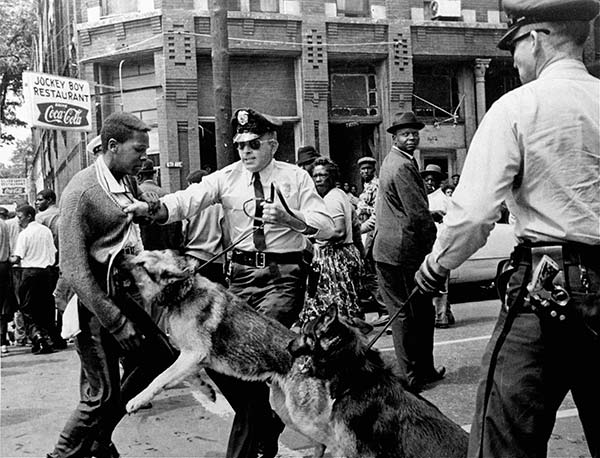


Week 26: Johnson’s Great Society
- The “Great Society Speech”, by Lyndon B. Johnson, 1964 (written)
- The “Great Society Speech” (You Tube video)
- The Israeli-Palestinian conflict in a nutshell.
- PBS site on Vietnam: many links. Outstanding.
- The Vietnam Veteran’s Memorial Wall Page
- Sparknotes History Guide on Vietnam
- Lyndon B. Johnson
- Malcolm X
Week 27: A Nation in Distress
- PBS site on Vietnam: many links. Outstanding.
- Sparknotes History Guide on Vietnam
- Women’s Rights Movement
- Cold War
- Lyndon B. Johnson
Unit 4 – The Postmodern World
Week 28: Nixon: Détente and Watergate
- Watergate Scandal
- The Vietnam War
- The Story of Agent Orange
- Man takes first steps on the moon
- Neil Armstrong
- Buzz Aldrin
- The Yom Kippur War
- Read about the overthrow of President Salvador Allende of Chile.
- Read more about Mao Zedong.
- Table Tennis and Ping Pong Diplomacy
- Yasir Arafat
- 1972 Olympics in Munich
- Read here or here about Israel.
- Read here or here about Lebanon.
- Richard M. Nixon
Week 29: Ford’s Integrity
- Gerald Ford
- Stagflation in the 1970’s
- History of the computer
- Overview of the Persian Gulf War
- “Cold War” between Saudi Arabia and Iran
- Great link on the Persian Gulf War
- Steve Jobs
- Steve Wozniak
- White Revolution
- Death of Mao
- The Fall of Saigon
- Civil War in Lebanon
- Shah of Iran
- Read here or here about Jordan.
- Read here or here about Syria.
Week 30: Carter’s Malaise
- Jimmy Carter
- Jimmy Carter for KIDS!
- Overview of the Persian Gulf War
- “Cold War” between Saudi Arabia and Iran
- SALT II
- Camp David Peace Accords
- Karen Ann Quinlan
- Short biography about Jack Kevorkian
- James Warren Jones
- Nelson Mandela
- Anwar al-Sadat
- Menachem Begin
- Saddam Hussein
- Ayatollah Khomeini
- Shah of Iran
- Deng Xiaoping
- Chinese History: Four Modernizations
- Ruhollah Khomeini
- The Iranian Revolution
- Iranian Revolution in pictures
- Read here or here about Egypt.
- Read here or here about Iran.
Week 31: Reagan’s Revolution
- Ronald Reagan
- Time line of Personal Computer
- Nancy Reagan
- Reaganomics
- “The Long Ordeal of James Brady”
- History of HIV and AIDS: parents you may want to preview this site! There is tons of good information here on the disease, but also information on sex and sexuality.
- Bill Gates
- Steve Jobs
- Steven Wozniak
- Sally Ride
- Read about the Space Shuttle Challenger disaster here.
- Watch the Space Shuttle Challenger disaster on YouTube. Parents may want to preview before students see this.
- Mikhail Gorbachev: biography and video
- Saddam Hussein
- The Iran-Iraq War
- Read here or here about Iraq.
- Read here or here about Oman.
- The Reagan Era
Week 32: G.H.W. Bush’s New World Order
- George H.W. Bush
- The Persian Gulf War
- History of the World Wide Web
- Read some interesting facts about Operation Desert Storm.
- General Norman Schwarzkopf
- General Colin Powell
- Freedom for Nelson Mandela: be sure and play the video to watch the celebration of his release.
- Manuel Noriega
- Mikhail Gorbachev
- Boris Yeltsin
- Saddam Hussein
- Read here or here about Saudi Arabia.
- Read here or here about Kuwait.
Week 33: Clinton’s Lost Opportunity
- Frontline presentation on The Gulf War.
- To answer questions in your Student Activity Pages: Scroll down at to “Post-colonial politics 1960-1990” and “Types of African governments 1960-1990” while you explore Africa
- Bill Clinton
- Outstanding PBS-linked site on The Clinton Years.
- Hillary Rodham Clinton
- Read about the 2000 election.
- Bill Gates
- The trial of O.J. Simpson
- Princess Diana
- Civil War in Rwanda
- Yugoslav Wars
- Read a “Dissident Voice,” which tells about the ethnic cleansing in Kosovo.
- Slobodan Milosevic
- Yasser Arafat
- Yitzhak Rabin
- Read here or here about Bahrain.
- Read here or here about Cyprus.
Week 34: George W. Bush: War on Terror
- Rwanda Genocide: click here or here.
- George W. Bush
- Laura Bush
- Bush Doctrine
- Read about alternative energy.
- Learn about steroids at kidshealth.org.
- What is social networking?
- Watch an interactive graphic about Hurricane Katrina. (It is slow to load, but is worth the wait!)
- Department of Homeland Security
- Read the chronology of events that took place on 9/11.
- Watch the tragic events of September 11, 2001 on YouTube.
- Forbes has a chart that tells about corporate scandals that you may find helpful.
- Alberto Gonzales
- Highlights of the Patriot Act
- Osama bin Laden
- Saddam Hussein
- Read here or here about Qatar.
- Read here or here about Turkey.
Week 35: Obama: Hope and Change?
- To answer questions in your Student Activity Pages: African Union
- Barack Obama
- The legacy of Mao Zedong
- Read here or here about United Arab Emirates.
- Read here or here about Yemen.
Week 36: Reflections and Revelation
Geography
We suggest that you use a good world history atlas so that your students can have practice at the skill of using maps and legends. Click the link below for our recommendation. The next choice is to use the supporting links that you find here. Please only let your student look at the teacher map in Map Aids as a last resort.
General
Online Maps, Map Vendors, and More!
- Euratlas
- Outstanding interactive map quizzes, puzzles and downloads!
- HyperHistory: Main page for links to resource maps, online time lines, much much more! Easy to use. Great online resource!
- Maps.com: Buy some, print some: all the maps you ever wanted in one place.
- National Geographic: All the modern source maps you could want. Black & White: print at will for private use!
- Map of Colonial Africa in 1930.
- From Susan in Florida: This should be of help to those wanting to printout their maps online. US 50 States, Counties of the US
- Knowledgequestmaps.com: black outline maps to purchase.
- A fantastic site which will be lots of help in all four of our year-plans.
- MegaMaps: print up maps from the size of a single page to 7 feet across!
- Imperial History of the Middle East: Who has conquered the Middle East over the course of world events? View this 90-second flash presentation!
Unit 1 – Casting Off the Moorings
Week 1: Dawn of the Twentieth Century
- Great site: includes helpful text and maps.
- Here is a .pdf file to download if you need a blank world map.
- A helpful site for geography terms.
- Blank outline map of the United States.
- Simple map showing the British Empire.
- Map of Europe in 1900: This map will be key to your review this week.
- US Territorial Map: 1900
- African Imperialism
- Map and information about Eastern Africa
- Map and information about Central Africa
- Map of Africa, Imperial boundaries, 1914
- European Colonies in Africa and Asia
Week 2: The Progressive Era
- Map of the Baltics
- This is a really neat animated atlas that you can use many more times while studying the rest of this year-plan. Don’t miss it!
- Country size comparison: Russia Compared to Japan
Week 3: Wilson’s Reforms & Europe’s War
- Detailed map of Europe before 1914
- Blank map of Europe
- Allied and Central Powers
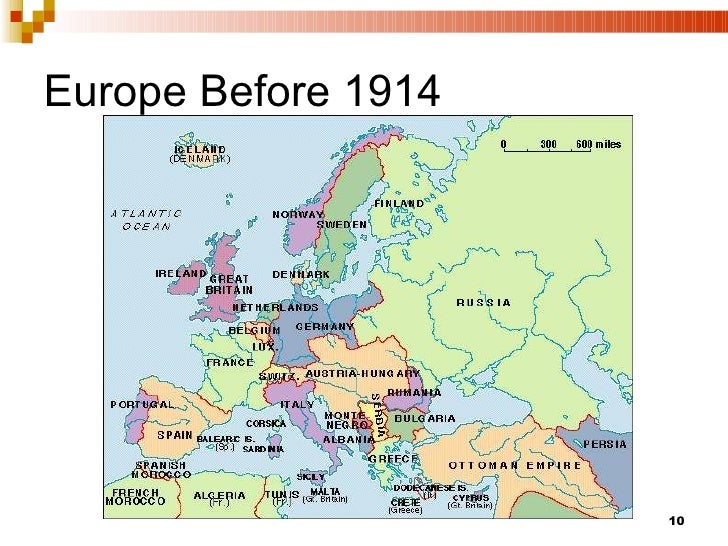

Week 4: Deadlock and Death
- Excellent! All the maps you’ll need for teaching about WWI.
Week 5: America Mobilizes & Russia Revolts
- Outline map of Russia
Week 6: Winning the War & Losing the Peace
- Map of Europe after WWI
- Europe: Before and after WWI
- Blank map of Europe
Week 7: Postwar America
- No objectives for this week.
Week 8: America’s Roaring 20’s & Russia’s Stalin
- No links for this week.
Week 9: American Ballyhoo & Hitler’s Early Career
Unit 2 – Depression and Destruction
General Resources for this Unit
- Outstanding site has many maps and other geographic information on WWII.
Week 10: Bull Market and Black Market
Week 11: Crash! The Great Depression in America
- Dust Bowl
- This map should help you discover the location of totalitarian governments.
- Map of Interwar Europe
- Blank map of Europe
Week 12: FDR and the New Deal
- No objectives for this week.
Week 13: Aggression and Appeasement
- Earhart’s Around the World Flight: Interactive map. Scroll down to go from her starting point to her final destination.
- Here is a .pdf file to download if you need a blank world map.
- Use this site and click on the map of Europe, and then the map of Spain for location of cities.
Week 14: Blitzkrieg!
- WWII Blitzkrieg! 1939-1940 maps
- Blank map of Europe.
- Maps of key WWII battles: click here and here.
Week 15: World-Wide War
- These interactive maps should help show the spread of WWII.
- One more set of maps that you will find helpful this week.
- A helpful link for learning more about the Balkans.
- Here is a .pdf file to download if you need a blank world map.
Week 16: Unconditional Surrender
- No objectives for this week.
Week 17: Hot War to Cold War
- Outline maps of Europe, with or without labels.
Week 18: A Jewish Homeland
- Outline map of the Middle East
- Another choice for an outline map of the Middle East
- Find every label in the Student Activity Pages here.
- Predominant religions and ethnicity of the Middle-east here
- Operation World: click country lists. Click on Asia to find individual middle-east countries. National pages have information regarding people, languages, and religions of a particular area.
Unit 3 – Conformity to Counterculture
Week 19: India’s Independence
- Salt March of India and map
- How to make a Salt Map.
- A salt dought map example.
- Use this site and click on the map of Asia, and then the map of India for location of cities.
- Outline map of India
- Map of India
- Monsoons: information and pictures.
Week 20: China’s Revolution
- How to make a Salt Map.
- A salt dough map example.
- Animated map of Mao’s Long March.
- Use this site and click on the map of Asia, and then the map of China for location of cities.
- All the outline maps, geographical information, and map labels you’ll need for a study of China.
Week 21: Truman: Korea & the Red Scare
- Wonderful interactive map of the stages of the Korean War from PBS.
- Use this site and click on the map of Asia, and then the map of North or South for location of cities.
Week 22: Eisenhower’s Oasis
Week 23: Conformity and Change
- Outline map of Cuba
- Use this site and click on the map of the Islands of the Caribbean, and then the map of Cuba for location of cities.
- Information on Cuba
Week 24: Kennedy’s New Frontiers
Week 25: Camelot and Crisis
- Outline map of the Southern states
- South and Central America
Week 26: Johnson’s Great Society
- Outline map of Vietnam from EnchantedLearning.com
- Details about Vietnam from WorldAtlas.com
- Blank outline map of Vietnam
Week 27: A Nation in Distress
- No links for this week.
Unit 4 – The Postmodern World
Week 28: Nixon: Détente and Watergate
- Outline Map of United States (pdf file)
- Map of United States and capitals (pdf file)
- Outline Map of the World (pdf file)
- List of world capitals
- Capitals of the World game
- Outline map of the Middle East (pdf file)
- Map of Middle East and capitals
- Decolonization of Africa (Northern)
- Decolonization of Africa (Southern)

Week 29: Ford’s Integrity
- Outline Map of the United States (pdf file)
- Map of United States and capitals (pdf file)
- Outline Map of the World (pdf file)
- Outline Map of the World (pdf file)
- List of world capitals
- Outline map of the Middle East (pdf file)
- Map of Middle East and capitals
- African National Independence
Week 30: Carter’s Malaise
- Outline Map of the United States (pdf file)
- Map of United States and capitals (pdf file)
- Outline Map of the World
- List of world capitals
- Outline map of the Middle East (pdf file)
- Map of Middle East and capitals
- African National Independence
Week 31: Reagan’s Revolution
- Outline Map of the United States (pdf file)
- Map of United States and capitals (pdf file)
- Outline Map of the World
- List of world capitals
- Outline map of the Middle East (pdf file)
- Map of Middle East and capitals
Week 32: G.H.W. Bush’s New World Order
- Outline Map of the United States (pdf file)
- Map of United States and capitals (pdf file)
- Outline Map of the World
- List of world capitals
- Outline map of the Middle East (pdf file)
- Map of Middle East and capitals
- African National Independence
- Interactive map showing the fall of Communism
- Ex-USSR and Iron Curtain Countries
Week 33: Clinton’s Lost Opportunity
- Outline Map of the United States (pdf file)
- Map of United States and capitals (pdf file)
- Outline Map of the World
- List of world capitals
- Outline map of the Middle East (pdf file)
- Map of Middle East and capitals
- African National Independence
- Interactive map showing the fall of Communism
Week 34: George W. Bush: War on Terror
- Outline map of the Middle East (pdf file)
- Map of Middle East and capitals
- Map of Afghanistan (Note that the Hari River is also called “The Harirud River”)
- Outline map of Afghanistan
- Map of Iraq
- Outline map of Iraq
- Map showing the Zagros Mountains in Iraq
- George Walker Bush
- Guantanamo Bay
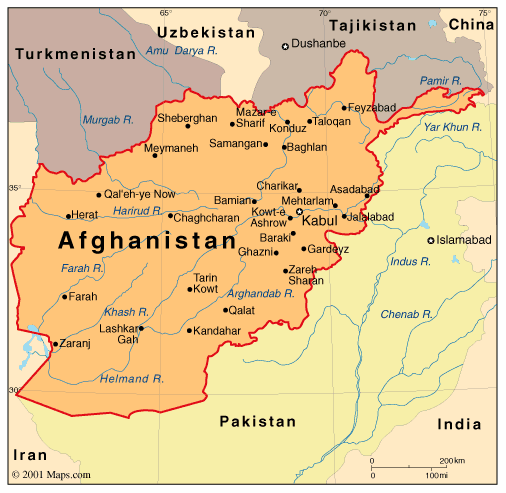


Week 35: Obama: Hope and Change?
- Outline map of the Middle East (pdf file)
- Map of Middle East and capitals
- Outline Map of the World
- List of world capitals
- Read about Mao Zedong’s legacy in China
Week 36: Reflections and Revelation
- Find the continents game
- A fun map game labeling the countries of the Middle East.
- More Games to review the Middle East
- Outline Map of the World
- List of world capitals
Worldview
General
- Does your denomination send out missionaries to various areas of the world? Do a Google search for your own mission’s site and bookmark it. Then, each week, you can return to that site and pray for specific missionaries!
- Blue Letter Bible: A wonderful study aid for teaching devotions or checking Hebrew and Greek words. Historical maps and artwork is also included!
- Operation World website: excellent for praying daily for missions
- The “Ism” Book: an online book for basic definitions that will help you in your worldview studies.
- YWAM: missionary puzzles and coloring pages
Unit 1 – Casting Off the Moorings
Week 1: Dawn of the Twentieth Century
Do you understand these terms and remember these key people? If not, take some time to click and review!
- Predestination
- Free will
- Reformed (Reformed churches)
- Arminian (Arminianism)
Take some time to look up names with which you are not familiar. See if you can spot their position with regard to the terms listed above:
- John Calvin
- Anabaptists
- Moravian Brethren
- Presbyterianism
- Baptists
- Methodists
- Amish
- Congregationalists
There have been outstanding people and events worldwide that must also be remembered in any quick review of the history of the Church to the beginning of the 20th Century:
- John Bunyan
- Wilberforce
- William Carey
- Hudson Taylor
- David Livingstone
- Mary Slessor
- John Newton
- George Muller
- Charles H. Spurgeon
- Amy Carmichael
Week 2: The Progressive Era
Week 3: Wilson’s Reforms & Europe’s War
- Fanny Crosby: scroll down to find a list of songs she wrote. Listen to them online!
Week 4: Deadlock and Death
Week 5: America Mobilizes & Russia Revolts
- Billy Sunday – focus on background, methods, and message
Week 6: Winning the War & Losing the Peace
- No links for this week.
Week 7: Postwar America
- The Screwtape Letters – discussion questions
- Eric Liddell
Week 8: America’s Roaring 20’s & Russia’s Stalin
- The Screwtape Letters – discussion questions
- Eric Liddell
Week 9: American Ballyhoo & Hitler’s Early Career
- The Screwtape Letters – discussion questions
- Eric Liddell
Unit 2 – Depression and Destruction
Week 10: Bull Market and Black Market
Week 11: Crash! The Great Depression in America
Week 12: FDR and the New Deal
Week 13: Aggression and Appeasement
Week 14: Blitzkrieg!
Week 15: World-Wide War
Week 16: Unconditional Surrender
- Richard Wurmbrand – see a video of him and read his biography
- Voice of Martyrs
Week 17: Hot War to Cold War
- Richard Wurmbrand – see a video of him and read his biography
- Voice of Martyrs
Week 18: A Jewish Homeland
- Richard Wurmbrand – see a video of him and read his biography
- Voice of Martyrs
- Israeli’s Independence Day
Unit 3 – Conformity to Counterculture
Week 19: India’s Independence
- Ida Scudder – Reluctant Missionary
- Jacob DeShazer’s personal testimony.
- Jacob DeShazer interview on YouTube.
- A study guide to “The Normal Christian Life” by Watchman Nee.
Week 20: China’s Revolution
- Ida Scudder – Reluctant Missionary
- Jacob DeShazer’s personal testimony
- Jacob DeShazer interview on YouTube.
- A study guide to “The Normal Christian Life” by Watchman Nee.
Week 21: Truman: Korea & the Red Scare
- Ida Scudder – Reluctant Missionary
- Jacob DeShazer’s personal testimony.
- Jacob DeShazer interview on YouTube.
- A study guide to “The Normal Christian Life” by Watchman Nee.
Week 22: Eisenhower’s Oasis
- Nate Saint – Site where you can receive a free book on his biography. Search “Nate Saint”
- Nate Saint
- Jim Elliot
Week 23: Conformity and Change
- Nate Saint – Site where you can receive a free book on his biography. Search “Nate Saint”
- Nate Saint
- Jim Elliot
Week 24: Kennedy’s New Frontiers
- Nate Saint – Site where you can receive a free book on his biography. Search “Nate Saint”
- Nate Saint
- Jim Elliot
Week 25: Camelot and Crisis
Week 26: Johnson’s Great Society
Week 27: A Nation in Distress
Unit 4 – The Postmodern World
Supplement 13: Rhetoric Church History Options for Unit 4
- Option 3: Church Denominations Project
- Option 4: World Missions Project
Week 28: Nixon: Détente and Watergate
- Mother Teresa – Official Site
- Brother Andrew’s sermons
Week 29: Ford’s Integrity
- Mother Teresa – Official Site
- Brother Andrew’s sermons
Week 30: Carter’s Malaise
- Mother Teresa – Official Site
- Brother Andrew’s sermons
Week 31: Reagan’s Revolution
Week 32: G.H.W. Bush’s New World Order
Week 33: Clinton’s Lost Opportunity
Week 34: George W. Bush: War on Terror
- No links for this week.
Week 35: Obama: Hope and Change?
- No links for this week.
Week 36: Reflections and Revelation
- From the book of Revelation: The River of Life and I Come Quickly activity pages
- Timeline of the Book of Revelation
Literature
General
- FreeBooknotes.com presents Cliff’s Notes-like help for many works.
- You won’t believe this site. You can look up any word, you can even make your own glossary. You type in a list of vocabulary words, decide what you would like included and push send. You then get a professional paged glossary of all your words. AND IT IS FREE! (You do have to register first.)
- Norton online quizzes — Western Literature
Unit 1 – Casting Off the Moorings
Week 1: Dawn of the Twentieth Century
- Call of the Wild, by Jack London
- Biography of Jack London
- Worldviews
Week 2: The Progressive Era
Week 3: Wilson’s Reforms & Europe’s War
- Read The Tales of Peter Rabbit, by Beatrix Potter
- Interactive site for Peter Rabbit
Week 4: Deadlock and Death
- The Railway Children, by E. Nesbit
- Anne of Green Gables, by L. M. Montgomery
- The Cherry Orchard, by Anton Chekhov
- Spark Notes: The Cherry Orchard
Week 5: America Mobilizes & Russia Revolts
- The Velveteen Rabbit, by Margery Williams
- The Railway Children, by E. Nesbit
- Anne of Green Gables, by L. M. Montgomery
- Spark Notes: All Quiet on the Western Front
Week 6: Winning the War & Losing the Peace
- The Wind in the Willows, by Kenneth Grahame
- Anne of Green Gables, by L. M. Montgomery
- Spark Notes: All Quiet on the Western Front
Week 7: Postwar America
- Biography of A. A. Milne
- Anne of Green Gables, by L. M. Montgomery
- Poetry by Robert Frost
- T.S. Eliot
- Alliteration, Allusion
Week 8: America’s Roaring 20’s & Russia’s Stalin
- Biography of A. A. Milne
- Peter Pan, by J.M. Barrie
- Animal Farm, by George Orwell
- Spark Notes: Animal Farm
- How to identify literary satire
Week 9: American Ballyhoo & Hitler’s Early Career
- In Which Pooh Goes Visiting and Gets into a Tight Place
- Biography of A. A. Milne
- Peter Pan, by J.M. Barrie
- The Metamorphosis, by Franz Kafka
- Spark Notes: The Metamorphosis
Unit 2 – Depression and Destruction
Week 10: Bull Market and Black Market
- Spark Notes for Our Town
- The Great Gatsby E book
- Spark Notes for The Great Gatsby
Week 11: Crash! The Great Depression in America
- Madeline
- Mike Mulligan site with activities
Week 12: FDR and the New Deal
- Click here for all kinds of activities to use with Curious George books.
- Mr. Popper’s Penguins literature guide
- Spark Notes for The Red Pony
- Spark Notes for The Pearl
Week 13: Aggression and Appeasement
- Spark Notes for The Glass Menagerie
Week 14: Blitzkrieg!
- Biography of Paul Gallico, author of The Snow Goose
- Snow Goose
- The Hundred Dresses activity pages from Scholastic.
- Understanding Poetry
- The Hundred Dresses: Lapbook
Week 15: World-Wide War
- Spark Notes for The Lord of the Flies
- Spark Notes for The Old Man and the Sea
Week 16: Unconditional Surrender
- Glencoe study guide for The Chosen (.pdf file)
Week 17: Hot War to Cold War
- No links for this week.
Week 18: A Jewish Homeland
- The Little Prince book
- Spark Notes for The Little Prince
Unit 3 – Conformity to Counterculture
Week 19: India’s Independence
- Activities for One Grain of Rice
- The House of Sixty Fathers – Study Guide. This has overview, themes, questions and more.
- Homeless Bird – Study Guide
Week 20: China’s Revolution
- The House of Sixty Fathers – Study Guide. This has overview, themes, questions and more.
- Homeless Bird – Study Guide
- To Live movie
Week 21: Truman: Korea & the Red Scare
- Glencoe guide to So Far from the Bamboo Grove. This is a pdf file: 22 pages.
- Spark Notes for The Crucible
Week 22: Eisenhower’s Oasis
- Want some fun online activities for Dr. Seuss books? Click here.
- Old Yeller Study Guide Questions
- Nancy Drew and Hardy Boys Fun Site
- Glencoe guide to So Far from the Bamboo Grove. This is a pdf file: 22 pages.
- Waiting for Godot – Spark Notes
Week 23: Conformity and Change
- Two-page pdf file that will give you more helps for teaching Through My Eyes by Ruby Bridges
- Flannery O’ Connor Site
- Spark Notes – “Everything that Rises Must Converge”, by Flannery O’Connor
- Spark Notes – “A Good Man is Hard to Find”, by Flannery O’Connor
- A Good Man is Hard To Find
- Everything That Rises Must Converge
Week 24: Kennedy’s New Frontiers
- Where the Wild Things Are – Games and Activities
- The Snowy Day
- Preschool Activities for Winter
- The Phantom Tollbooth Activity Page
- Fahrenheit 451 – Spark Notes
- Fahrenheit 451 Novel Guide
Week 25: Camelot and Crisis
- The Berenstain Bears Website
- James and the Giant Peach – Activities
- Spark Notes for To Kill a Mockingbird
Week 26: Johnson’s Great Society
- Dragon Page Activities
- Dragon Coloring Pages
- Water Buffalo Days – Activities
- Review of The Lilies of the Field
- Spark Notes for To Kill a Mockingbird
Week 27: A Nation in Distress
- Water Buffalo Days – Activities
- Review of The Lilies of the Field
- Spark Notes for To Kill a Mockingbird
Unit 4 – The Postmodern World
Week 28: Nixon: Détente and Watergate
- Alexander and the Terrible, Horrible, No Good, Very Bad Day – Story time online
- James Herriot Unit Study
- Have Space Suit Will Travel Audiobook
- I, Robot – Study Guide
Week 29: Ford’s Integrity
- Listen to You Are Special, by Max Lucado, on YouTube.
- James Herriot Unit Study
- Have Space Suit Will Travel Audiobook
- Citizen of the Galaxy study guide
Week 30: Carter’s Malaise
- Miss Nelson is Missing read-aloud on YouTube.
- Berenstain Bears
- The Breadwinner study guide
- Citizen of the Galaxy study guide
Week 31: Reagan’s Revolution
- The Breadwinner study guide
- The Hobbit Sparknotes
Week 32: G.H.W. Bush’s New World Order
- Discussion questions for The Indian in the Cupboard
- Study guide for The Lion, The Witch and The Wardrobe (pdf file)
- Another study guide for The Lion, The Witch and The Wardrobe
- The Hobbit Sparknotes
Week 33: Clinton’s Lost Opportunity
- Discussion questions for The Indian in the Cupboard
- Study guide for The Lion, The Witch and The Wardrobe (pdf file)
- Another study guide for The Lion, The Witch and The Wardrobe
- The Hobbit Sparknotes
Week 34: George W. Bush: War on Terror
- Shel Silverstein website full of activities and ideas for teaching
- Raising Dragons is one of the books in the Dragons in Our Midst series. Check out their website!
Week 35: Obama: Hope and Change?
- Shel Silverstein website full of activities and ideas for teaching
- Raising Dragons is one of the books in the Dragons in Our Midst series. Check out their website!
Week 36: Reflections and Revelation
Raising Dragons is one of the books in the Dragons in Our Midst series. Check out their website!
Shel Silverstein website full of activities and ideas for teaching
Writing
General
- Here’s a great site to bookmark for all your graphic organizing needs and questions. What is a Graphic Organizer?
- If you would like to make personalized graphic organizers, click here.
- This site can be used as you are teaching or reviewing the parts of speech. You’ll find matching, concentration, flash cards, and a word search.
- Interactive Graphic Organizers
- Or, click here for another grammar game.
- Make online crossword puzzles here or here. These are great for reviewing vocabulary!
- Daily Grammar. Excellent site!
- At the right is a picture one of our users sent in of the sentence pocket suggested in Marcia’s introductory notes. Click on the picture to see all the details up very close!
SAT Preparation:
- SAT online question of the day
- Go to this site to answer almost any question you may have about taking the SAT, PSAT, and more.
- Test Prep Review: Great site for test preparation.
- SAT Prep Plan: Take a practice test, which generates a free test report, then create your own SAT study plan. All for FREE!
- SAT Vocabulary Words
- 5000 Collegiate Words with Brief Definitions
Writing College Admissions Essays
- College Essays: Write Ones That Get You into Every School On Your List
- 5 Ways College Application Essays and High School Essays Are Different
- College Admissions Essay Prompts
Evaluations and Rubrics:
- Lisa has contributed this great link for evaluating writing for grades 2-5. This is an interactive rubric for the student to use as a checklist.
- Click here to evaluate writing for grades 6-8. Another great interactive student checklist!
- I recommend you show a student his grading rubric (or better yet, have him help you develop one!) before he starts his project or writing assignment. Click here to develop rubrics automatically from this site for most types of evaluations!
Unit 1 – Casting Off the Moorings
Week 1: Dawn of the Twentieth Century
- Level 1: Click here for some neat online activities as you are teaching nouns. Use next week too!
- Level 2: Parts of grammar
- Levels 3-7: For reviewing the steps in the writing process, click here.
- Levels 8-11: More advanced explanation of steps in the writing process.
Week 2: The Progressive Era
- Level 1: Coloring page of William H. Taft
- Level 2: Pronoun game
- Level 3: Your student may enjoy practicing combining words into sentences with this fun online activity.
- Levels 4-6: Describing wheel (pdf file), Cluster diagram (pdf file)
- Levels 7-8: Cluster Diagram for more middle level students (pdf file), describing wheel (pdf file)
- Levels 9-11: More advanced cluster diagram for oldest students, describing wheel (pdf file)
Week 3: Wilson’s Reforms & Europe’s War
- Level 1: Coloring page of Woodrow Wilson
- Level 2: Grammar Blast
- Level 3: Venn diagram, Cluster diagram (pdf file), describing wheel (pdf file), 5 W’s Chart (pdf file)
- Level 11: Taking lecture notes
Week 4: Deadlock and Death
- Levels 4-6: Want to use level-appropriate sentences from the Bible for dictation? Click here.
- Levels 4-12: If you are beginning to learn or review prepositions this week in grammar, click here for a crossword puzzle here that will reinforce this knowledge.
- Levels 4-12: Preposition Wordsearch
- Levels 5-8: Descriptive Writing
- Levels 10-11: More advanced cluster diagram for oldest students.
Week 5: America Mobilizes & Russia Revolts
- EZ School: grammar tutorials, worksheets, and games.
- Level 3: Very simple story map (pdf file)
- Levels 3, 6, 9: Learn how to write plays from the Scholastic website
- Levels 4-5: Use one of these graphic organizers.
- Levels 6, 9: Story map
Week 6: Winning the War & Losing the Peace
- Levels 3, 6, 9: Learn how to write plays from the Scholastic website
Week 7: Postwar America
- Level 1: Click here for instructions on making a game for learning prepositions. Looks like fun!
- Level 2: Daily Grammar
- Levels 3, 6, 9: Learn how to write plays from the Scholastic website.
- Levels 4-5: 5 W’s Chart (pdf file), Cluster diagram (pdf file)
- Level 7: Cluster Diagram (pdf file)
- Level 11: Christian Internet Code of Ethics: definitely worth reading!
Week 8: America’s Roaring 20’s & Russia’s Stalin
- Level 1: Coloring page of Warren G. Harding
- Level 2: For further help with learning the steps of the writing process, click here.
- Levels 3, 6, 9: Learn how to write plays from the Scholastic website.
- Level 11: Go to these sites for helps and practice college application essays:
- Princeton Review has loads of helpful information, and we found this very interesting page there.
- Interested in Business schools? Princeton Review has this article on writing essays for admission to them.
- AdmissionsEssays.com: Free step by step analysis, structure, and writing guide.
- College Application Essays: helpful hints. Written from a secular perspective, but with some helpful hints.
Week 9: American Ballyhoo & Hitler’s Early Career
- Level 1: Coloring page of Herbert Hoover
- Level 3: Cluster diagram (pdf file)
- Level 6: Cluster Diagram for more middle level students (pdf file)
Unit 2 – Depression and Destruction
Week 10: Bull Market and Black Market
- Level 1: Coloring page of Herbert Hoover
- Level 2: Describing wheel (pdf file)
- Level 10: Instructions for building your own website.
- Level 11: Cause and Effect
Week 11: Crash! The Great Depression in America
- Level 1: Need extra worksheets for working on capitalization? Click here.
- Level 2: Cluster diagram (pdf file)
- Level 3: Parts of Speech: Schoolhouse Rock songs!
- Level 6: Cluster diagram (pdf file)
- Level 7: How to write a report.
- Level 10: Instructions for building your own website.
Week 12: FDR and the New Deal
- Level 1: Coloring page of Franklin D. Roosevelt
- Levels 2-3: Very simple story map (pdf file)
- Level 3: Basic information about descriptive writing.
- Levels 4-5: Online thesaurus
- Levels 4-5: Using a Thesaurus
- Level 7: Use one of these graphic organizers for planning your research report.
- Level 11: Good site, with an example definition essay.
Week 13: Aggression and Appeasement
- Level 1: Need more practice on capitalization or punctuation? Click here for more worksheets.
- Level 3: Describing wheel (pdf file), sensory chart (pdf file)
- Levels 4-5: Cluster diagram (pdf file)
- Level 6: Venn diagram
- Level 9: Writing a Research Paper
Week 14: Blitzkrieg!
- Levels 2-3: Cluster diagram (pdf file)
- Level 4: Very simple story map (pdf file)
- Level 5: Biography Maker
- Level 6: Venn diagram
Week 15: World-Wide War
- Level 1: WWII Coloring Pages
- Levels 2, 5: Cluster diagram (pdf file)
- Level 3: Venn diagram
- Level 11: Story map
Week 16: Unconditional Surrender
- Level 1: Harry Truman coloring page
- Level 2: Cluster diagram (pdf file)
- Level 3: Venn diagram
- Level 3: Compare and Contrast! Diagram a story.
- Level 6: Cluster diagram (pdf file)
- Level 7: Describing wheel (pdf file), sensory chart (pdf file)
- Level 12: Great site for learning to build your own website.
Week 17: Hot War to Cold War
- Level 3: Venn diagram
Week 18: A Jewish Homeland
- No links for this week.
Unit 3 – Conformity to Counterculture
Week 19: India’s Independence
- Level 1: Cluster diagram (pdf file)
- Level 2: Samples of Aesop’s fables to show students in pre-writing phase
- Great site: all the Aesop’s Fables you’ll ever need! All ages, but supervision is recommended. (We’ve not previewed this entire site, and it seems that stories from other sources are also posted.)
- Level 3: Narrative Writing Tutorial
- Level 9: How to Write an Analytical Essay
- Level 10: Narrative Essays
- Level 11: Argumentative Essay
- Level 12: Historical Fiction
Week 20: China’s Revolution
- Level 1: Cluster diagram (pdf file)
- Level 2: Samples of Aesop’s fables to show students in pre-writing phase
- Great site: all the Aesop’s Fables you’ll ever need! All ages, but supervision is recommended. (We’ve not previewed this entire site, and it seems that stories from other sources are also posted.)
- Level 4: Journal Writing
- Level 6: Persuasive Writing
- Level 7: Book Reports
- Level 8: Compare and Contrast Essays
- Level 9: How to Write an Analytical Essay
- Level 11: Argumentative Essay
- Level 12: Historical Fiction
Week 21: Truman: Korea & the Red Scare
- Level 1: Cluster diagram (pdf file)
- Level 2: Samples of Aesop’s fables to show students in pre-writing phase
- Great site: all the Aesop’s Fables you’ll ever need! All ages, but supervision is recommended. (We’ve not previewed this entire site, and it seems that stories from other sources are also posted.)
- Level 3: Story Writing
- Level 4: Journal Writing
- Levels 6, 10: Compare and Contrast Essays
- Level 7: Book Reports
- Level 8: Expository Essays
- Level 9: Narrative Essays
- Level 11: Argumentative Essay
Week 22: Eisenhower’s Oasis
- Level 1: Cluster diagram (pdf file)
- Level 2: Samples of Aesop’s fables to show students in pre-writing phase
- Great site: all the Aesop’s Fables you’ll ever need! All ages, but supervision is recommended. (We’ve not previewed this entire site, and it seems that stories from other sources are also posted.)
- Level 3: Story Writing
- Level 4: Journal Writing
- Levels 6, 10: Compare and Contrast Essays
- Levels 7, 9: Persuasive Essays
- Level 8: Narrative Essays
- Level 11: Personal Response to Literature
- Level 12: Historical Fiction
Week 23: Conformity and Change
- Level 1: Cluster diagram (pdf file)
- Level 2: Samples of Aesop’s fables to show students in pre-writing phase
- Great site: all the Aesop’s Fables you’ll ever need! All ages, but supervision is recommended. (We’ve not previewed this entire site, and it seems that stories from other sources are also posted.)
- Level 3: Story Writing
- Level 4: Journal Writing
- Level 6: Narrative Essays
- Levels 7, 9: Persuasive Essays
- Level 8: Story Writing
- Level 10: Argumentative Essay
- Level 11: Analytical Essays
- Level 12: Historical Fiction
Week 24: Kennedy’s New Frontiers
- Level 1: Cluster diagram (pdf file)
- Level 2: Expository Writing
- Level 3: Photo Essay – you have to scroll a little way down
- Levels 4, 7, 9: Speech Writing
- Level 6: Reports
- Level 8: Story Writing
- Levels 10-12: Debate
Week 25: Camelot and Crisis
- Level 1: Cluster diagram (pdf file)
- Level 2: Some graphic organizers to print to help with informative writing or directions
- Level 3: Photo Essay – you have to scroll a little way down
- Level 6: Reports
- Levels 7, 9: Speech Writing
- Levels 10-12: Debate
Week 26: Johnson’s Great Society
- Level 1: Cluster diagram (pdf file)
- Level 2: Descriptive Writing
- Level 3: Photo Essay – you have to scroll a little way down
- Levels 4, 7, 9: Speech Writing
- Level 6: Reports
- Level 8: Story Writing
- Levels 10-12: Debate
Week 27: A Nation in Distress
- Level 1: Cluster diagram (pdf file)
- Level 2: Descriptive Writing
- Level 3: Photo Essay – you have to scroll a little way down
- Levels 4, 7, 9: Speech Writing
- Level 6: Reports
- Levels 10-12: Debate
Unit 4 – The Postmodern World
Week 28: Nixon: Détente and Watergate
- Level 1: Writing a Friendly Letter
- Levels 2, 4, 7: Newspaper Writing
- Level 5: How to write a report
- Level 6: How to write a fiction story
- Levels 8-10: Literary Analysis
- Level 11: The Process Essay
- Level 12: How to write a Parable
Week 29: Ford’s Integrity
- Level 1: Writing a Friendly Letter
- Levels 2, 4, 7: How to Write a Summary Paragraph
- Level 5: How to write a report
- Level 6: How to write a fiction story
- Levels 8-10: Literary Analysis
- Level 11: The Process Essay
- Level 12: How to write a Parable
Week 30: Carter’s Malaise
- Level 1: Describing Wheel – printable
- Levels 2, 4: Writing a Newspaper
- Levels 2, 4: Newspaper Game for Kids
- Levels 2, 4, 7: Power Point Template for your newspaper assignment
- Level 5: How to write a report
- Level 6: How to write a fiction story
- Level 7: Writing a Newspaper
- Levels 8-10: Literary Analysis
- Level 11: Response to Literature
Week 31: Reagan’s Revolution
- Level 1: Describing Wheel – printable
- Level 2: Writing a Newspaper
- Levels 2, 4: Newspaper Game for Kids
- Levels 2, 4, 7: Power Point Template for your newspaper assignment
- Levels 3, 6, 8: 2 Word Poems
- Levels 4, 7: Writing a Newspaper
- Level 5: How to write a report
- Levels 8-10: Imagery in Poetry
Week 32: G.H.W. Bush’s New World Order
- Level 1: Describing Wheel – printable
- Levels 2, 4: Newspaper Game for Kids
- Levels 2, 4, 7: Writing a Newspaper
- Levels 2, 4, 7: Power Point Template for your newspaper assignment
- Level 5: Writing a Personal Narrative
- Level 9: Writing an Interview Report
Week 33: Clinton’s Lost Opportunity
- Levels 2, 4: Newspaper Game for Kids
- Levels 2, 4, 7: Power Point Template for your newspaper assignment
Week 34: George W. Bush: War on Terror
- Levels 2, 4: Newspaper Game for Kids
- Levels 2, 4, 7: Power Point Template for your newspaper assignment
Week 35: Obama: Hope and Change?
- Levels 2, 4: Newspaper Game for Kids
- Levels 2, 4, 7: Power Point Template for your newspaper assignment
Week 36: Reflections and Revelation
- Levels 2, 4: Newspaper Game for Kids
- Levels 2, 4, 7: Power Point Template for your newspaper assignment
Government
General
- Another massive site: teachers use, probably, initially, although you’ll use it to find sites for your children. If they want to read the originals, here they are!
- All ages will love this site on US Government. This site transcends unit boundaries. It’s GREAT!
Unit 1 – Casting Off the Moorings
Week 1: Dawn of the Twentieth Century
Week 2: The Progressive Era
Week 3: Wilson’s Reforms & Europe’s War
- No links for this week
Week 4: Deadlock and Death
- No links for this week
Week 5: America Mobilizes & Russia Revolts
Week 6: Winning the War & Losing the Peace
Week 7: Postwar America
Week 8: America’s Roaring 20’s & Russia’s Stalin
Week 9: American Ballyhoo & Hitler’s Early Career
Unit 2 – Depression and Destruction
Week 10: Bull Market and Black Market
- Prohibition *content is good and relevant, but noticed that pop up ads exist
- 18th Amendment
Week 11: Crash! The Great Depression in America
- No links for this week.
Week 12: FDR and the New Deal
- Read original documents about the New Deal
- Fireside Chats of FDR
Week 13: Aggression and Appeasement
Week 14: Blitzkrieg!
- No links for this week.
Week 15: World-Wide War
Week 16: Unconditional Surrender
Week 17: Hot War to Cold War
- No links for this week.
Week 18: A Jewish Homeland
- No links for this week.
Unit 3 – Conformity to Counterculture
Week 19: India’s Independence
Week 20: China’s Revolution
- Mao Zedong’s Government
- President Truman’s Statement on US Policy Toward China. From the New York Times, December 15, 1945
Week 21: Truman: Korea & the Red Scare
- No links for this week.
Week 22: Eisenhower’s Oasis
Week 23: Conformity and Change
- No helpful links this week.
Week 24: Kennedy’s New Frontiers
- No links for this week.
Week 25: Camelot and Crisis
- No links for this week.
Week 26: Johnson’s Great Society
Week 27: A Nation in Distress
- No links for this week.
Unit 4 – The Postmodern World
Week 28: Nixon: Détente and Watergate
Week 29: Ford’s Integrity
Week 30: Carter’s Malaise
- No links for this week.
Week 31: Reagan’s Revolution
Week 32: G.H.W. Bush’s New World Order
- Employment Division v. Smith
Week 33: Clinton’s Lost Opportunity
- US v. Lopez
Week 34: George W. Bush: War on Terror
- Bush v. Gore
Week 35: Obama: Hope and Change?
- Citizens United v. Federal Election Commission
Week 36: Reflections and Revelation
- No links needed this week.
Arts & Activities
General
- A user recommends watching “Fly me to the Moon”, an animated feature about three young flies that catch a ride on Apollo 13. Can be rented or found on Netflix.
- Use this site for great pictures when making lapbooks.
- A vast resource on 20th-Century Art. Click on General, Early, or Later 20th-Century Art.
- This art history project book can be used in all four year-plans, as it goes through the 1980’s. There are 80 projects in this book entitled Great Studio Projects in Art History, and is written by William Reid. ISBN 0825138523
- Here’s real help with Feast Nights: food timeline and recipes galore! Enjoy!
- Lowe’s and Home Depot stores have kid’s workshops on selected Saturdays each month! They give the child a complete kit with all the materials needed to build a project. They set up worktables with hammers, wood glue, screw drivers, etc. They also give aprons and pins for completing the project. Call your local store for details!
- Puzzlemaker: input a list of words and this site will generate crosswords, word searches, codes, etc.
- Cookie Dough Recipe: A great alternative to salt dough maps
- 2 c. smooth peanut butter
- 2 1/2 c. powdered milk
- 2 1/2 c. powdered sugar
- 2 c. white corn syrup
- Blue icing – lakes and oceans
- Green sprinkles – plains
- Clear sprinkles – deserts
- Chocolate chips – mountains
- Red candy strips – rivers
- M&Ms – capitals
Unit 1 – Casting Off the Moorings
General Resources for this Unit
- This site lists online biographies to all the “greats” of Jazz!
Week 1: Dawn of the Twentieth Century
- Pictures of Teddy Roosevelt (photographs, cartoons, and more from Wikimedia Commons).
- The Model T
- A site on fashions from 1900-1910.
- More fashions
- Favorite toys of 1900-1910
- This website has instructions and templates for building the Wright brothers’ planes.
- Wright Brothers Model
- Make paper airplanes
- How to make a mobile.
Week 2: The Progressive Era
- Red Cross
- Panama Canal
- Outline maps of the different states
- Cut away of the Titanic
- San Francisco Earthquake
Week 3: Wilson’s Reforms & Europe’s War
- This site contains photographs of eight different real submarines, six model submarines and a large number of plans of old and modern boats. Submarine video clips and two virtual submarine tours are also presented.
- Nova online: submarines
- Submarine Warfare in WWI
- Paper airplanes: Scroll through to find easy, medium difficulty, and hard to make varieties.
- Periscope project: extended directions to supplement those given in the Student Activity Pages.
- World War I cartoons
- Frederick Delius and his music
- Architecture in early 1900
- Cubism Art
- Pablo Picasso
Week 4: Deadlock and Death
- Zeppelins
- Using a compass. Scroll to the bottom to get to the lessons.
- Planes from WWI
- Lusitania
- Scott Joplin
- George Braque
Week 5: America Mobilizes & Russia Revolts
- Actual pictures of a U-boat sinking a merchant marine vessel.
- French Army in the War
- American Recruiting Posters from WWI
- Igor Stravinsky
- Schools of Art before and after Russian Revolution
Week 6: Winning the War & Losing the Peace
- Political Cartoons from 1900-1920
- Political Cartoons from WWI
- Richard Strauss
- Enrique Granados- listen to his music
- Expressionism
Week 7: Postwar America
- How to make your own paper dolls – generic site for all paper dolls
- Paperdoll Heaven: play paper dolls online
- George Gershwin site
- Radio in the 1920’s
- Click here for your “newscaster” project.
- Vintage radio script library.
- Watch them dance the Charleston from the 1920’s
- Jean Sibelius
Week 8: America’s Roaring 20’s & Russia’s Stalin
- The Harlem Renaissance: video
- This site lists online biographies to all the “greats” of Jazz!
- Joplin tunes and Ragtime pieces that can be downloaded.
- Jazz for kids
- Ken Burns Jazz on PBS
Week 9: American Ballyhoo & Hitler’s Early Career
- Think you know baseball? Take this baseball quiz.
- Charlie Chaplin movies to watch!
- Baseball field positions
- Charles Ives
Unit 2 – Depression and Destruction
Week 10: Bull Market and Black Market
- How to create a flip book- video
- Creating a flip book
- Steamboat Willie information
- Steamboat Willie video on YouTube
- Stock Market Information from Nasdaq
- Al Capone
- Development of the Polio Vaccine
- Polio Vaccine today
- George Gershwin
- Bauhaus School: 1919-1933
- Dadaism
- Edward Hopper: Cape Cod Evening
Week 11: Crash! The Great Depression in America
- Stock Market Information from Nasdaq
Week 12: FDR and the New Deal
- Great site on the 1930’s. It covers prices of things during this time period for the LG activity.
- Another good site on prices in the 1930’s.
- Sergei Rachmaninoff
- Basic Musical Terms
- Regionalism
Week 13: Aggression and Appeasement
- Amelia Earhart Museum: biography, childhood, virtual tour, etc.
- You Tube video- Bing Crosby singing “Old Man River”
- Winston Churchill
- World War II Overview
- Adolf Hitler
- Francisco Franco
- Sergei Prokofiev
- Fascist Architecture
Week 14: Blitzkrieg!
- Pictures of battleships
- History of air craft carriers. All U.S. ships ever built listed by name with personal histories from those who sailed them linked. Fascinating REAL history!
- Modern British aircraft carriers.
- From Anna in LA: We recently stumbled on a wonderful book suitable for mature D-level on up through adults. If your D or R-level student is studying or will be studying WWII history and loves fashion, design and dolls this is a “must read”. This book retails for $30 but you can purchase it at Amazon for about $21. Théâtre de la Mode: Fashion Dolls: The Survival of Haute Couture (Revised second edition)
- Printable Battleship Game
- Papier Mache Piggy Bank
- How to Blow an Egg
- Victory Gardens
- For Your WWII assignment: Underground Resistance, Women on the Front Line, Rationing, Bombs and Bombers
- Aircraft Carrier to help with the making of your model
- Bela Bartok
- Norman Rockwell
Week 15: World-Wide War
- Making a Toy Parachute: Click here.
- Bob Hope during WWII
- YouTube: Bob Hope “Thanks for the Memories”
- Maurice Ravel
- Giorgio Morandi
- Alberto Giacometti
Week 16: Unconditional Surrender
- Rosie the Riveter
- Famous Women of WWII
- Jigsaw Puzzle Maker
- Make a periscope.
- How to darn a sock
- Ammunition from WWII
- WWII Uniforms
- The Anderson Shelter and a picture of the shelter.
- D-Day video
- Manhattan Project
- V-E Day
- Military Insignias – This site has all the different branches of service.
- Arnold Schoenberg
- Surrealism

Week 17: Hot War to Cold War
- Dewey Vs Truman: Election of 1948
- Information for the Dialectic United Nations Project: Flags for all the countries
- Manuel de Falla
- Abstract Expressionism
- William de Kooning
- Jackson Pollock
- Mark Rothko
- Maria Helena Vieira da Silva
Week 18: A Jewish Homeland
Unit 3 – Conformity to Counterculture
Week 19: India’s Independence
- Making salt
- Making salt – a YouTube video
- Making salt sculptures
- Coloring pages about India
- Recipes from India – for kids
- A History of Indian clothing
- Frances Poulenc’s music and biography
- Make a distaff to spin wool into yarn
- Franz Kline
- Hans Hoffman
- Richard Diebenkorn
Week 20: China’s Revolution
- Chinese propaganda posters. Fascinating jump-off discussion starters, especially after our in-depth study of propaganda in World War II. Compare/contrast, enjoy!
- Coloring pages about China
- The Great Leap Forward: video and text.
- Anton Webern
- Chinese Art
- Chinese Tea Ceremony
- Pictures of Mao Zedong for your art project
Week 21: Truman: Korea & the Red Scare
- General Douglas MacArthur
- Unforgettable: The Korean War. A PBS film.
- Coloring pages about Korea
- Jean Dubuffet – French avant-garde painter.
- M.C. Escher
- Encyclopedia Britannica Pagoda
Week 22: Eisenhower’s Oasis
- Fashion of the 1950s
- 1950s Fashion
- Frank Stella artwork: Earlier paintings Harran II, and an example of his later relief sculpture
- Josef Albers artwork: from the Hirshhorn Museum (scroll down and also go to page 2 for more images), from the National Gallery, Washington, DC, and more artwork.
- Ludwig Mies van der Rohe
- Ellsworth Kelly
- Living conditions of Black and White Americans in the 1950s
- Vietnam: climate and natural resources
Week 23: Conformity and Change
- View many of the works of Robert Rauschenburg, especially Canyon that is referenced in the Teacher’s Notes.
- Selected Works from a Jasper Johns Retrospective at MoMA, 1996
- Rock Music
- Sputnik: Images for your project
Week 24: Kennedy’s New Frontiers
Week 25: Camelot and Crisis
- Pop Art on Artlex, or Archive
- Interesting Warhol article in Christianity Today’s Periodical Books and Culture
- Coloring pages of Andy Warhol’s artwork
- Roy Lichtenstein
- Dmitri Shostakovich
- Cuban Recipes
Week 26: Johnson’s Great Society
- Claes Oldenburg
- Musical Terms – some with good audio examples
- Coloring pages about Vietnam
Week 27: A Nation in Distress
Unit 4 – The Postmodern World
Week 28: Nixon: Détente and Watergate
- Solar System Model
- Make your own astronaut suit!
- Make a solar system mobile
- Check out this website with lots of solar system activities!
- Meeting Basic Needs in Space
- Instructions for making a papel picado.
- Information for your clay models for a baby’s size at each month after conception.
- Make a booklet about the seven continents.
- Crafts for your overview of North America: Canada, United States, Mexico
- Conceptual Art site with artists’ biographies and works (scroll through the page to see the links)
Week 29: Ford’s Integrity
- For your picture of a computer: 1970s computer displays.
- Play Pong online.
- For your mini-poster: Nadia Comaneci and Muhammad Ali.
- Continue your booklet about the seven continents
- Crafts for your overview of South America
- Performance Art
- Make a Rain Stick craft.
Week 30: Carter’s Malaise
- Parts of a Peanut Plant
- How to Grow Peanuts
- Peanut Recipes
- Health benefits of peanuts
- Interview with Nelson Mandela
- Nelson Mandela
- Diagram of a nuclear plant
- Lessons about Nuclear Reactors (scroll to some very helpful pdf files)
- Earth Art
- Installation Art
- Read about Andy Goldsworth here.

Week 31: Reagan’s Revolution
- The Earth from Space
- Continue your booklet about the seven continents
- For your mini-poster: Steve Jobs, Bill Gates, or Steve Wozniak
- For your visual about the Strategic Defense Initiative, otherwise known as Star Wars
- Strategic Defense Initiative
- Architecture Review of 80s Design
Week 32: G.H.W. Bush’s New World Order
- For your mini poster: Nelson Mandela
- For your Upper Grammar web project: service provider, web browser, search engine, hypertext.
- For your Dialectic web project: http and https, html (click on links in left toolbar), web browsers
- For your mini-poster: Norman Schwarzkopf
- Green movement
- Sandra Bowden
- Dan Callis
Week 33: Clinton’s Lost Opportunity
- For your mini-poster: Bill Gates
- For your mobile: Nelson Mandela
- Image showing progression of cell phones
- Time line of cell phones
- For your digital collage: Tiger Woods, Cal Ripken, Mark McGwire, John Elway
- For your mini-poster: Ron Brown, Henry Cisneros, Janet Reno, Donna Shalala, Jocelyn Elders, Ruth Bader Ginsburg, Madeleine Albright
- Continue your booklet about the seven continents
- Princess Diana’s charity work
- Mary McCleary
- John Silvis
Week 34: George W. Bush: War on Terror
- For your mini-poster: George W. Bush
- Crafts for your overview of Asia: Japan
- Read about Edward Knippers here or here. (Beware of nudity in some artwork.)
Week 35: Obama: Hope and Change?
- Crafts for your overview of Africa
- Architecture and urban degradation
- Albert Pedulla
- Tim Rollins
Week 36: Reflections and Revelation
- Have fun playing games in which you put the Presidents in order: here or here.
- Joel Sheesley
- Makoto Fujimura
- CIVA – Christians in the Visual Arts. Check out the kinds of exhibitions that this group sponsors, the artist directory for perspective art collectors
Field Trips
On this page, we hope to post field trip ideas from YOUR state that dovetail with Tapestry subjects as organized in our week-plans. Please submit your ideas via email, and please try to include the following information:
- Your email address (for our sake, in case we have questions, but you can tell us if you’re willing to have your email linked as a contact person for more info about your recommendation).
- The name of the attraction.
- ANY online links to explain, give information, about the attraction.
- A short paragraph explaining why the attraction would serve homeschoolers.
THANKS for your help! We will post states as their submissions come in, and under the weeks as listed below:
**IMAX often has great films that are an excellent addition to your academic studies. Find out what is playing, and where, to schedule this activity for your family.
Unit 1 – Casting Off the Moorings
Week 1: Dawn of the Twentieth Century
- Museum on the building of the Atomic Bomb!.
- Southern Museum of Flight in Birmingham, Alabama.
- Henry Ford museum in Dearborn, Michigan.
- Wright Brothers memorial in Kill Devil Hills, North Carolina.
- Sagamore Hill, the Home of Theodore Roosevelt in Oyster Bay, New York.
- Teddy Roosevelt National Historic Site in New York, New York.
- Roosevelt’s Little White House Historic Site in Warm Springs, Georgia.
- The Morgan Library and Museum – The collections of JP Morgan, New York, New York.
- George Eastman House in Rochester, New York.
- Fort Worth Museum of Science and History in Texas. Studying Albert Einstein we will use the museum’s hands on exhibits to perform our own experiments.
Week 2: The Progressive Era
- William Howard Taft National Historic Site in Cincinnati, Ohio.
- National Parks – find one in your state.
- Mount Rushmore National Memorial in South Dakota.
Week 3: Wilson’s Reforms & Europe’s War
- Dr. Pepper museum in Waco, Texas.
- Titanic Museum
- Woodrow Wilson house in Washington, DC.
- Submarine museum in Groton, Connecticut.
- Robert Frost Stone House Museum in South Shaftsbury, Vermont.
Week 4: Deadlock and Death
- Smithsonian Air and Space Museum in Washington, DC.
- National Air and Space Museum near the Dulles airport in Chantilly, Virginia.
- Museum of the American Railroad in Frisco, Texas. One of the literature books covered this week is the Railway Children. A railroad museum just seemed very appropriate.
Week 5: America Mobilizes & Russia Revolts
- Hillwood Museum – One of the premier art collector’s museums in the US. The museum features the most comprehensive collection of Russian imperial art outside of Russia – Washington, DC.
- Fort Worth Museum of Science and History in Texas. The museum has an exhibit on air.
Week 6: Winning the War & Losing the Peace
- If you didn’t make the trip while studying Year 3, consider it now: Laura Ingalls Wilder’s home in Rocky Ridge: Mansfield, Missouri.
- Warren Harding home in Marion, Ohio
- Heard Museum – McKinney, Texas. Finishing up Anne of Green Gables this week and Wind in the Willows we thought it would be nice to see of some of the outdoors up close and personal.
Week 7: Postwar America
- Norman Rockwell Museum in Stockbridge, Massachusetts or Rutland, Vermont
- There are several radio museums around the country. One is in Huntington, West Virginia.
Week 8: America’s Roaring 20’s & Russia’s Stalin
- Smithsonian National Air and Space Museum in Washington, DC.
Week 9: American Ballyhoo & Hitler’s Early Career
- Check out your local museums for displays about the Great Depression.
- Amelia Earhart Birthplace and Museum in Atchison, Kansas.
- Courthouse tour: Old Red Museum in Dallas, Texas.
- Outstanding, incredibly detailed and rich site on WWII
- WWII timeline
- Outstanding index of sites dealing with WWII. Heavily hyper linked text and a joy to use.
- Outstanding site has many maps and other geographic information on WWII.
Unit 2 – Depression and Destruction
Week 10: Bull Market and Black Market
- Franklin D. Roosevelt home in Hyde Park, New York.
- FDR Memorial in Washington, DC.
- FDR’s Little White House in Warm Springs, Georgia.
- Alcatraz in the San Francisco bay area of California.
Week 11: Crash! The Great Depression in America
- Von Trapp Family Museum and Lodge in Stowe, Vermont.
- Visit the courtroom of “To Kill a Mockingbird” (Gregory Peck film) Recreated for the film in great detail!!! This link submitted by Erin.
Week 12: FDR and the New Deal
- No links for this week.
Week 13: Aggression and Appeasement
- No links for this week.
Week 14: Blitzkrieg!
- The National WWII Museum in New Orleans.
Week 15: World-Wide War
- Holocaust Memorial Museum in Washington, DC.
- The National WWII Museum in New Orleans.
- Holocaust Museum in Dallas, Texas.
Week 16: Unconditional Surrender
- The National WWII Museum in New Orleans.
- American airlines C.R. Smith Museum in Fort Worth, Texas. With reading and discussion this week on the atomic bomb and Rosie the Riveter, we thought a field trip to learn more about airplanes would be beneficial.
Week 17: Hot War to Cold War
- No links for this week.
Week 18: A Jewish Homeland
- No links for this week.
Unit 3 – Conformity to Counterculture
Week 19: India’s Independence
- No links for this week.
Week 20: China’s Revolution
- If there is a “China Town” in your city, you could visit there.
Week 21: Truman: Korea & the Red Scare
- Harry S. Truman Library and Museum -Independence, MO
Week 22: Eisenhower’s Oasis
- A Civil Rights “List of Sites” for each state.
Week 23: Conformity and Change
- Smithsonian National Air and Space Museum – Washington, DC
Week 24: Kennedy’s New Frontiers
- JFK Presidential Library and Museum – Boston, MA
Week 25: Camelot and Crisis
- US Space & Rocket Center in Huntsville, Alabama
- Intrepid Sea-Air-Space Museum in New York, New York
- Virginia Air & Space Center in Hampton, Virginia
- Smithsonian National Air and Space Museum in Washington, DC
- Martin Luther King, Jr. National Historic Site – Atlanta, GA
- National Civil Rights Museum – Memphis, TN
Week 26: Johnson’s Great Society
- Virtual Tour of Andy Warhol art museum
- Harry S. Truman Library and Museum – Independence, MO
- Martin Luther King, Jr. National Historic Site – Atlanta, GA
- National Civil Rights Museum – Memphis, TN
Week 27: A Nation in Distress
- Martin Luther King, Jr. National Historic Site – Atlanta, GA
Unit 4 – The Postmodern World
Supplement 13: Rhetoric Church History Options for Unit 4
- Option 3: Church Denominations Project
- Option 4: World Missions Project
Week 28: Nixon: Détente and Watergate
- No links for this week.
Week 29: Ford’s Integrity
- No links for this week.
Week 30: Carter’s Malaise
- Jimmy Carter Library and Museum in Atlanta, Georgia
- Jimmy Carter National Historic site in Plains, Georgia
Week 31: Reagan’s Revolution
- No links for this week.
Week 32: G.H.W. Bush’s New World Order
- No links for this week.
Week 33: Clinton’s Lost Opportunity
- No links for this week.
Week 34: George W. Bush: War on Terror
- No links for this week.
Week 35: Obama: Hope and Change?
- No links for this week.
Week 36: Reflections and Revelation
- No links for this week.